Flowers use their beautiful colours and perfumes to lure and seduce their favourite insect pollinators. Bees especially love flowers in shades of blue, purple, and yellow, but planting your garden in a diverse mix of flowers in different shapes, sizes and flowering times is the best way to keep your garden buzzing with life. Bees love simple blooms that dish up their dinner in an easily accessible way. Here are a few favourites guaranteed to please the bees while filling your garden (and your vases) with joy.
Blossoms called to Bumblebee
With perfumes sweet and bold,
Their petal patterns on display,
And pollen sparkling gold.
- From Bumblebee by Rachel Western
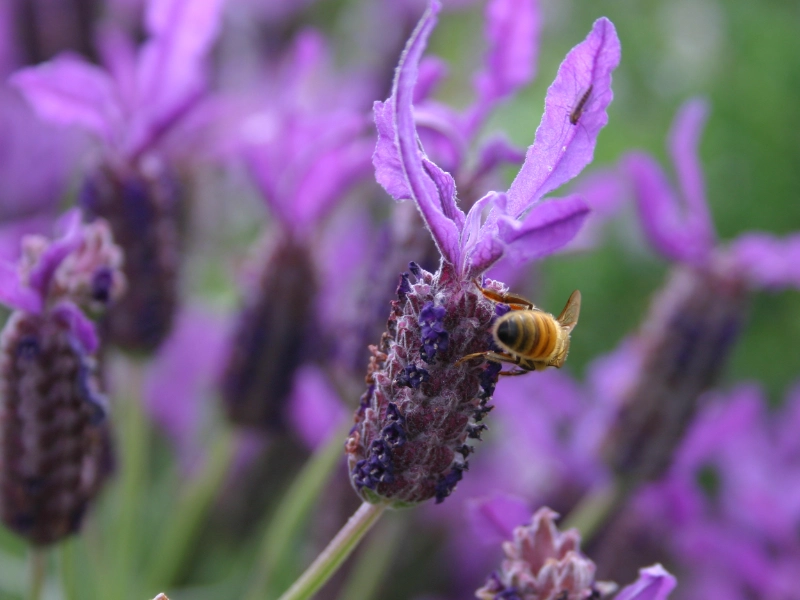
Lavender produces an abundant supply of sweet nectar and protein-rich pollen. It often blooms during a quiet time in the garden when other garden plants have finished flowering. The flower spikes attract via sheer mass which produces a cloud of colour, and the shape allows bees to land and feed easily. There are loads of different lavenders, something for every soil and climate.
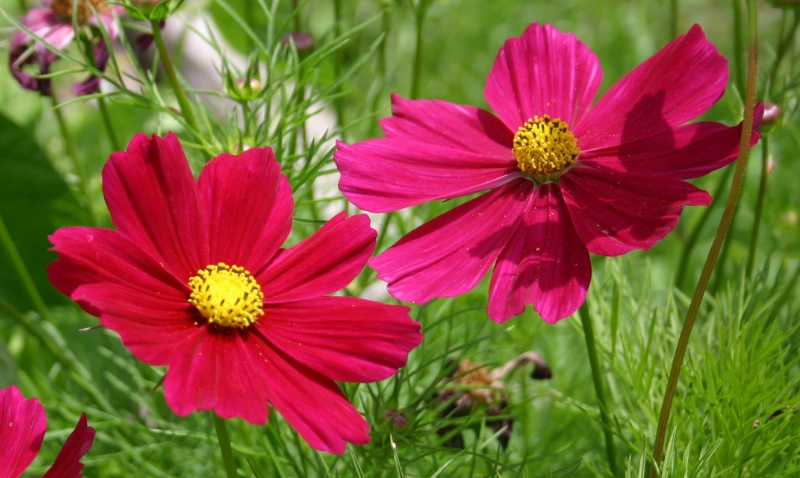
Open, daisy-like blossoms make it easy for honeybees, bumblebees, and native bees to reach the food. And because Cosmos flowers for such a long time, it is reliable food source when other plants fade. Cosmos grows easily from seeds, and will often self-seed to bloom the next season. Cosmos regularly features in bee-friendly seed mixes, along with other bee friendly ‘wildflowers’ like cornflowers, calendulas and phacelia.
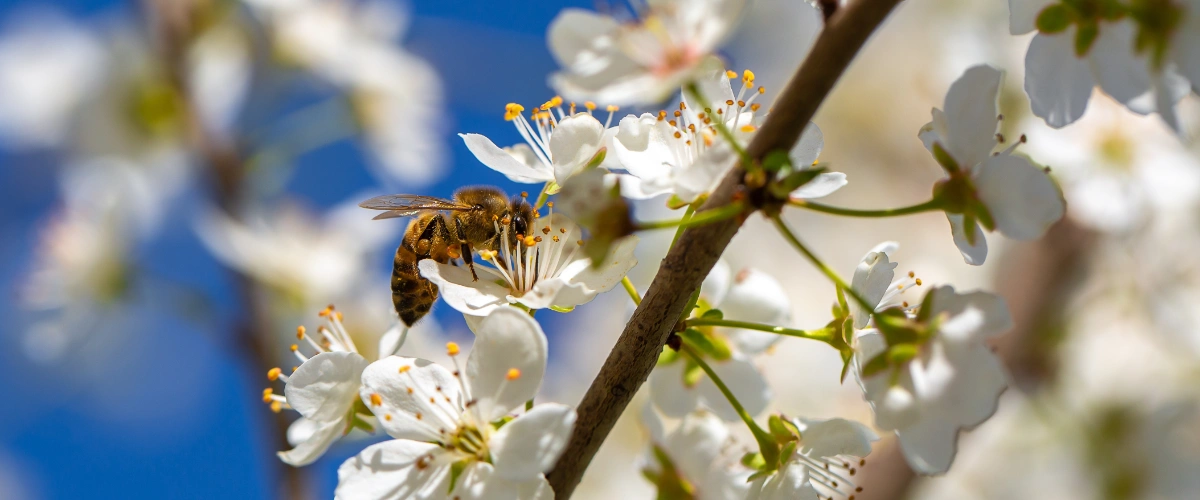
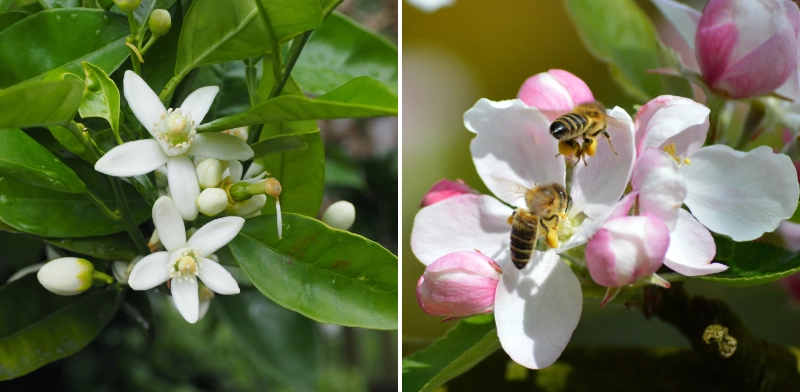
White flowers often use fragrance rather than colour to attract their pollinators. Intensely scented orange and lemon blossoms attract bees from a distance with their powerful perfume. The easily accessible flowers provide a rich, abundant supply provide of nectar and protein-rich pollen. Modern grafted trees fit easily into smaller gardens and can be grown in containers.
Apple trees bloom in spring, earlier than many other trees, which makes them an important source of energy at this time of year. Most apple varieties cannot pollinate themselves and need a bee to deliver pollen from a different apple tree variety before a flower will start to grow its apple. Loose pollen sticks to the hair on a bee's body and transfers to the next flower's pistil.
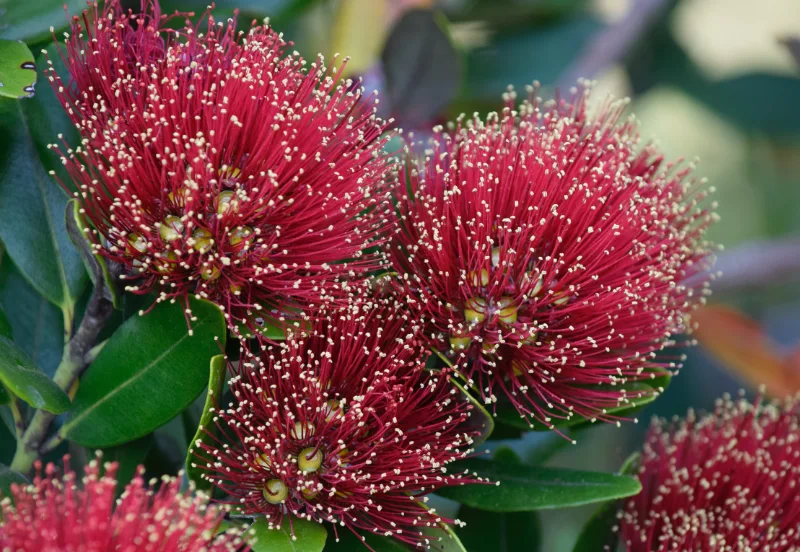
Beautiful bright red Pōhutukawa flowers are an abundant source of food during bees’ peak summer foraging season. Bee activity is high over the warm days of December and January when their colonies need steady nourishment. Each brush-like bloom secretes large quantities of nectar, loved both by honeybees and native New Zealand bees.
Honeybees turn pōhutukawa nectar into a distinctive and delicious honey but unfortunately they are poor pollinators of pōhutukawa compared to native bees. This inefficient pollination results in lower seed set for the pōhutukawa trees. Because of this, commercial hives are restricted on public conservation land. High densities of honeybees will crowd out native bees, forcing them to find another food source.
If there is no room in your garden for a big pohutukawa tree, consider one of its compact cousins, such as Metrosideros ‘Dalese’ or Metrosideros ‘Tahiti’.
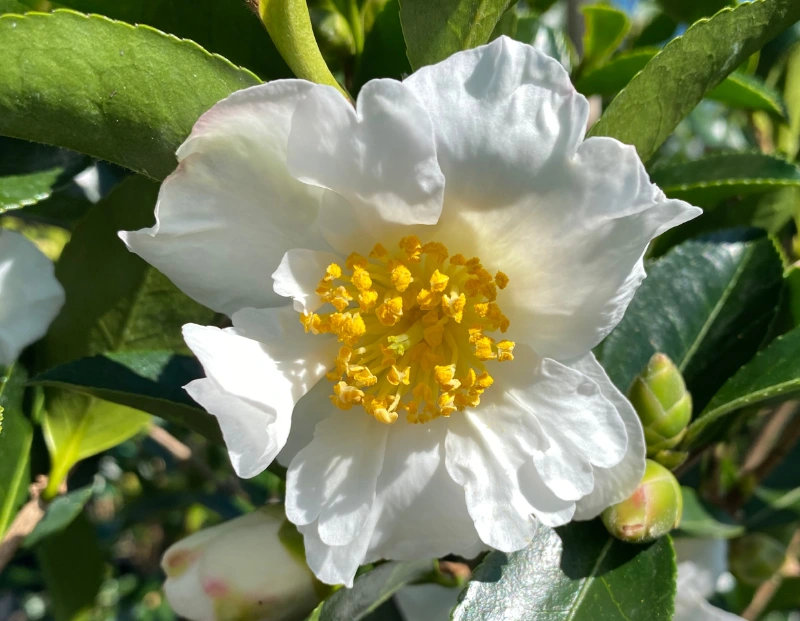
Because they are long term shrubs that bloom between autumn and early spring when few other flowers are around, camellias fill the food gap, year after year. Honey bees and bumblebees and can rely on them for high-quality food during the cooler months. Not all camellias are bee magnets. If you are keen to attract bees to your garden, choose camellias with a single or semi-double ring of petals and a large, exposed centre of bright yellow stamens. Those with heavy peony-like blooms have extra petals instead of pollen-loaded stamens.
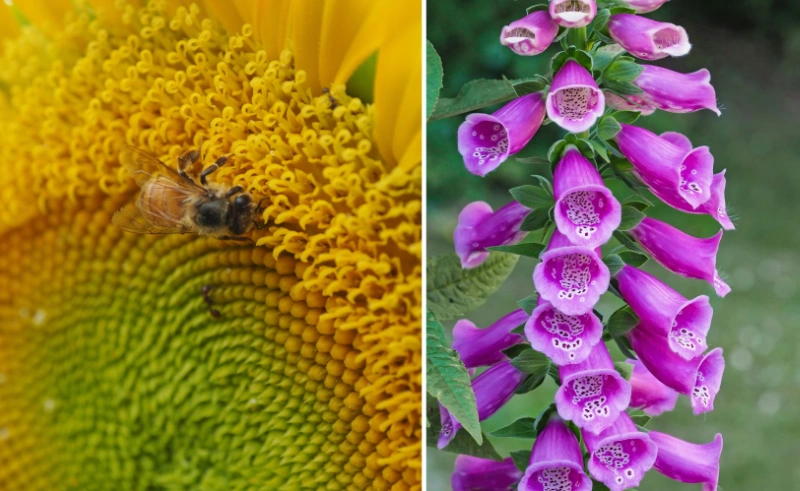
Grow sunflowers from seed to give bees a steady food source during their busy summer season. They will easily see these giant flowers from a distance especially if you grow a good number. In fact, each large sunflower head is made of hundreds of tiny individual flowers that open over time. Bees can feast on a sunflower without spending energy flying between plants. Sunflowers face the sun, warming up quickly in the morning which attracts bees when they are most active.
Clever foxglove flowers are perfectly designed for their main pollinators - large, long-tongued bumblebees. Their tall flower stalks bloom from the bottom up, forcing bees to start at older, female flowers before climbing to younger, male blooms - which prevents self-pollination. Additionally, the mouth of each flower features stiff guard hairs that deter small, less efficient pollinators while providing a steady foothold for heavy bees. Inside, the flower spots guiding the bee toward the hidden nectar vault. As it backs out out of the narrow tube, its furry body is doused with pollen.
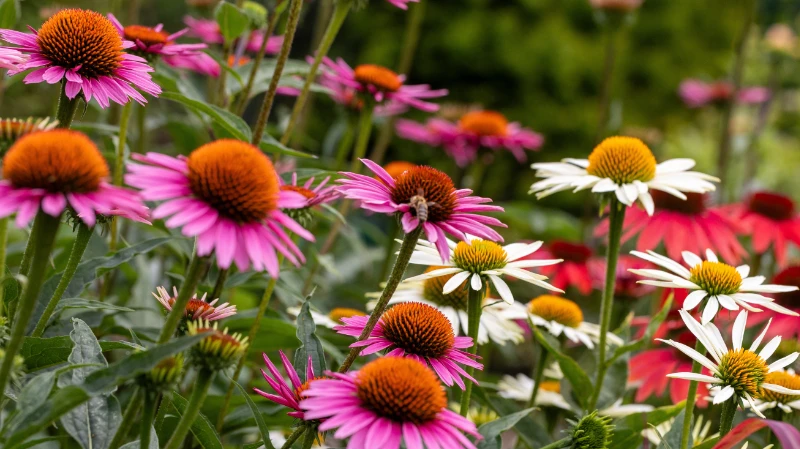
Coneflowers (Rudbeckia and Echinacea) are perfectly suited to a bee friendly garden. Their flat petals provide ideal landing pads for bees, from heavy bumblebees to tiny native species, while each raised centre cone contains hundreds of tiny, nectar-rich flowers. Blooming continuously from mid-summer through autumn, these hardy, drought-tolerant, perennials provide an important late-season food source for bees.
With their excellent colour vision, bees are irresistibly drawn to bright vibrant nasturtium flowers then rewarded with the sugar rich nectar that these flowers produce in copious proportions. Nasturtiums grow easily from seed and bloom continuously from spring all the way through until the first frost. The wide-open, trumpets offer easy access to all kinds of bees. Planting nasturtiums near your vegetable garden significantly boosts crop yields.
great for colour in a winter garden Calendula’s bright, open flowers also provide an accessible and reliable source of both nectar and pollen. often the first flowers to pop up in spring and the last to fade They flower from late spring through late summer and all winter in mild climates, offering a steady food supply.Calendulas also draw other helpful insects, like ladybugs and hoverflies, that eat garden pests.
Salvias are bee favourites due to their long flowering time and tube-shaped flowers that hold vast amounts of nectar. They feature a unique "lever mechanism" that dabs pollen directly onto a bee's back as it reaches inside, ensuring highly efficient cross-pollination.
Colourful cupheas are excellent, nectar-rich plants that strongly attract bees, butterflies, and other pollinators. Their long-lasting, tubular flowers are present from spring through autumn (and year-round in warmer climates), giving bees a reliable food source. Popular Cuphea 'Bee Banquet’ is a compact, evergreen shrub about 1m by 1m ideal for small gardens and pots which becomes blanketed in vibrant red-and-gold flowers. It is highly heat and drought-tolerant once established. A perfect plant to plant near the vege patch, it thrives best in warm, sunny spots with free-draining soil.
When allowed to flower (‘bolt’), broccoli and other brassicas explode into masses of yellow flowers that pollinators love. These cold-hardy plants bloom during early spring and late autumn when other food is scarce. Bees feeding on broccoli flowers in spring will pollinate and boost the yields of summer crops, like tomatoes and zucchini.
TIPS