

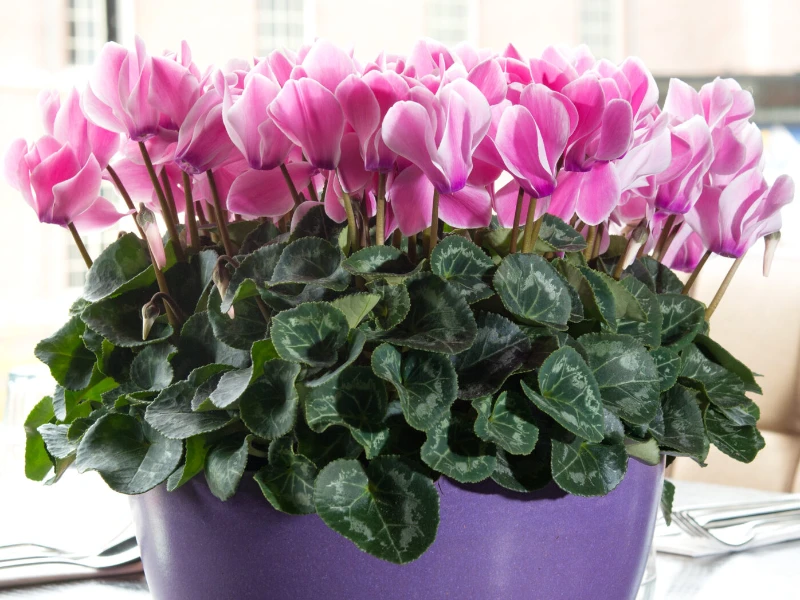
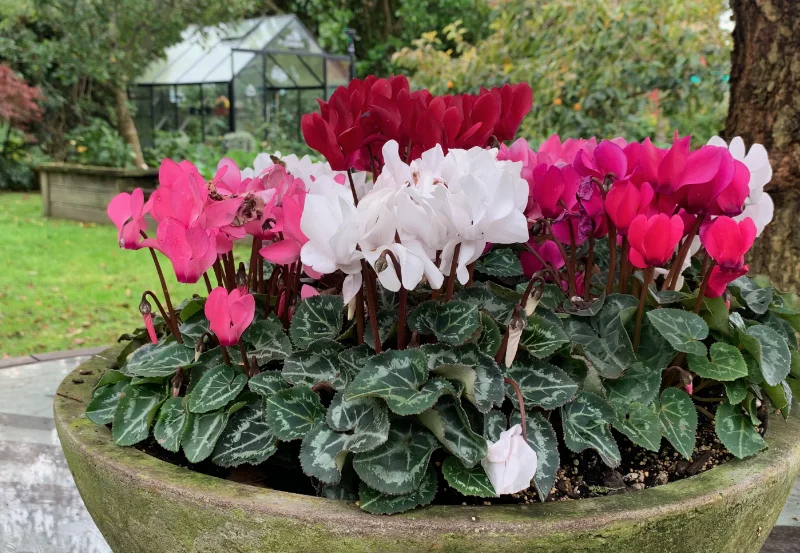
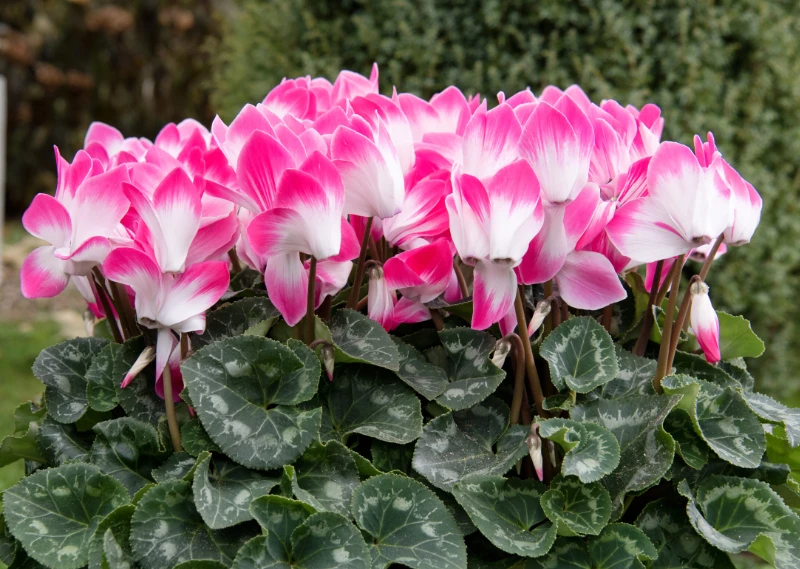

Potted cyclamen will instantly brighten a room or make a welcoming scene at the front door. Indoor cyclamen are mainly the larger flowered hybrids. These can also be grown outdoors, but the smaller flowered cyclamen are generally the most weather resistant.
A bowl of mini cyclamen on an outdoor table will provide enticing colour for months, provided they receive protection from heavy rain, frost and hot sun. Cyclamen also make beautiful gifts in colours to suit any décor, in many shades of pink, red and white including bicolour forms.
Cyclamen are members of the primula family. The bare stems of their flowers and pretty marbled leaves rise from fat, disc-shaped tubers (sometimes called corms). Today’s cyclamen are the result of extensive plant breeding and the quest for free flowering plants with bigger brighter blooms.
Wild cyclamen species originate mainly from the Mediterranean and the Middle East, where summers are hot and dry and winters are cool and wet. Of the 23 different species, some are sweetly scented. And compared to modern hybrids, they have small dainty flowers. Most are summer-dormant perennials with fresh leaves and flowers sprouting in autumn and continuing through the winter before dying back in spring for another summer rest. After pollination, the flower stems curl downwards sinking the seed pods into the ground before releasing their brown sticky seeds. Wild cyclamen are dispersed by ants and other insects, which carry the seeds off to dine on the sticky coating.
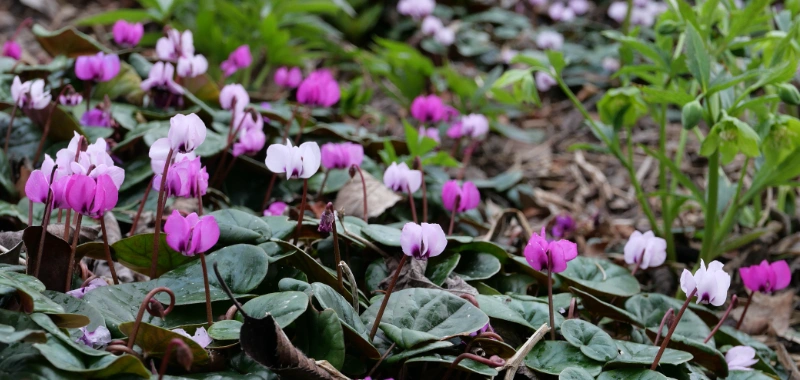
Though not as well-known as our showy pot plants, a number of wild cyclamen species exist in New Zealand gardens. The species Cyclamen hederifolium (aka Cyclamen neapolitanum or ivy leaf cyclamen) is a hardy woodland species often seen carpeting shady ground under trees in large established gardens where it is left to self seed. The dainty flowers pop up in late summer and autumn after a period of summer dormancy.
The wild ancestor of most modern forms is Cyclamen persicum, a native of rocky hillsides and woodlands around the Mediterranean. This species was cultivated in French gardens since the early 1700’s. Breeding took off in the mid-nineteenth century.
The impressive cyclamen varieties available in garden centres today are the result of nearly two centuries of breeding, in a range of colours and sizes with exceptional weather tolerance, they arrive in stores from March through June.
Cyclamen are much tougher than their exquisite looks suggest, but their ancestral homelands of cold winters and dry summers give clues to their preferences: