
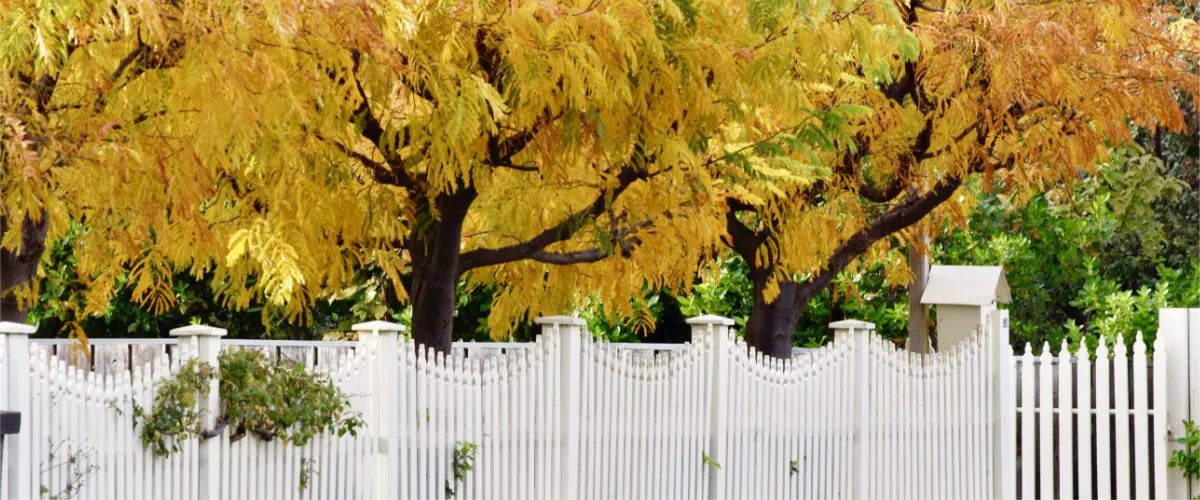
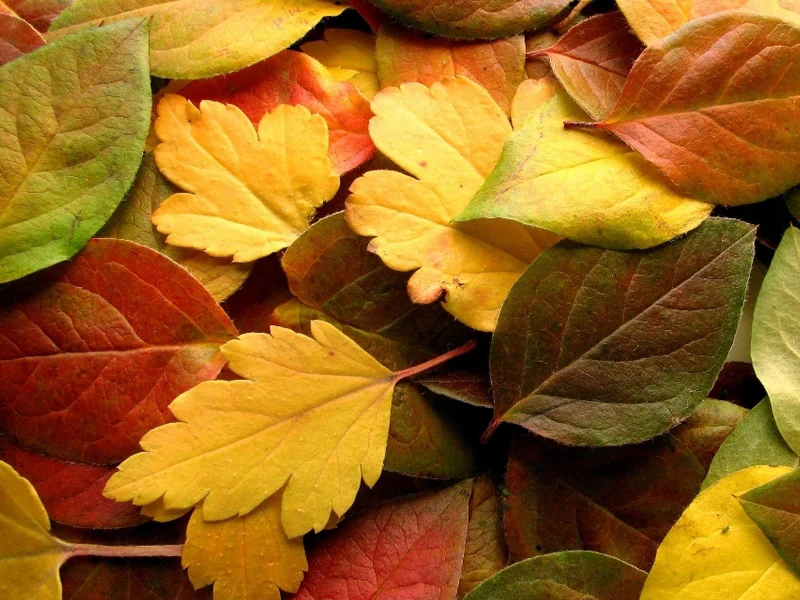
If spring is for pinks, pastels and sunny yellow, summer for soothing greens then autumn belongs to the fiery tones. Oranges, golds and rusty reds glow most intensely as the garden settles into winter, warming the landscape as low-angled sunlight filters through.
Some gardeners shy away from orange flowers, finding them too bold and garish among the softer colours of spring. But autumn’s oranges are softer. Used as highlights amid lashings of green, mingling shades of copper, amber and terracotta enliven the senses during what might otherwise be a dreary time of year.
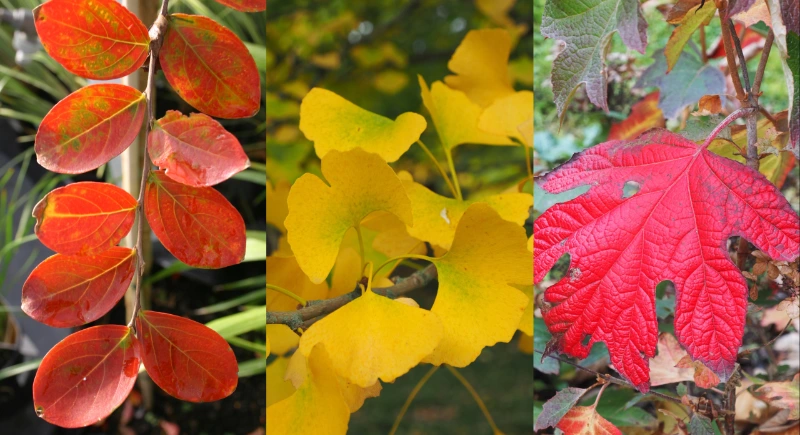
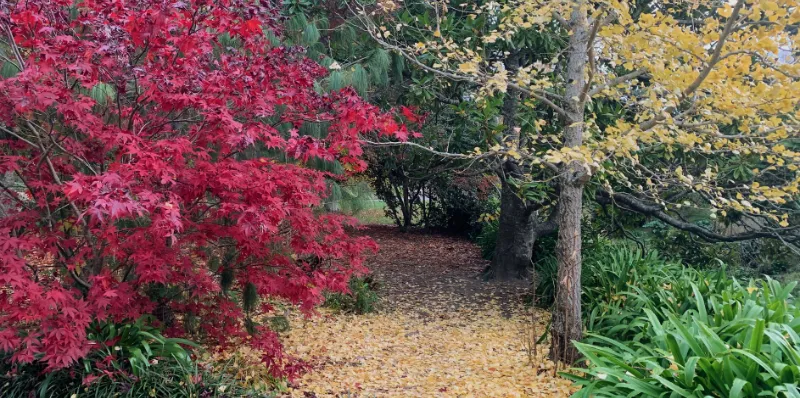
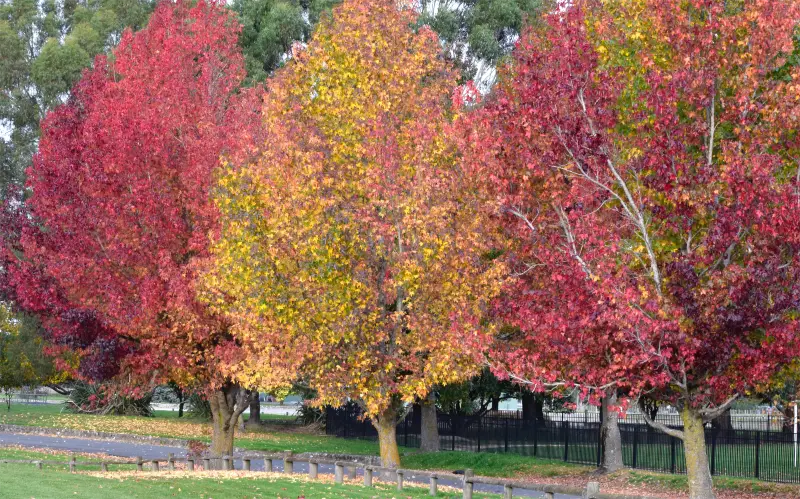
As the days get shorter, the leaves of our favourite deciduous trees and shrubs ignite in vibrant colours, lovely against cooling grey skies before they fall from their branches and melt into the soil.
When we think of autumn colour, we often think of big park-sized trees, but the drama can be created in small gardens too. Maples, flowering cherries and dogwoods are perfect for making a seasonal statement in a town-sized garden. At a smaller scale, the likes of smoke bush (Cotinus) and shad bush (Amelanchier) are seen as large shrubs in park-sized gardens, but in a smaller space they appear as small trees, especially if planted as a feature among lower plantings. Ideal for planter boxes and tubs, the colourful dwarf varieties of Japanese maple provide a spectacle in spring and again in autumn.
When deciding which tree to plant where, consider the angle of the sun. Where an evergreen may cast too much shade in winter, a deciduous tree will let the sun shine through. Allow enough space for a prized specimen to reach its full potential. It is easy to destroy the winter charm of a beautiful deciduous tree or shrub by over-crowding or over-pruning it. Where possible, let beautiful natural shapes and branch patterns take centre stage, unless the goal is an elegant hedge.
A deciduous hedge is a striking feature even in winter. The sprouting of fresh young leaves is a highlight in spring before your hedge becomes completely clothed in summer – when privacy is most needed. Beech and hornbeam are the classic favourites but a charming hedge can be made of any number of interesting deciduous species: crabapples, forsythia, hazel, viburnum, dogwood or deciduous magnolias. Or you could pair something deciduous with an evergreen for a smart two tier hedge.
As the weather gets colder deciduous trees and shrubs prepare for winter dormancy by reducing their production of chlorophyll, the green pigment in leaves. As chlorophyll breaks down, other leaf pigments (carotenoids and anthocyanin) become visible - revealing vivid shades of yellow, orange, purple and red depending on the plant. These changes allow the tree to conserve energy for the following spring. Nutrients and sugars are withdrawn from the leaves and stored in roots, trunks, and branches, while the falling leaves become food for the soil.
Deciduous trees and shrubs excel when underplanted with spring flowering bulbs and low maintenance ground covers like heucheras, mondo grass and ajugas.
Foliage colour comes not only from plants that lose their leaves. Many evergreens also take on richer, warmer tones as temperatures cool. Bergenias (elephant’s ears) provide significant cool season colour, especially in colder winters when their chunky leaves turn various shades of red, bronze, and purple.
Heucheras are colourful all year round, and their vibrant hues are intensified with the cold. For example, Heuchera Marmalade changes from amber to peachy bronze then rich fiery orange. Heucherella Brass Lantern is well known for its seasonal changes, shifting from bright gold with red veins in spring to green with red veins, thenorange-pink in autumn.
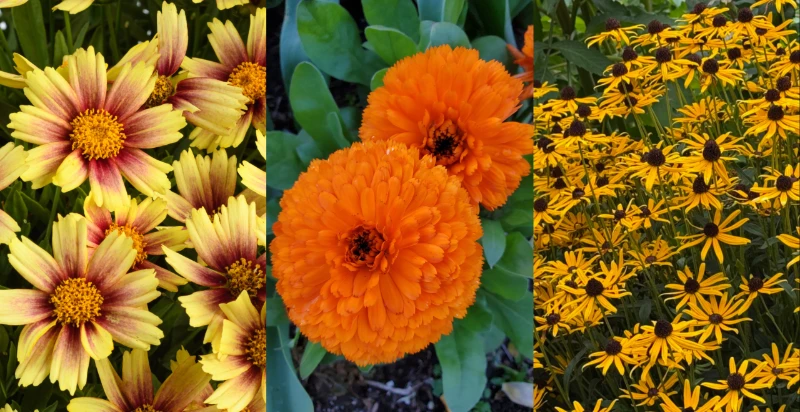
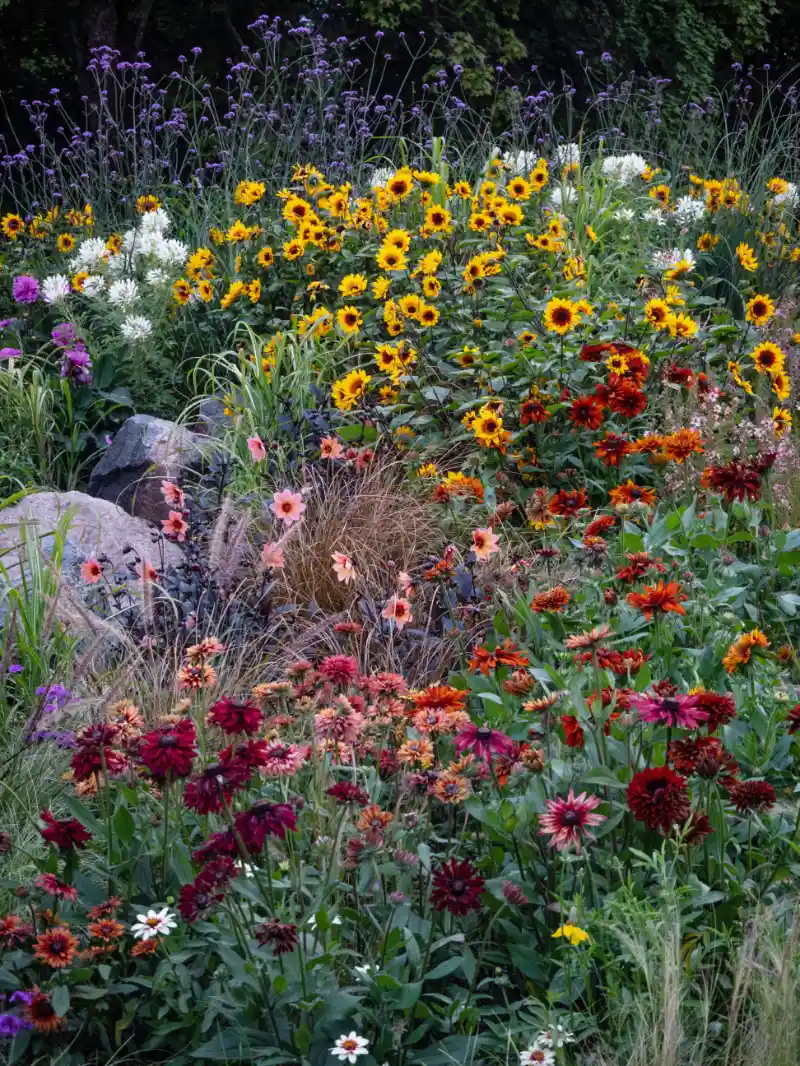
Golden flowers reach a crescendo at this time of year. Autumn lights up with marigolds, chrysanthemums, calendula, coreopsis and rudbeckias, their colours all the more intense when combined with deep blue salvias, tawny grasses and softly ageing hydrangea flowers.
Hot colours for autumn pots can be found among the likes of dwarf ‘Toto’ rudbeckias, vibrant orange or yellow calendulas and mini chrysanthemums (aka ’garden mums’).
Marguerite and African daisies (Argyranthemum, Osteospermum, Arctotis and Gazania) will keep on blooming until the first frost. Dahlias will also flower throughout March and beyond.
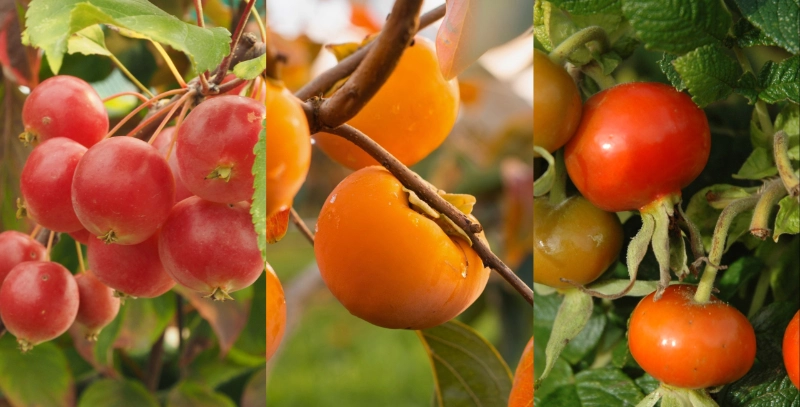
Fruits and berries enrich the autumn scene with the intense reds and golds of harvest time - pumpkins, persimmon, guava, apples and crabapples, quince, cape gooseberries and rosehips. They provide welcome colour both in the garden and indoors at a time when flowers can be in short supply.
Among the best crabapple trees, Malus ‘Jack Humm’ and Malus ‘Gorgeous’ deliver startling displays of glossy red or yellow fruit that last well into winter.
Persimmon trees combine autumn foliage colour with shiny orange fruit. The astringent varieties are arguably the most striking, heavily ladenand a magnet for nectar seeking birds.
Pomegranates follow their bright orange summer flowers with rosy red fruit and golden foliage. They need a long warm summer to ripen properly but are lovely to look at either way. Dwarf Pomegranate 'Nana' is a small ornamental shrub with golf-ball-sized fruit.
Brightly coloured to attract wildlife, fruits and berries contain the seeds that ensure the survival of their species. As intended by nature, birds carry the seeds of their favourite food plants to new locations. Some berry plants are so successfully spread by birds that they’ve become environmental pests. For this reason, the likes of pyracantha and cotoneaster, once popular garden shrubs, are now banned from sale and propagation.
Whether it’s berries, fruit, flowers or autumn colour, planting something for every season creates a ‘living painting' that highlights the changing seasons, benefits biodiversity, and is exciting all year round.In gardening, more than any other art form, we have an extra dimension at our disposal - the gentle passage of time.
Giving rose hips time to develop before pruning lets plants finish their growth cycle. Hips signal to the plant that winter is close, slowing the growth of tender shoots and protecting against frost damage.
Rose hips are food for the birds and edible for humans too, high in many different vitamins. They contain more Vitamin C than citrus. Rose hip tea is said to be a good cleaner for the kidneys and gallbladder.
Wild roses (aka species roses) are known for their plentiful fruit. Among popular garden roses, the old fashioned Rugosa roses are the best known for spectacular hip production. Other popular roses to grow for hips are Mutabilis and the stunning white rambler Wedding Day. In fact, most roses, including favourites like Iceberg and Flower Carpet Roses produce colourful fruits (albeit small) when left unpruned.
Acer palmatum cultivars (Japanese maple), Cercis ‘Forest Pansy’ (and other cultivars), Gingko ‘Jade Butterflies’, Liquidamber ‘Gum Ball’, Parrotia persica, Persimmon varieties, Prunus ‘Pink Perfection’ (flowering cherry)
Amelanchier (shadbush), Blueberry, Cotinus (smoke bush), Fothergilla (witch alder), Hamamelis (witch hazel), Hydrangea quercifolia (oak leaf hydrangea), Physocarpus opulifolius, Stachyurus praecox
Vitis vinifera ‘Purpurea’ (ornamental grape), Vitis coignetiae (crimson glory vine), Parthenocissus tricuspidata (Boston ivy), Parthenocissus quinquefolia (Virginia creeper),
Ajuga, Bergenia, Epimedium, Heuchera, Heucherella
Malus (crabapple), Persimmon, Pomegranate, Rose hips, Skimmia, Viburnum trilobum
Anemanthele lessoniana, Calamagrostis ‘Karl Foerster’, Carex testacea, Chionochloa rubra, Hakonechloa macra. Miscanthus sinensis ‘Gracillimus’