
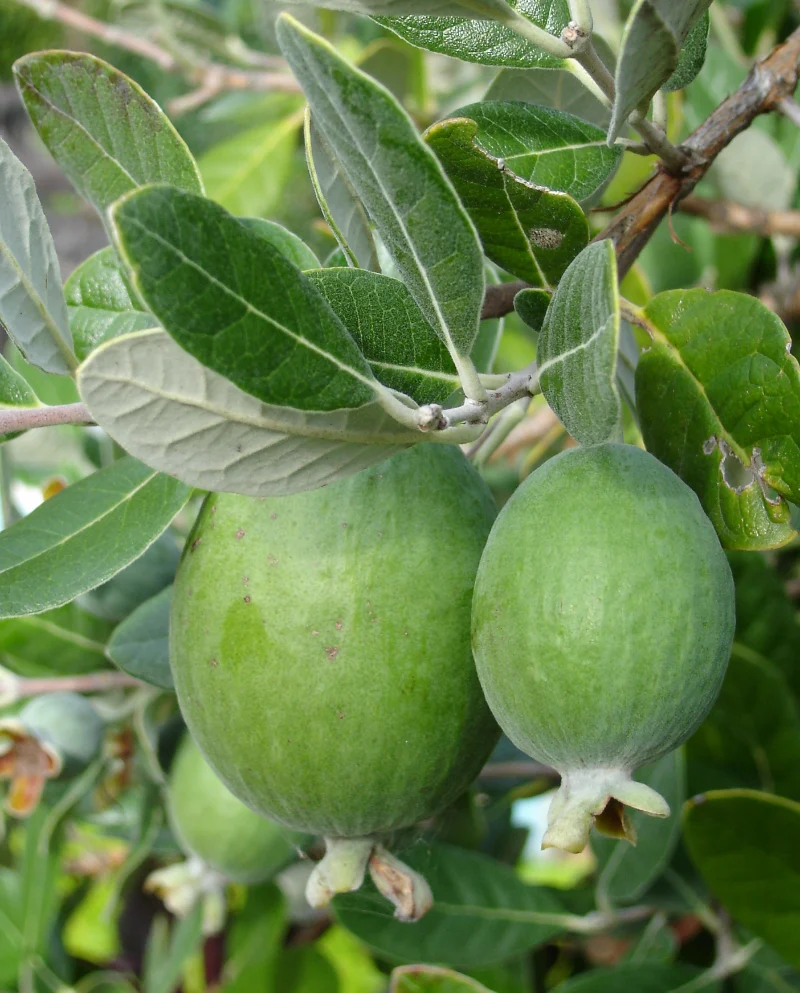

Feijoas are a versatile shrub. They can serve as a hedge, be planted in containers, in groups within an orchard, or integrated into ornamental garden plantings. The trees typically reach a height of 2m to 3m and a width of approximately 1.5m to 2m.
Feijoas are hardy to coastal conditions and can withstand frosts to minus 10℃, although frost cover is recommended in spring to protect new growth. Young trees may need shelter from wind as branches can snap if exposed to strong gusts.
Stake the young tree to secure it while the roots take hold and mulch to retain moisture and suppress weeds. Once established, feijoas are drought tolerant, but they’ll be much healthier and more productive if watered regularly, especially in summer. Feijoas usually fruit 2 to 3 years after planting.
As bushy evergreens, feijoa trees are easily pruned to maintain a desirable shape and size. For optimal fruiting, pruning for a more open framework allows more light and air into the branches - plus birds for pollination. If they get too large, branches can be pruned back hard. Because they produce fruit on new spring growth the best time to prune feijoas is soon after fruiting, to encourage new fruiting wood to grow.
Plant at least two different varieties to aid pollination and increase fruit yield. Some varieties are self-fertile, but even these will produce heavier and more regular crops if they are pollinated by other varieties.
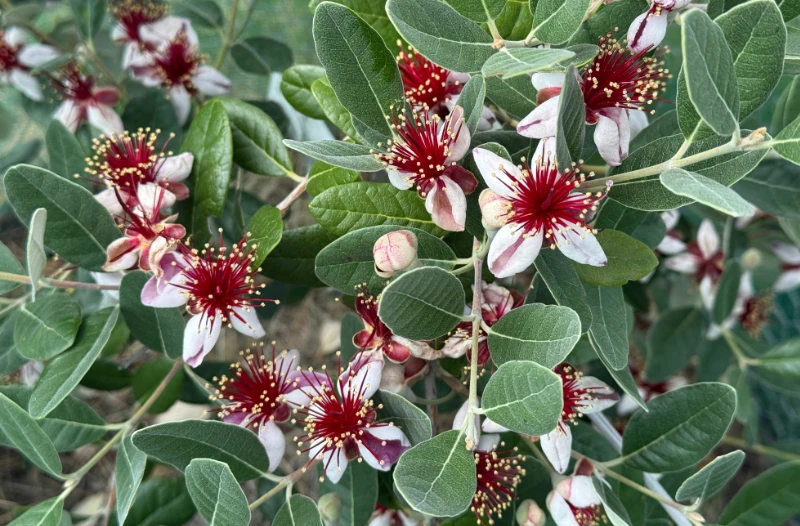
Modern feijoa cultivars (of which there are many) will fruit either early (March to April), mid (April) or late season (May to June). Although they all flower at roughly the same time (November to January), the fruit will ripen at different times, so selecting varieties with different fruiting seasons will spread out the harvest period. If you live in a colder district, plant early-fruiting varieties.
FUN FACT: Feijoa flowers are mainly pollinated by birds, with some help from wind and bees. Keeping the shrub open will attract birds, resulting in more fruit.
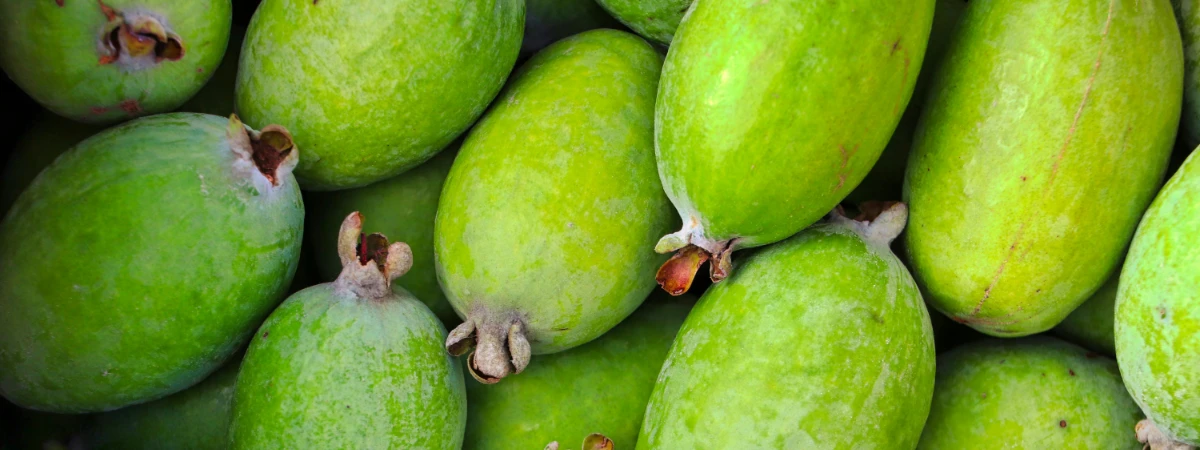
HARVEST TIP: Feijoas ripen best on the tree and will fall when fully ripe. But for optimal ripeness, gently cup the fruit and pull; if it detaches easily, it's ready. If picked this way, fruit should keep a week or more in the fruit bowl. Fruit from the ground lasts only a few days.