
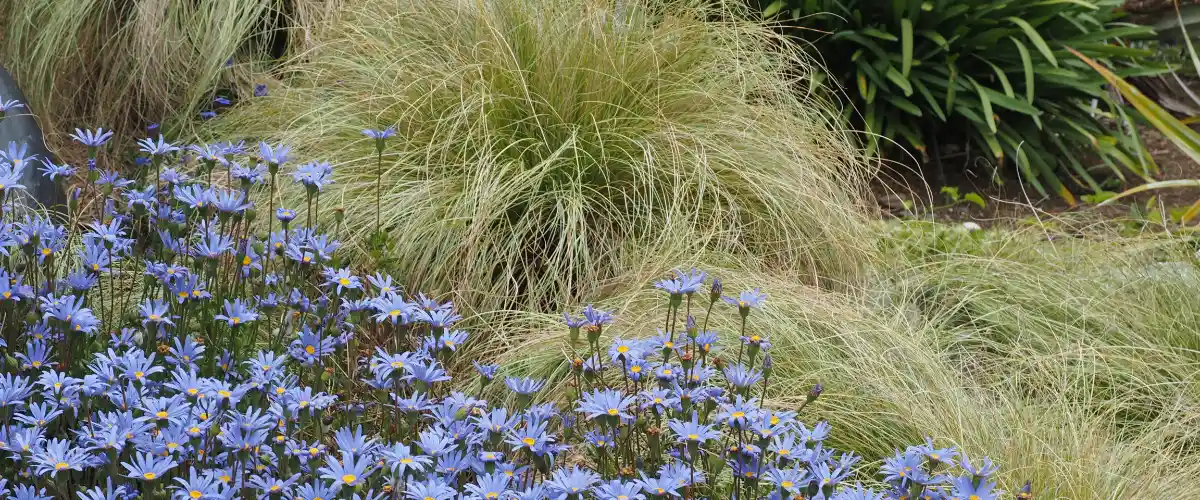

Hardy yet beautiful, ornamental grasses are cherished for their graceful form and tactile quality.Contrasting beautifully with the stillness of broad-leaved plants, smooth stones, sculptural elements, and glassy water surfaces, they offer a rich and varied palette of earthy colours. There is seasonal interest too, with distinctive, often dramatic flower heads.
There are grasses to suit every soil and location. On a dry wind-swept site, an entire garden of drought tolerant native grasses makes a perfect match to a dramatic view or bold architecture. Where there is wet ground, there are grasses to suit. On smaller sites, compact cultivars make useful groundcovers and edging. Many work beautifully in pots.
Choosing a grass that suits your soil and climate is the best recipe for long term success. New Zealand native tussocks from dry alpine climates with gravelly soils may not last long in damp soil or high humidity, but subtropical exotics like Lomandra are very successful in warmer climates.
New Zealand native grasses and sedges are ecologically critical members of our native flora, helping to help stabilise soil, purify water and as habitat for native creatures. Our amazingly diverse Carex species prevail from exposed mountain wilderness down through forest floors to wetlands and coastal dunes. In the garden, they are prized for their resilience and aesthetic appeal. They offer beautiful copper and bronze tones and super fine, hair like foliage. Most are drought-tolerant once established.
Neatly mounding Carex comans is a low grower in shades of soft green and bronze. Taller Carex flagellifera is a graceful bronze-toned sedge loved for its fine arching foliage. The most colourful species, Carex testacea blends olive green with bright copper orange tones, which intensify in cold weather. For the brightest colour, plant it in full sun. Offering a similar fine-textured effect in damp soil, Carex dipsacea has bronze-tinted foliage. Bright green Carex secta is the top choice for wetland planting.
Giant sedge, (Machaerina sinclairii or pepepe) has broad shiny leaves and attractive drooping flowers. Almost flax-like, it has a strong architectural presence, reaching a metre or more in height.
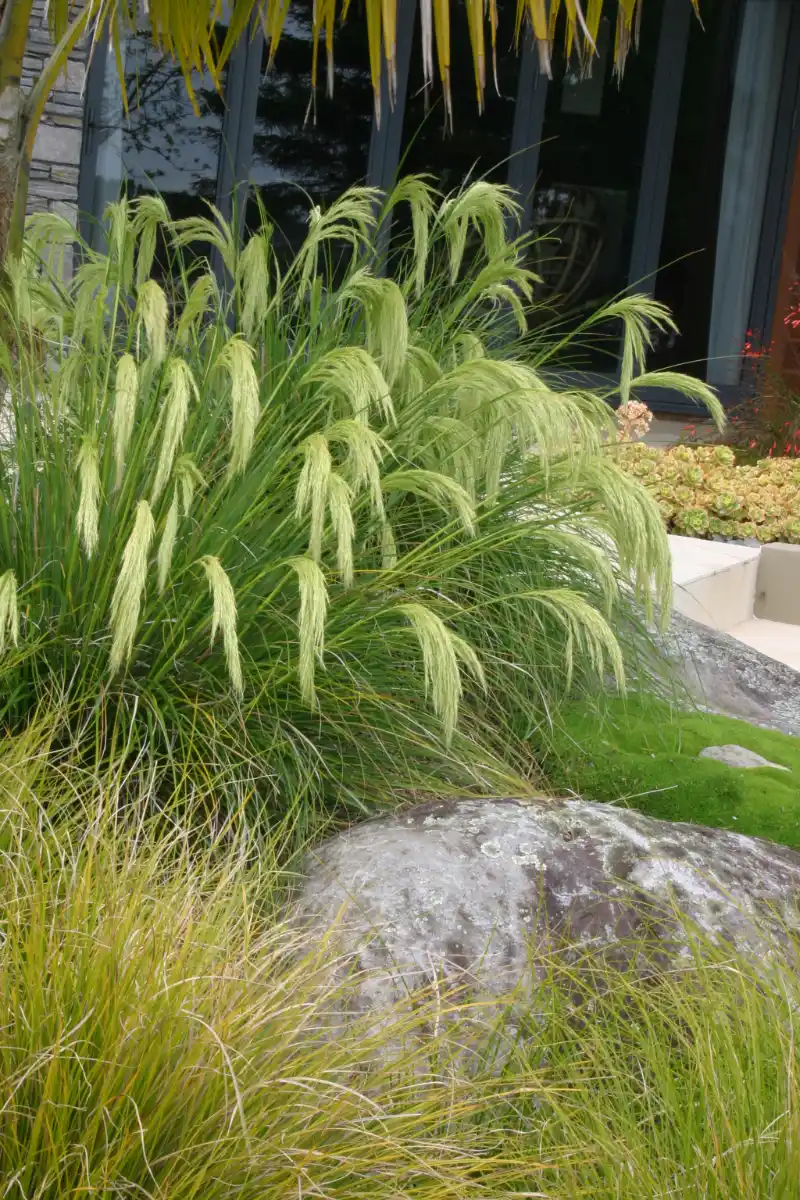
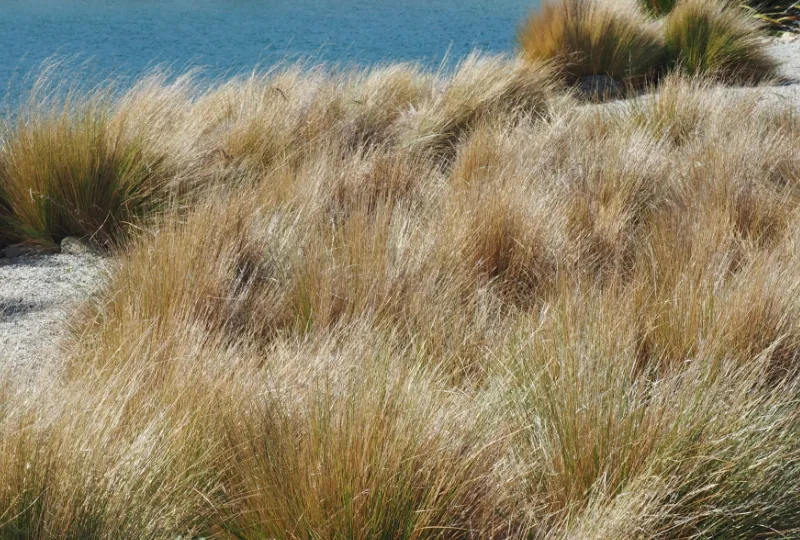
Beautiful NZ tussock grasses make spectacular garden plants. Graceful Chionochloa flavicans grows 80–120 cm tall and is loved for its arching, soft green toetoe-like flower heads.Cold hardy Poa cita is a low grower that thrives in dry landscapes and is stunning en masse.
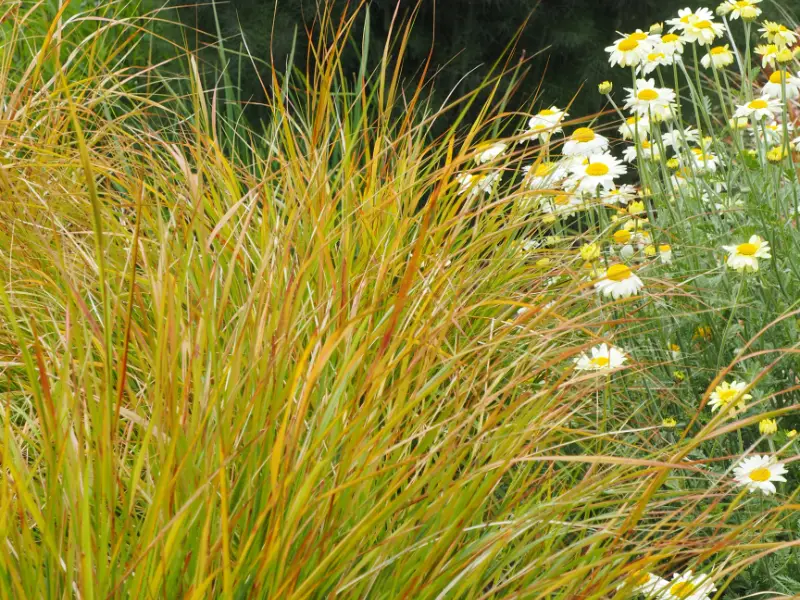
One of our prettiest grasses, Anemanthele lessoniana (gossamer grass) forms a loose, flowing mound that catches the light. Its narrow dancing leaves turn amber over summer and autumn, especially in full sun. Airy flower stems rise above the foliage giving a mist-like effect that adds to its charm. To minimise self-seeding remove the flower heads once the display weakens. Gossamer grass tolerates both dry conditions and shade, forming bold clumps about 80cm high and 1m wide.
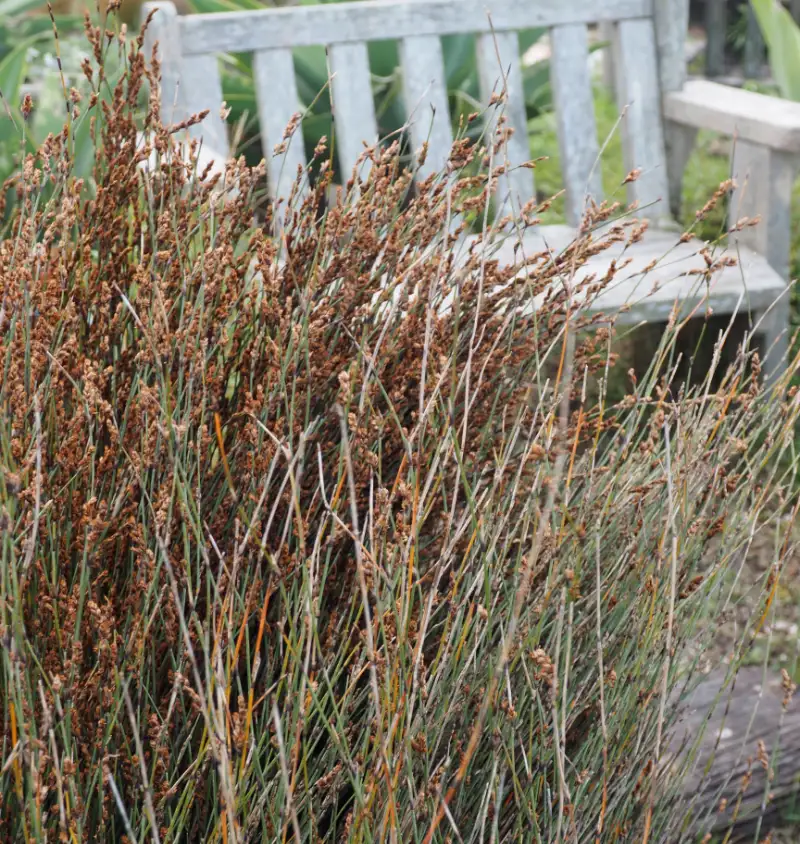
Upright Apodasmia similis (oioi) is another outstanding native. This beautifully structural rush-like plant has fine grey-green leaves with brownish bracts at the joints. It is perfect for mass planting on wet or coastal sites.
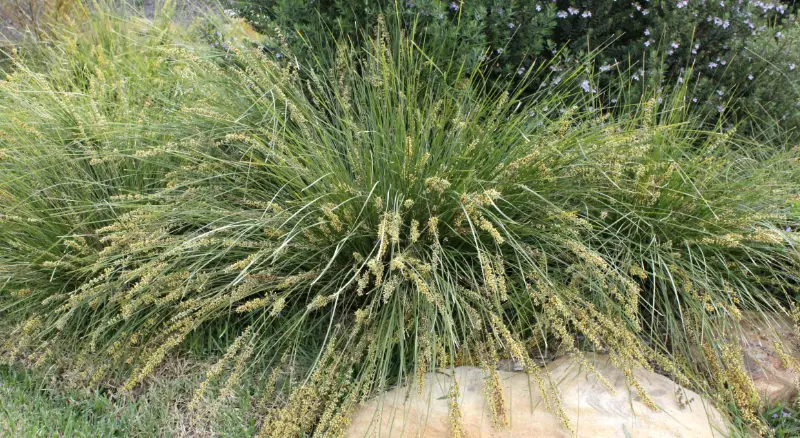
The Australian mat rushes, Lomandra, are deservedly popular for their resilience and lasting good looks in a wide range of situations. They tolerate poor or sandy soils as well as hot, dry, windy and coastal positions, and also grow well in containers.
Lomandra’s strappy leaves form dense, green or blue-green clumps. In addition to their attractive foliage, lomandras produce fragrant flowers in spring or summer. While not showy, the flowers add subtle charm and can attract pollinators.
An ever-expanding choice of Lomandra cultivars covers the scope of landscape possibilities. There are mini lomandras for borders and pots and wider spreading forms for mass planting as weed-stopping groundcover and erosion control. Some have variegated foliage. Others vary in the fineness of their foliage.
The most compact varieties, such as Echidna and Little Con are perfect for borders, containers, and tight spaces. Mid-sized cultivars like Lime Tuff and are great for decorative mass planting. A little taller, Nyalla is great for mass planting and erosion control. As a bold statement try Tanika or lofty Titan (150cm tall).
Offering maximum impact for minimal effort, lomandras require very little attention once established. Cutting mature plants back every few years helps to keep them looking fresh. Mature clumps may be divided every few years to rejuvenate plants and prevent overcrowding.
The Japanese sedges are clump forming perennials perfect for brightening shady parts of the garden as borders, fillers, weed-stopping groundcovers and in pots. Today’s striking cultivars are hybrids of Japanese native Carex oshimensis and Carex morrowii. They pair beautifully with ferns, hostas, and other shade-loving perennials. For year-round impact in the garden or pots, elegant Carex 'Feather Falls’ boasts long, arching green leaves edged in creamy white, and feathery plumes.
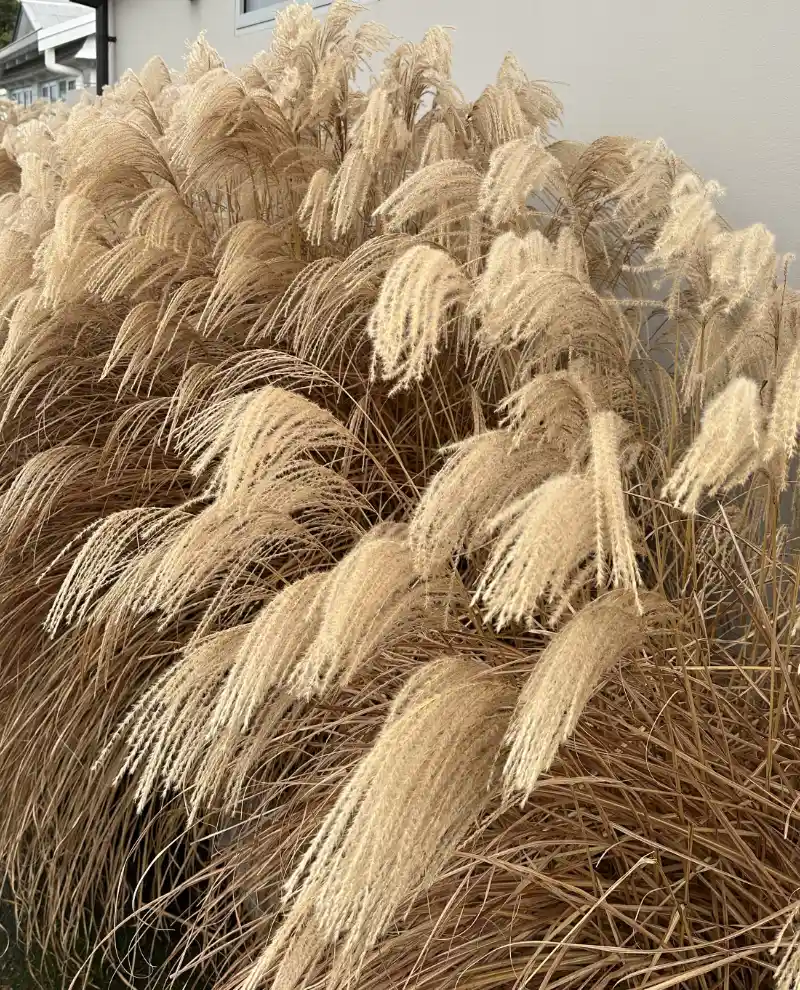
Tall glamorous exotics, Japanese silver grasses (Miscanthus sinensis) and feather reed grass (Calamagrostis) are favourite deciduous grasses that are especially loved in cold climate gardens. Cut back at the end of winter they sprout fresh new growth in spring and make a spectacular backdrop to autumn flowering perennials.
‘MorningLight’, the smaller of the Miscanthus cultivars grows around 1.5m tall and a metre wide, with narrow green leaves edged in white. In autumn and winter its soft pink flowers soften to silver as the foliage turns gold. Calamagrostis × acutiflora ‘Karl Foerster’ is another grass prized for its upright form and stately flower heads held high above the leaves.
Despite looking very similar, grass-like plants belong to different plant families and have distinct characteristics.
‘Sedges’ are members of the Cyperaceae family with solid triangular stems. NZ’s most famous are the Carex sedges. In contrast the true grasses (belong to the Poaceae family) have hollow, round stems and leaves that are often flat or rolled. ‘Tussocks' are true grasses, including the NZ tussocks, Chionochloa, toetoe and Poa cita. Confusingly,plants we call reeds are also in the Poaceae family. ‘Reeds’ are typically tall and upright with hollow stems, and often found in or near water.
In the Juncaceae family, ‘rushes’ are typically upright with solid cylindrical stems and famously fond of wet environments. Juncus edgariae (wīwī) is common in wetlands and one of our most important plants for erosion control and revegetation. Lomandras are known as ‘mat rushes’, but actually members of the asparagus family, as the look of their flowers might suggest.
To keep established grasses looking their best, use a rake or gloved hands to strip away dead foliage. Remove the flower heads of any self-seeders you want to keep under control. Untidy tussocks and deciduous grasses can be cut back close to the ground and they’ll come away again with renewed vigour in spring. Grasses can also be lifted and divided every few springs to keep growth fresh and vigorous.