

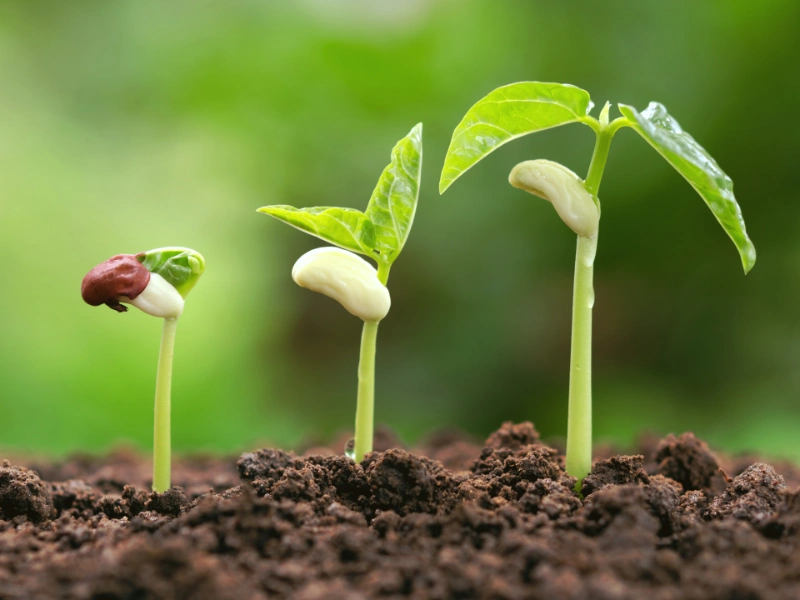
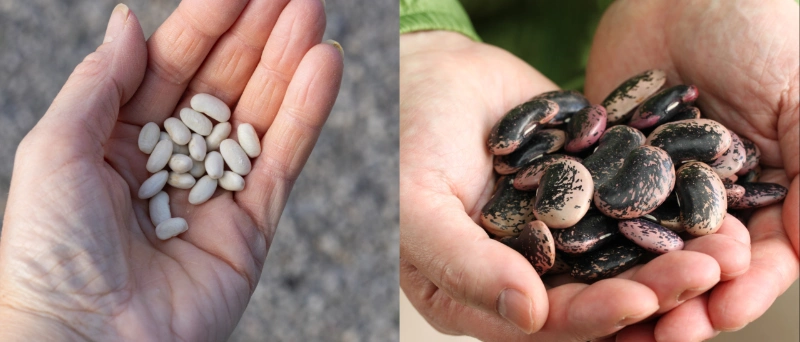
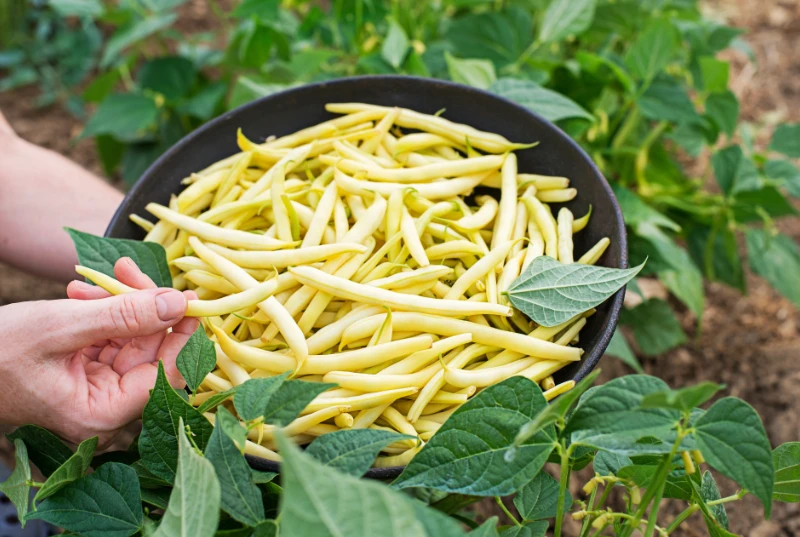
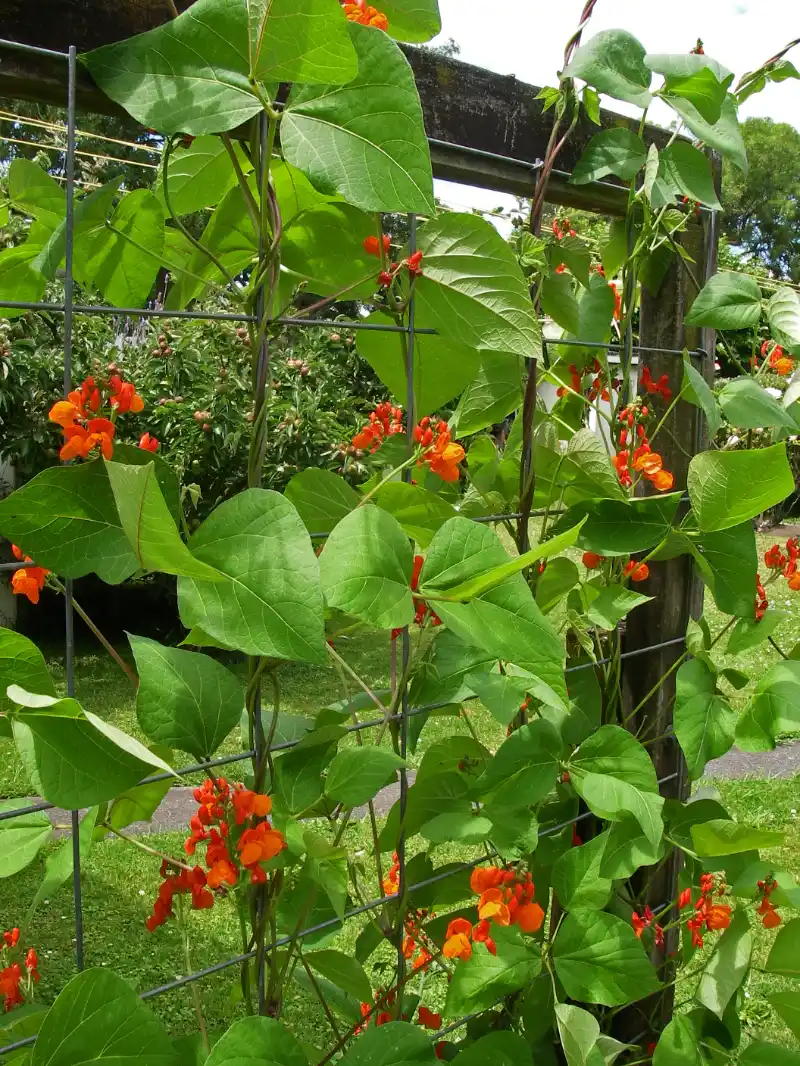
Beans grow best when seed is sown straight into warm garden soil, but before sowing seed, decide if you are growing dwarf or climbing beans (or both!), as the climbing ones will need something to climb on - a trellis, teepee or frame. It is much better to install the support structure first, rather than trying to put it in later and damaging the plants.
Despite it being easy enough to grow beans indoors in containers, they prefer to be planted outdoors directly into the soil, and they don’t like being transplanted. The soil needs to be warm enough for successful germination. Any colder than 18-20°C and they will just rot away. This just happens to be the kind of temperature where the risk of frost is all but past.
In good soil, beans generally don't need extra nitrogen fertiliser because of the beneficial nitrogen-fixing bacteria that lives in their root nodules. If the soil has too much nitrogen, you may end up with all leaves and few beans.
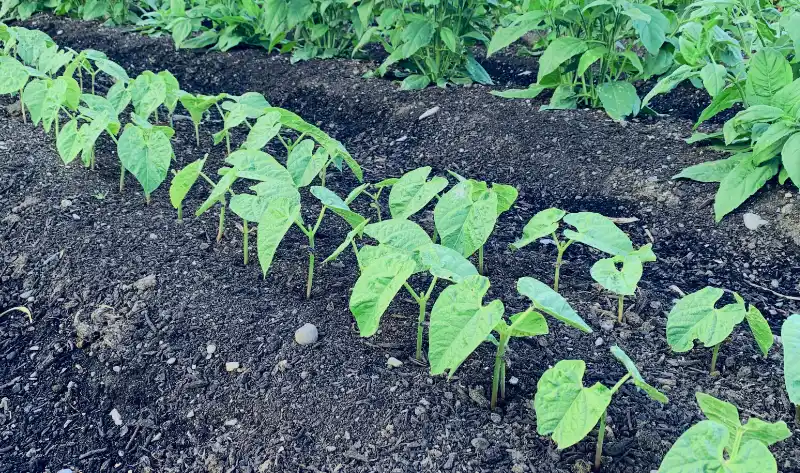
Sow beans about 15cm apart into well-watered soil and then try not to water them again until they germinate, to avoid the risk of rotting the seed. In 8–10 weeks you will begin to have more beans than you know what to do with!
Climbing beans take about three months to mature, but they produce about three times the yield per square metre as dwarf beans and will keep on bearing until the first frost.
Dwarf beans mature very quickly to produce the bulk of their crop over a two-week period. To achieve a non-stop summer-autumn supply for a family of four sow 15-20 dwarf bean seeds every three weeks from October to January.
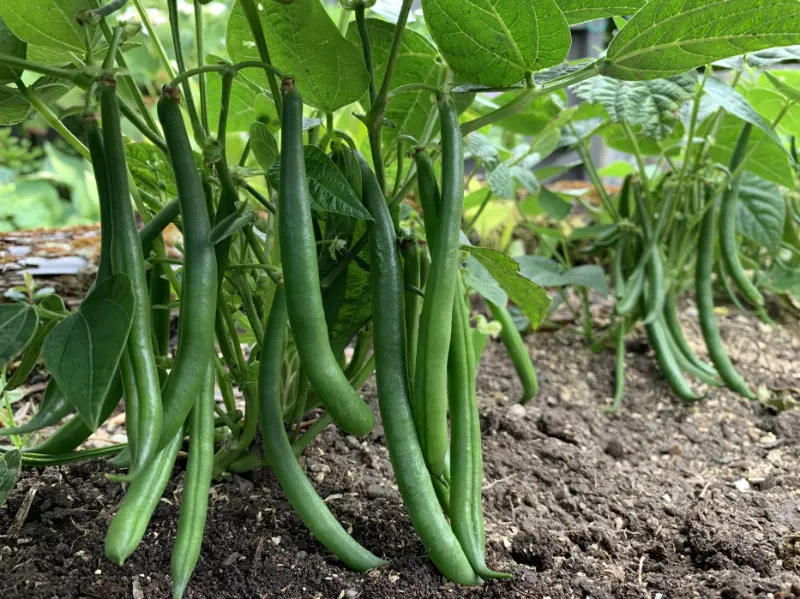
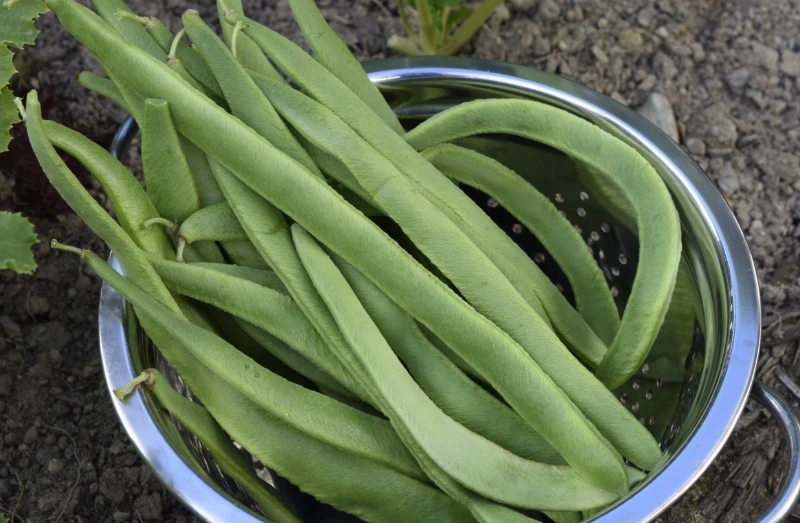
Pick beans frequently and eat them while they are young and tender.

