
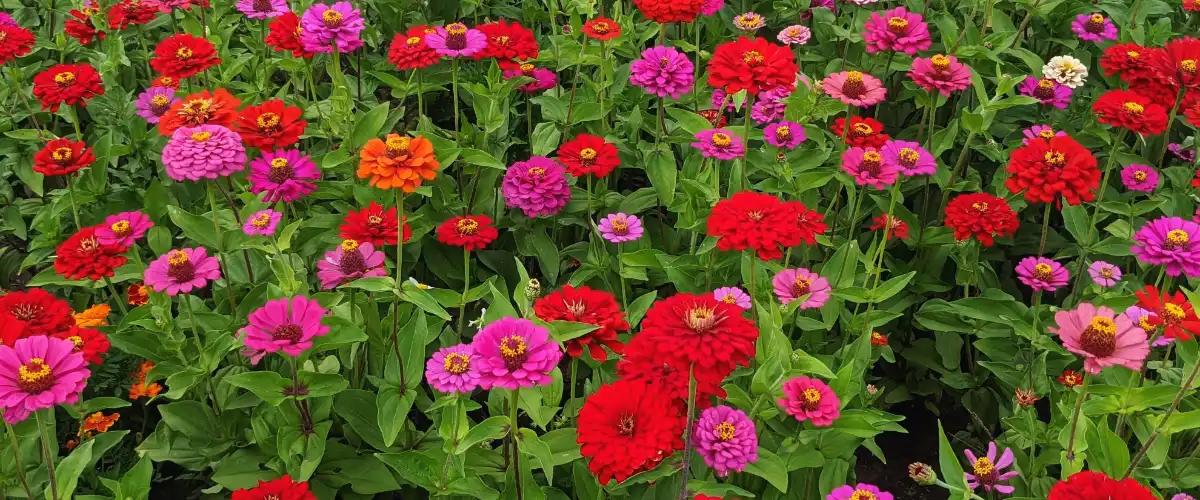

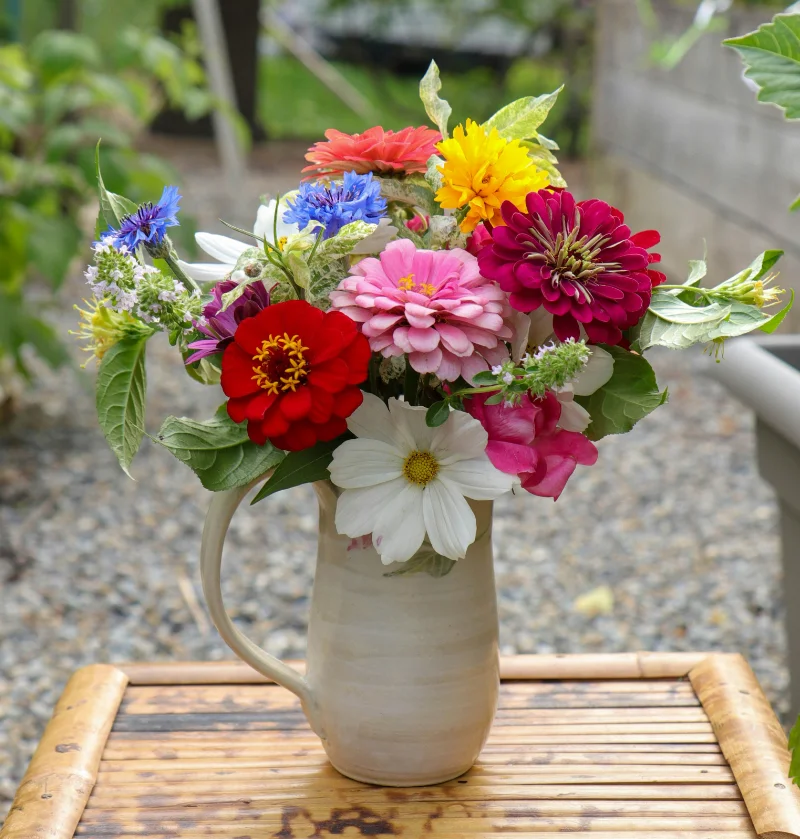

Zinnias bright colours, long flowering season (summer and autumn), and appeal to bees and butterflies make them an excellent choice for cottage gardens, flower beds and cut-flower gardens. They last well in a vase and are perfect for posies.
Zinnias are easy to grow from seed, and seedlings from your garden centre, in all parts of the country when the weather warms up. The range of colours, heights and flowers shapes are greater if grown from seed purchased from a specialist seed company.
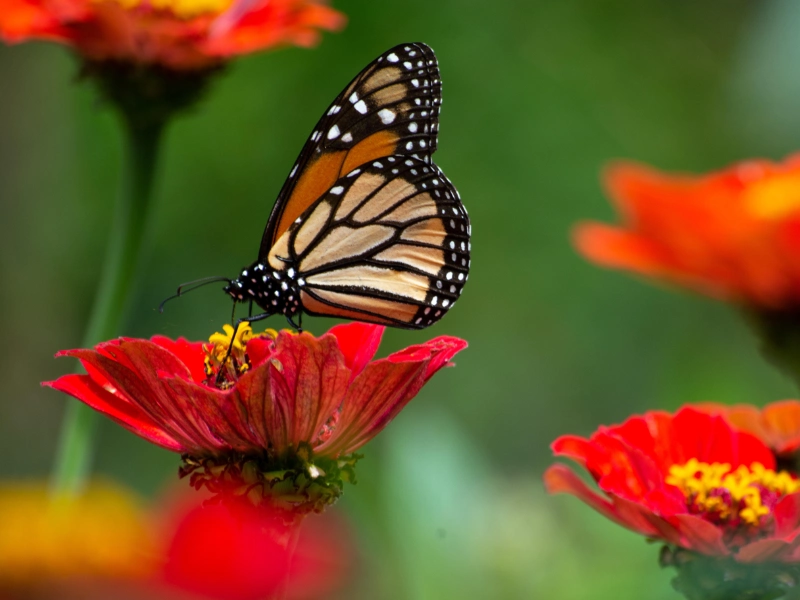
Bees, butterflies and other beneficial insects are attracted to them. They are a reliable food source for Monarch butterflies with their long blooming season, and the sturdy, open blooms provide a good landing pad for bees and butterflies.
Whether you grow a few plants in pots or fill a whole garden bed, zinnias provide a generous display for relatively little effort.
Zinnias are frost-tender annuals, so wait until the danger of frost has passed before sowing and planting outdoors. The best time to plant depends on where you live. Warmer regions can start sowing seed late September with successive sowings every few weeks through to January. Cooler regions should delay until late November, and sow no later than mid-summer.
Zinnias grow best in a garden that receives all day sun and has fertile and free-draining soil. Before sowing or planting, loosen the soil and mix in compost and a sprinkling of a balanced general garden fertiliser. Avoid adding too much fertiliser, especially one high in nitrogen, as this can encourage leafy growth instead of flowers. Grow zinnias in pots and raised beds if your soil does not drain well.
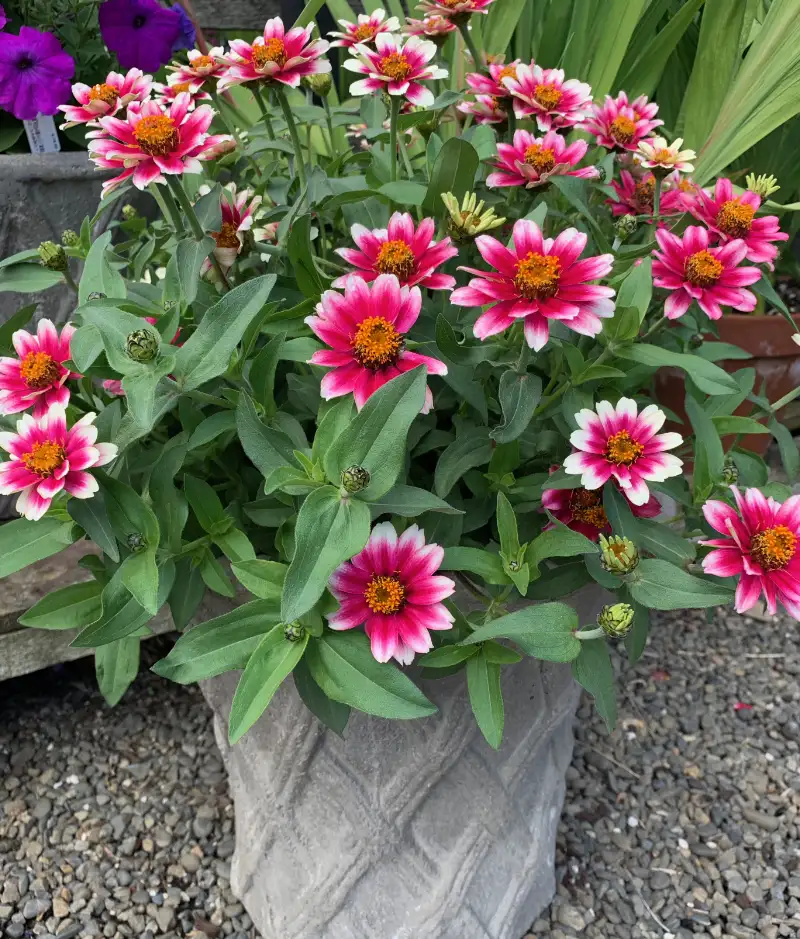
Zinnias do well in containers, making them a good choice for patios, courtyards and smaller outdoor spaces. Choose a pot at least 30 cm deep with good drainage holes and fill it with good-quality potting mix. Compact and dwarf varieties are especially suitable for pots.
Potting mix can dry out faster than garden soil, so check your containers often and water regularly during hot weather.
For a cottage-garden look, mix varieties of different heights and colours. Zinnias also look lovely with other ‘cottage’ summer flowers such as strawflowers, cornflowers, marigolds, sunflowers and cosmos. For a stand-out display, plant groups of the same variety together, either in colour blocks or mixed colours. Grow a mixture of heights for cut flower - long for bouquets and short for posies.
Zinnias are annuals (only grow for one year) but they can self-seed if flower heads are left on the plants; you’ll find new seedlings popping up the following summer.
Zinnias are easy to grow from seed, either into seed trays or directly into the garden. They need warmth and seeds will germinate best when the soil temperature is above 20°C. Sow seeds 5–6 mm deep; seedlings often appear within 7–10 days.
When seedlings have their first true leaves and are about 5–8 cm tall, thin them out or transplant them into their final position. Leave 20–25 cm between smaller varieties and 30–45 cm between taller varieties.
Zinnias will struggle to grow if they are planted too early. Although the seeds may germinate, cool spring temperatures can stunt young. If you are unsure if the weather is warm enough, wait another week or two. Zinnias will grow quickly when the conditions are right.
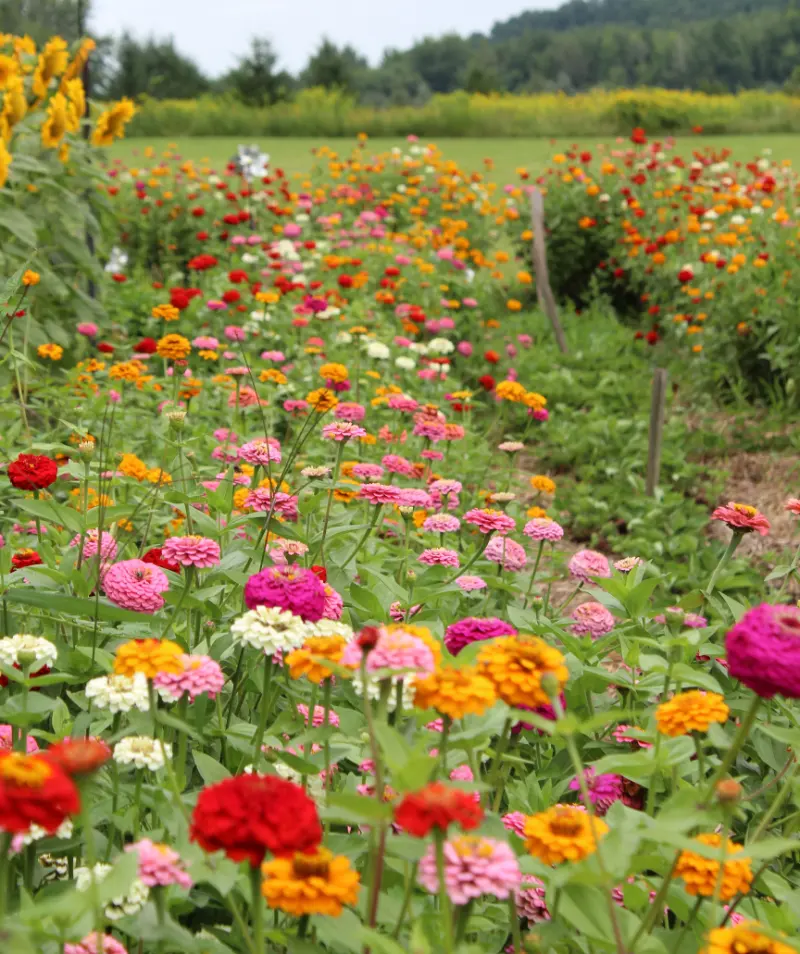
Zinnias are a great choice if you want to grow your own cut flowers. Plant them in rows so they are easy to reach when it is time to harvest. Taller varieties are useful for arrangements because they produce longer stems. Shorter varieties go well in posies. Pick flowers when the blooms are fully open as zinnias do not open further once cut. The stem should feel firm, not wobbly, just below the flower head. Pick at cool times - early morning or late evening - cut the stems on an angle, strip off the lower leaves and set into clean water immediately.
Once they are established, zinnias are easy to care for.
Water deeply but not too often to encourage deep strong roots. Use a light liquid fertiliser every three to four weeks during the growing season, but do not overfeed your plants, as too much fertiliser discourages flowering.
When seedlings reach about 10–15 cm tall, pinch out the growing tip. This encourages the plants to grow more side shoots, helping them become bushier with more flowers.
Remove flowers (deadhead) as they fade to encourage the plant to keep producing new blooms. Regular deadheading will keep zinnias flowering until autumn.
Keep an eye out for aphids, mites, caterpillars and powdery mildew. Remove diseased leaves promptly to help improve airflow. If needed, Yates Rose Gun ready-to-use spray will provide control.
Stake taller varieties if your garden is exposed to wind and add mulch around plants to help the soil hold moisture.