
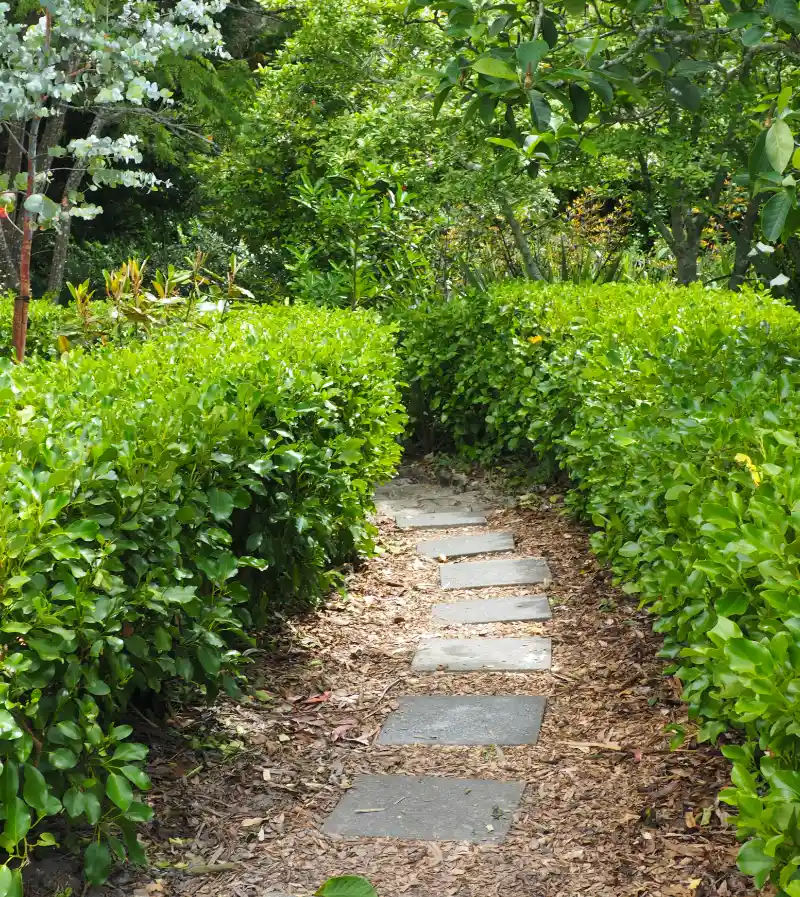
The refined natural beauty of a well-kept hedge is the best kind of garden wall of all. Above eye level, hedges offer privacy, screening and shelter. Trimmed low, they define garden lines, and give permanent shape and structure for a garden that looks good all year round.
While almost any species can be grown as a hedge, shrubs that make the best hedges are smaller leafed, dense growing evergreens. Ideally, they’ll need trimming no more than two or three times a year. It’s important to consider soil and climate when deciding which hedge to plant, but these tough natives will thrive in a wide range of situations.
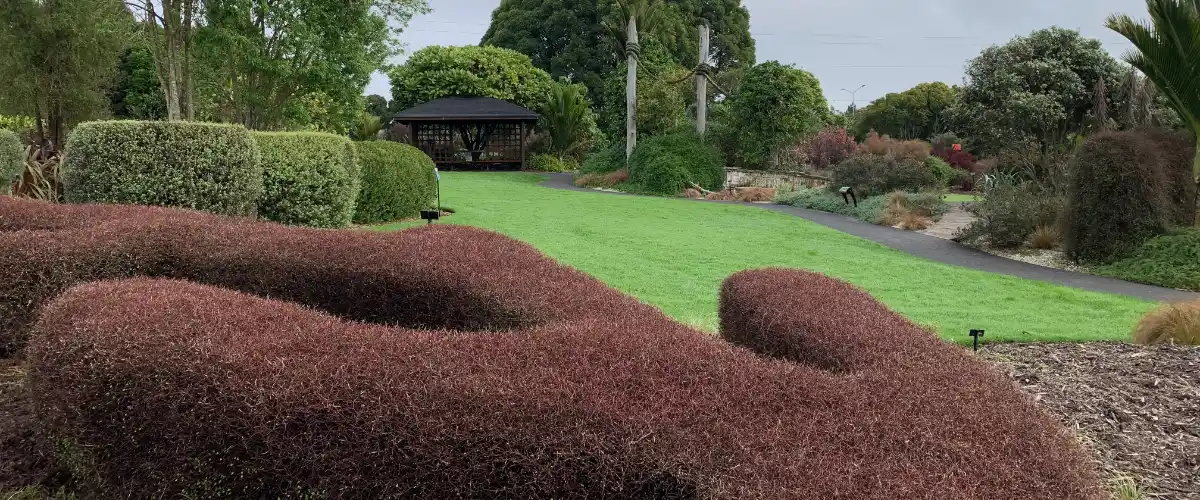
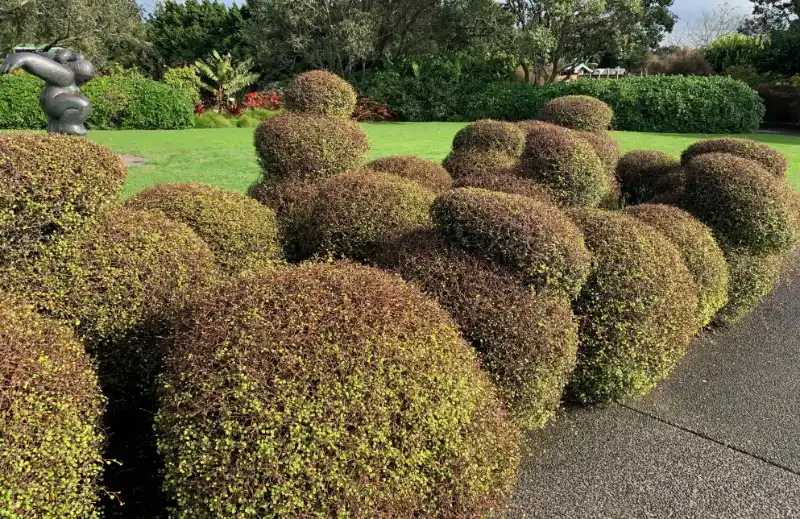
Highly prized for their distinctive thick, wiry growth and tiny leaves, our corokias (aka korokio) are a top choice for sculpting into strong architectural forms. As a bonus to their impeccable foliage they produce tiny yellow star flowers in spring. Red berries follow in autumn, which makes corokias some of the best bird magnets in the garden, especially when left untrimmed.
So good are the corokias, that dozens of named cultivars have appeared on the scene in recent times, offering an enticing choice of different colours and textures. Many of them are selections of Corokia x virgata, a cross between the small leafed species, Corokia cotoneaster, and larger leafed Corokia buddleioides.
Two of our most time-honoured favourites are Corokia Geenty’s Green and Corokia Frosted Chocolate. The multi-toned leaves of the latter combine, olive greens, warm russet browns tones and silver, the young growth imparting a lavender sheen en masse. Geenty’s Green leaves are pure olive green with white undersides. Both have excellent bushy growth that responds beautifully to trimming, ideal for hedges between 1 and 2m tall.
For a misty, silvery sheen that contrasts beautifully with darker greens, the similar looking (but subtly different) cultivars Silver Prince, Geenty’s Ghost, Silver Ghost and Little Prince, all make excellent small to medium hedges or topiaries, with small wiry leaves covering thick compact growth.
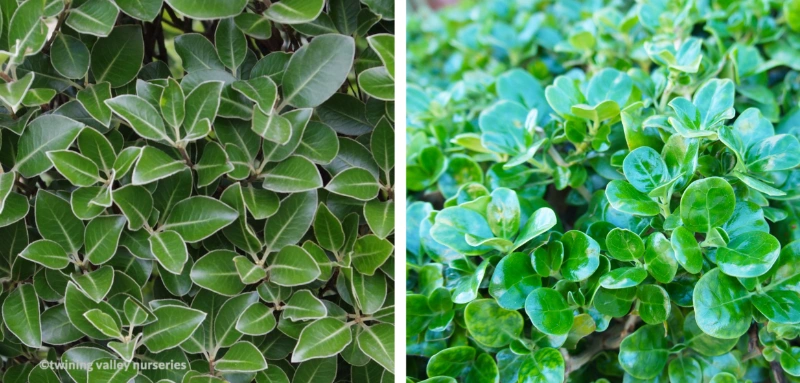
For a greener hedge, Emerald and Jade, and Clover are recent additions to the corokia wardrobe which are becoming very popular for their fine textured foliage in rich shades of green on green.
Corokias are best trimmed little and often, at least twice a year, ideally in winter and again in summer. They will tolerate dry, exposed sites. Though well suited to coastal areas, some varieties are sensitive to salt spray. Plant 50-70 cm apart.
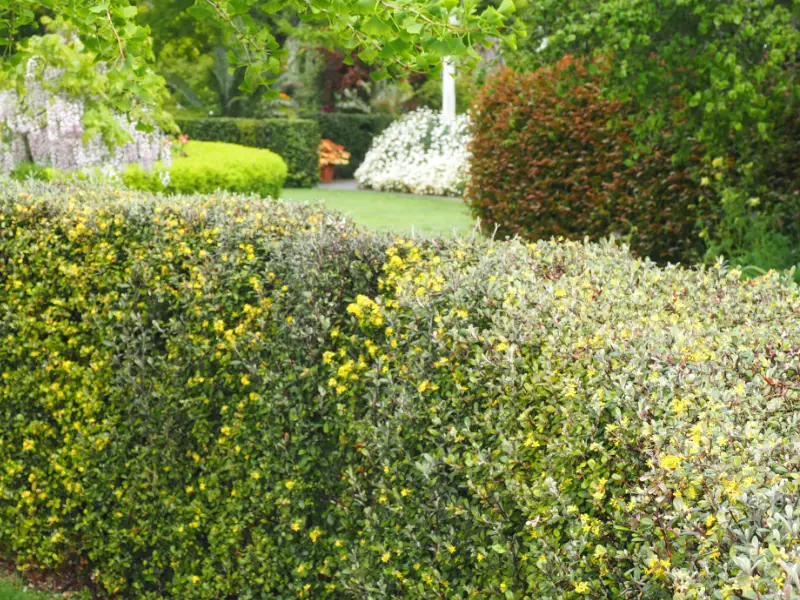
Low growing and bushy, Sophora Dragon’s Gold is perfect for gardens lacking space for a regular Kowhai tree. Dragon’s Gold flowers over a longer period than its larger cousins, often commencing in mid winter. As well, its attractive close-knit foliage makes it a strong contender for hedging at 1 to 1.5m tall, reaching about 2 metres tall and wide when left untrimmed. As a bonus, Dragon’s Gold is loved by nectar seeking birds.
New Zealand pittosporums are long time favourites for privacy screening in urban gardens. Surpassing a raft of pittosporums that have gone before it, is a cultivar originating from Stephens Island in Cook Strait, where harsh salt laden winds prevail. Pittosporum Stephen's Island has become today’s leading choice as a tough dense hedge, informal or trimmed, with extremely attractive dense foliage that is lovely for picking. It thrives in a range of soil types, provided it is well drained. It is reasonably drought-tolerant once established and great for hedges 1-2.5m, growing about 4 metres tall and wide when left untrimmed. Plant 50-100cm apart.
Catching the winter sun with their high gloss leaves, the mirror coprosmas (Coprosma repens) are great as quick growing hedges in frost-free climates and coastal gardens. One of many brightly coloured cultivars, Karo Red sports bright shades of purple, red and green. In citrus tones, Lemon ’n’ Lime is another standout. Or try Pacific Sunrise for wavy multi-toned leaves with hot-pink highlights. A real statement in winter,Coprosma Inferno or Ignite radiate warm vibrant reds. If green is your colour, Coprosma Middlemore makes a superb 1m hedge in bright shimmering emerald. Plant coprosmas 50-70 cm apart and trim regularly to a height of 50-100cm.
As a taller hedge that contrasts beautifully with the mirror coprosmas, Coprosma virescens (mikimiki) has an elegant weeping form with dense tangled growth coated in tiny coppery-orange leaves that glisten after rain. Left untrimmed it makes a striking tall screen, but it can also be trimmed as a tall formal hedge up to 2 meters tall.
Griselinia littoralis has become one of our most popular and omnipresent hedges - for good reason. It is quick growing and practically bulletproof in a wide range of hostile environments, including coastal. Hard frost is its only real enemy. Popular Broadway Mint is now accompanied by equally tough darker green Ardmore Emerald, and bronze-stemmed Canterbury for hedges 1 to 3m tall. For a smaller option Griselinia Gecko Green is a newer,more compact form with dense foliage and smaller leaves.
Hebes are favourites among small flowering hedges. As our most diverse native shrub genus, they offer a bewildering choice of cultivars. Those with tight packed foliage make the best hedges.
Some hebes are grown primarily for their foliage. Hebe Red Edge is constantly colourful, even when not in bloom,with glowering red leaf margins. Neatly compact Hebe Emerald Green makes a good low hedge up to 40cm tall.
Unlike many hebes, Hebe Wiri Mist will regenerate from inner bare wood when trimmed, making it one of the best as a hedge. With masses of snowy white flowers from late spring it is tough and easy care. Another top performing Hebe, Hebe Wiri Charm offers masses of rose purple flowers, peaking in summer. It makes a colourful display up to 50-75cm tall.
Hebes grow best in moist,well-drained soil. Keep young plants well watered until established, especially over the summer months. Regular trimming will help prolong a fresh and youthful shape. Because hebes flower on new growth, it is best to trim immediately after flowering in mid to late spring. Another trim in summer is worthwhile to maintain compact leafy growth. Plant 40-50cm apart.
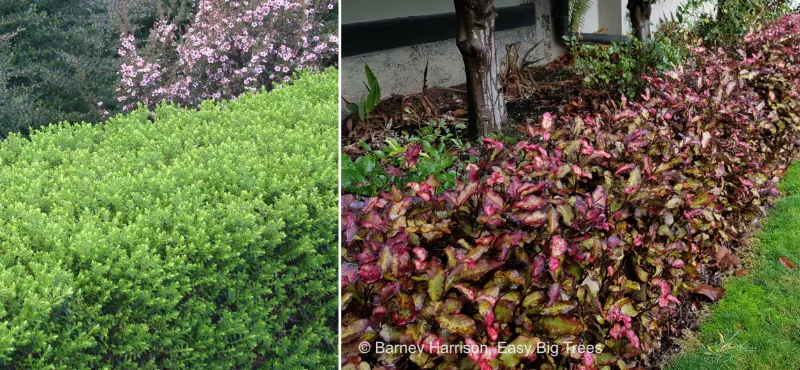
A low sweeping curve of colourful Pseudowintera makes a vibrant accent between green lawn and shrubs. Compact and colourful forms like Red Leopard and Burgundy Delight are stunning in the winter garden and are great as low border hedges.
With tiny heart-shaped leaves on lacy brown-red twigs, Muehlenbeckia astonii is a beautiful lacy textured native shrub that’s superb either as a billowy informal hedge or trimmed to more formal shapes. This one is excellent for windy and coastal sites.
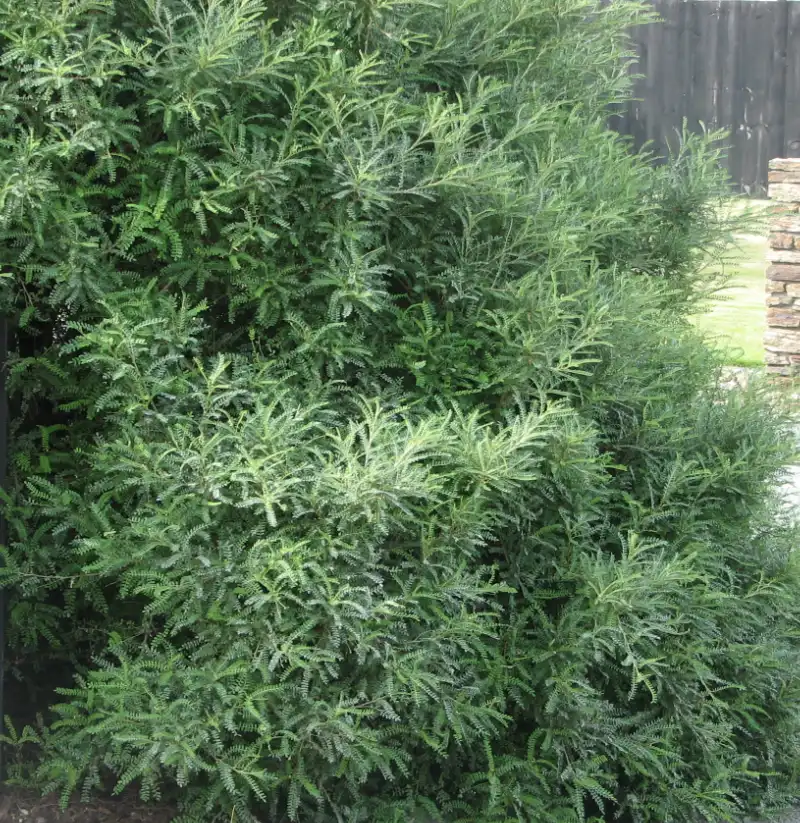
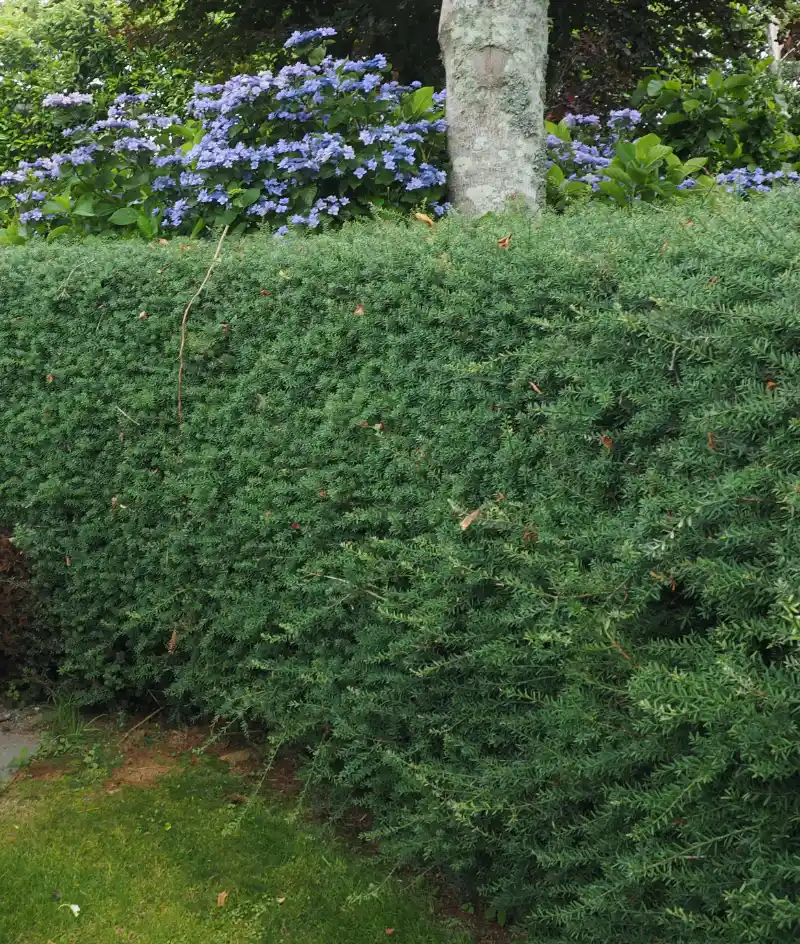
Podocarpus totara Matapouri Blue is a blue-green variety of totara which makes a stunning hedge with thick dense yew-like growth. It can be trimmed at a metre but it is also a great choice for taller hedges of 2 or 3m. Plant 50-70 cm apart.