
The fresher the fruit, the crunchier, sweeter, and more nutritious it is. We have known for at least ten thousand years that the best way to eat an apple is straight from the tree - apples are deeply entwined in human history, art and mythology. Somewhere along the way, the apples that grew in the wild gave rise to the popular eating apple, Malus domestica, we all know today.
Since arriving in New Zealand with the missionary Samuel Marsden in 1819, apples have truly flourished. They are now our third biggest export fruit after grapes and kiwifruit. Our dynamic pip fruit industry has become a world leader with its superior fruit exports, research and development.
It is our climates and soils that make New Zealand one of the best places in the world to grow apples and pears. While they are grown throughout the country, Hawkes Bay, Nelson, and Central Otago are our top apple regions.
Apples thrive in rich well drained soils where there are cool winters for winter chilling followed by warm springs and ample summer sun, ideally during a dry summer. Pests and diseases are more difficult to control when the growing season is wet.
Of the many thousands of Malus domestica varieties available today, only a select few are considered worthy of mass production. As growers responded to market trends, the number of varieties grown in commercial orchards has fallen dramatically over the years.
Leading varieties fill orchards and supermarket shelves but home gardeners need not be drivento what sells best on supermarket shelves, travels well and produces the highest yield per hectare. There is a much wider choice of varieties to enjoy when you grow your own.
Among those who know that the tastiest cooking apple or the one that grows on the most disease resistant tree is not always the shiniest, there is rising interest in rekindling old and rare varieties.
Rescued from a very old tree in the Manawatu and now available in garden centres, Monty’s Surprise is hardy and versatile. The large late ripening fruit, pale green with a red stripe, is beautiful for cooking and found to be very high in health-boosting antioxidants. Another old favourite, ‘Bramley’s Seedling’ was developed for lighter free-draining soils and is great keeper, ripening mid to late season. Aromatic ‘Belle de Boskoop', has russeted skin that’s not so eye-catching on modern shop shelves, but this heritage apple is well known for its firm crisp texture and full, tart flavour. It will keep for 3-4 months and gets sweeter with storage.
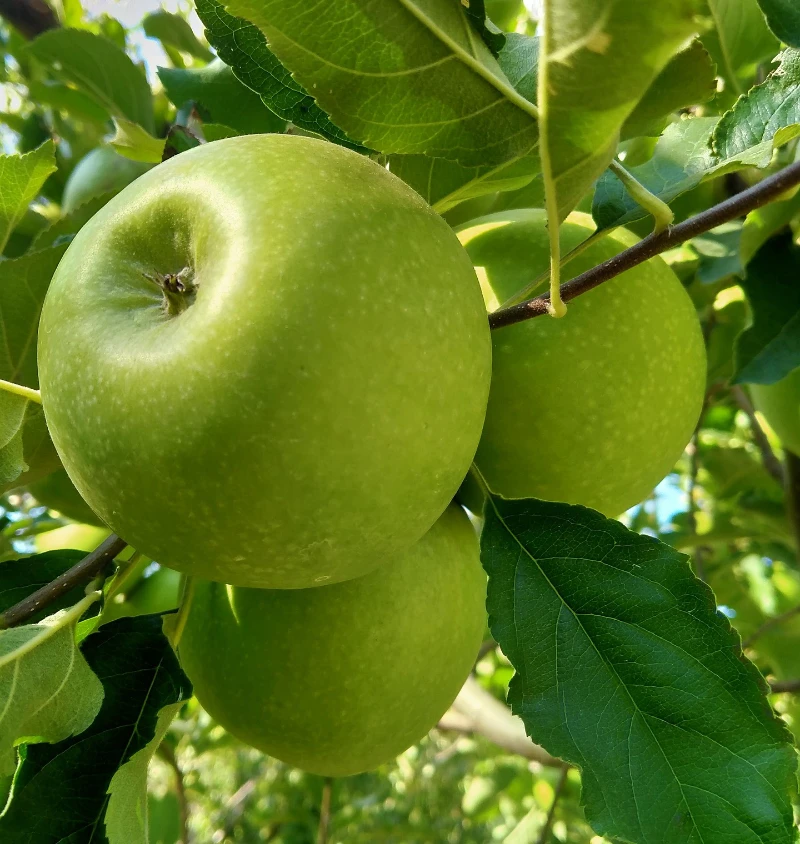
Orchard favourites that have been surpassed for export but still deservedly popular ,are sweet Golden Delicious and beloved tart Granny Smith with its bright shiny green skin. Granny Smith is one of the best for cooking and keeps well. Also, it is self-fertile and an excellent pollinator for other apple varieties. Granny Smith originated from a chance seedling in Australia in 1868.
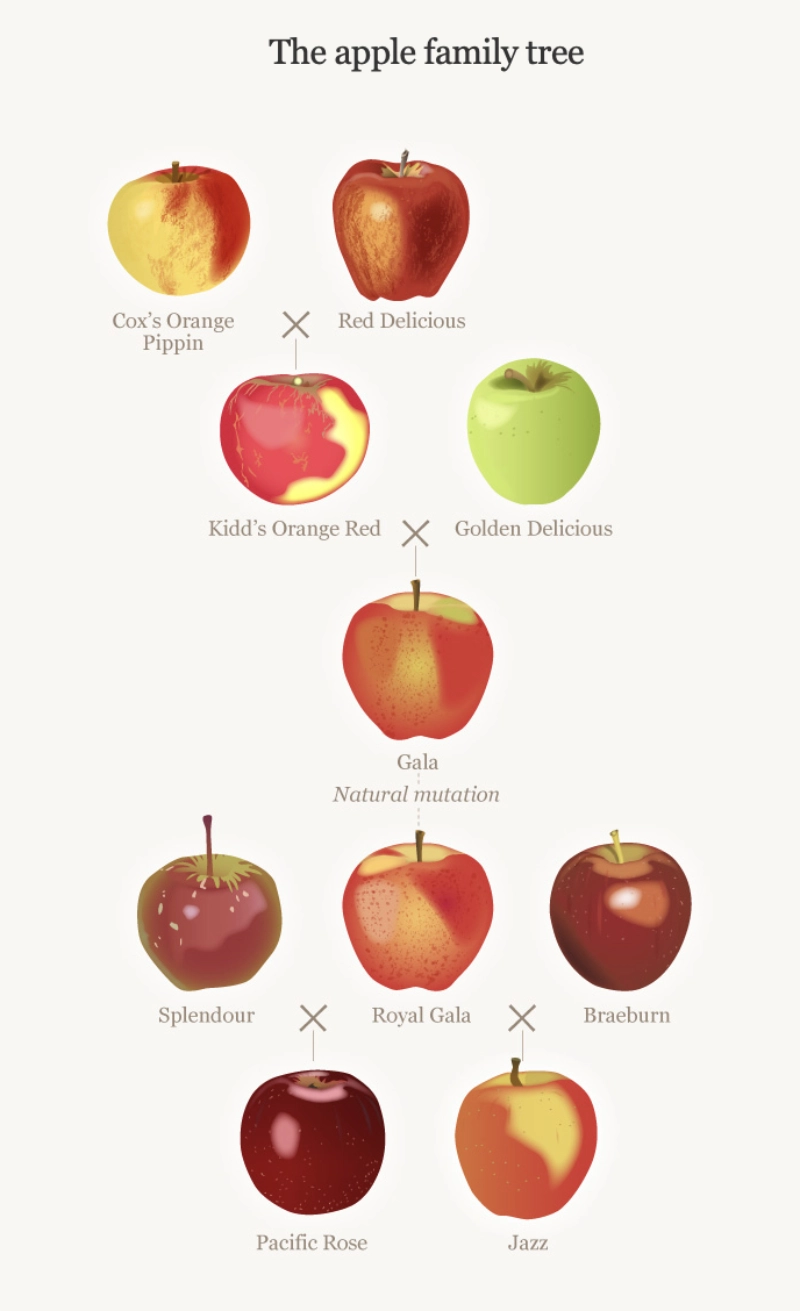
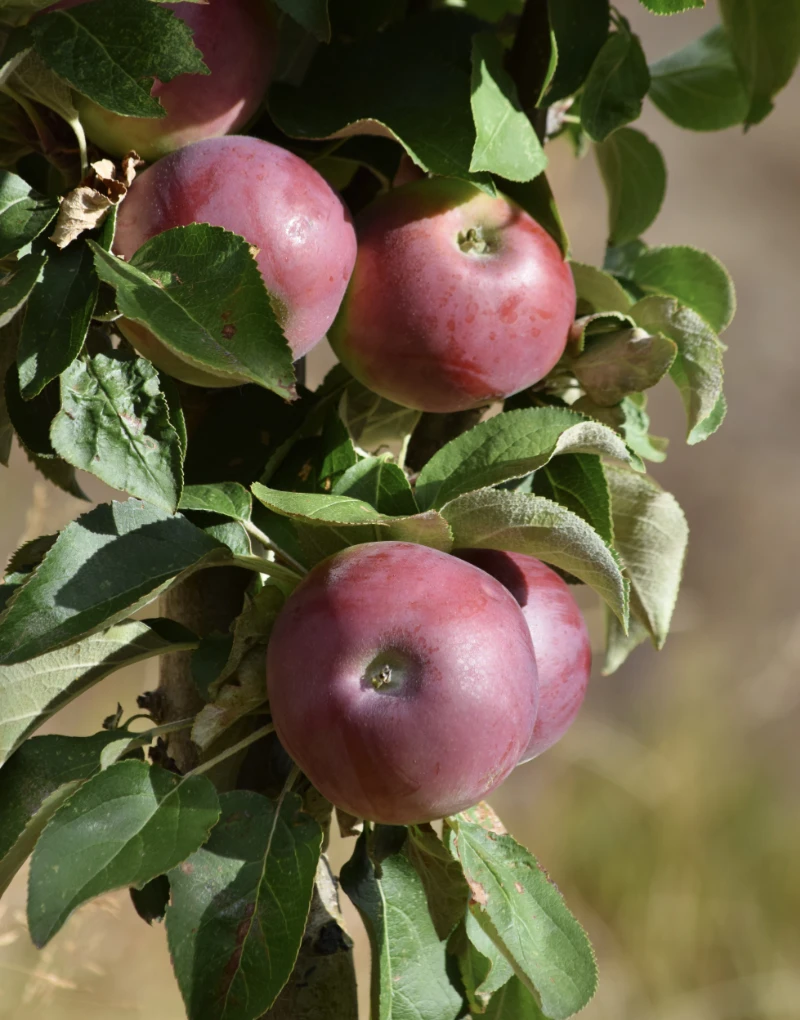
Originating in 1977, New Zealand’s own Royal Gala holds its place as our number one export apple by volume and is regarded as one of the words best and is a very popular garden apple too. Pretty to look at and sweet to eat, it is ready for picking early in the harvest season‑by mid-February.
Royal Gala first arose as a sport (random shoot) of the original Gala apple, bred in Greytown in the 1930’s from a seedling of a cross between a Golden Delicious and a Kidd's Orange Red.
A good selection of sought after apple varieties is available in leading garden centres. For those keen to search further afield, there is a daunting array of heritage varieties to explore.
Apples are currently the fourth most popular fruit in the world, after tomatoes, bananas and watermelons.
Taking the time to decide which apple trees to plant in a home garden is well worth the effort as trees will ideally grace your garden for decades. First, consider your climate. In a marginal climate outside major apple growing regions some varieties will be more suitable than others. Talking to local gardeners and garden centre staff is a great place to start.
Consider which traits you care most about. Flavour? Disease resistance? Fruit size? Harvest time? Yield? Do you want apples mainly for cooking or eating fresh or both? If a long storage life is important, the late harvest apples generally have very good keeping qualities.
How tall do you want your tree to grow? Very dwarf trees can be harvested without a ladder. While some varieties are naturally compact growing, the potential height of any apple tree is influenced by the rootstock it is grafted onto.
Pollination is another important thing to check, when deciding which apple varieties to plant, especially if you only want to plant one or two trees. Some popularvarieties, including Royal Gala, Golden Delicious, Bramley’s and Granny Smith, are self-fertile but most are not. For trees that need cross pollination, failure to fruit happens if there is not a compatible pollinator tree within bees’ flying distance. The wide range of pollinator options and other very useful information can be found on the Waimea Nurseries website, www.waimeanurseries.co.nz.
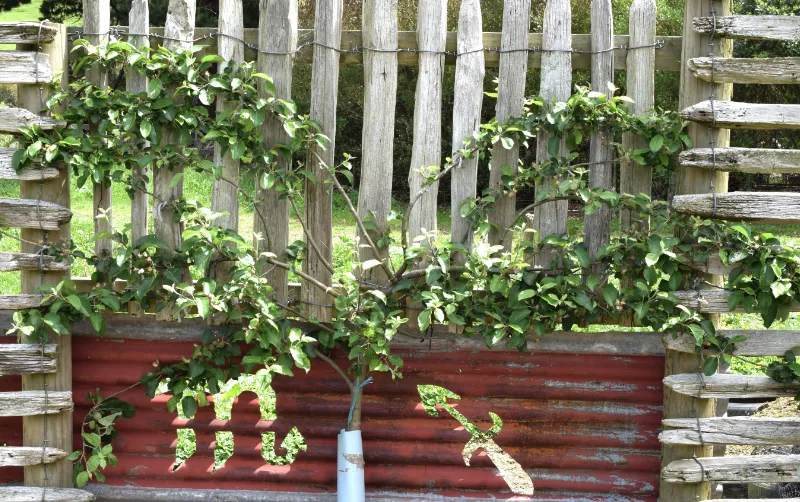
Plant your apple trees where there is plenty of sun and good well-drained soil. If the sunniest spot is along a fence, consider espaliering. To grow apples in a tight space, look to ultra dwarf trees or tall and narrow Ballerina apples. Avoid areas where the water puddles and don’t plant too close to larger trees. If you have good sun but poor soil, look to dwarf apples for tubs.
TIPS
Apple trees grown from seed are not the same as their parent plant. Most don’t perform well ‘on their own roots’ either - those that do grow well from cuttings usually become very large trees. For these reasons apple trees are grown by grafting or budding the ‘scion’ wood of the desired variety onto the roots of another variety, known as a ‘rootstock’.
Rootstocks help to control tree vigour and size, which is very useful when growing trees in a defined space. Rootstocks also influence other qualities like fruit quality and disease resistance. The right rootstock can be the difference between a healthy or not so healthy tree.
The M9 dwarfing rootstock keeps trees at a height of 2 to3m. M27 is even smaller. Generally, the more dwarfing the rootstock, the younger the tree will be when it starts to produce fruit and the larger its fruit will be. On the downside, some kind of support structure is commonly needed as these trees have shallower root systems, which also means more watering is needed in dry periods.
Trees grown on semi-dwarfing rootstocks (such as MM106 or MM116) require temporary staking in the first few years of establishment. Averaging around 4.5m tall, they fruit a bit later in life but generally will fare better in heavy soils than trees on M9 dwarf rootstock.
The old Northern Spy rootstock and its offspring MM793 are more vigorous (non-dwarfing) rootstocks best able to tolerate heavy clay soils. Columnar apples are grown on M793 rootstock, but their very compact genetics counteracts the vigour of the rootstock, keeping Ballerina trees under 4m tall.
Most apple trees sold in garden centres currently are on M9 or MM106 rootstocks. The rootstock should be included on a new tree’s label.
While any apple can be used in a cake or dessert the best apples for cooking are not the super sweet crisp designed for eating raw. Favourite cooking apples include:
Apples and other deciduous fruit trees arrive in garden centres in autumn and early winter.