
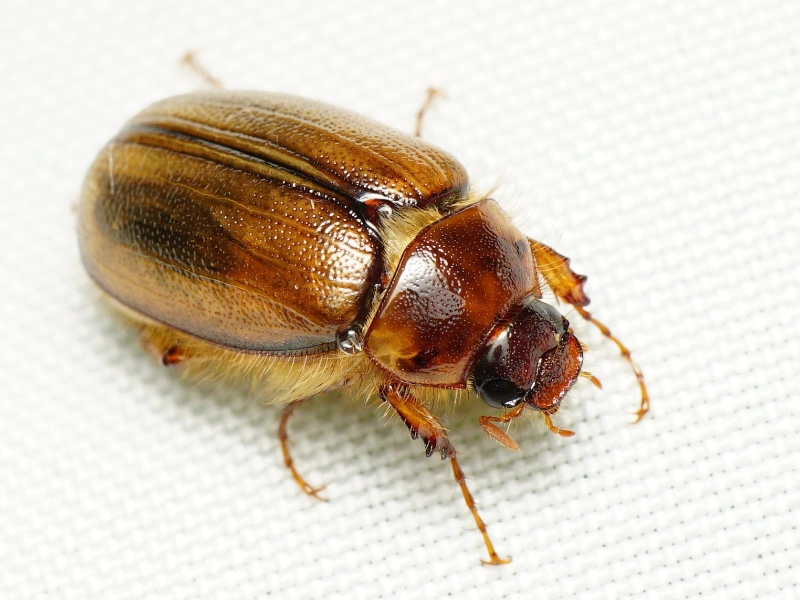

Grass grubs are the larval stage of a native scarab beetle, which chew at the roots of plants. Grass grubs feast in large numbers, inflicting severe damage on lawns and gardens. Meanwhile, the nocturnal adult beetle stage of the same insect is notorious for chewing holes in the leaves of fruit trees (vegetables too) and scarring the fruit.
In the warm evenings of late spring and summer, adult beetles can be seen swarming around outdoor lighting. During the day they lay their eggs as they burrow into your lawn.
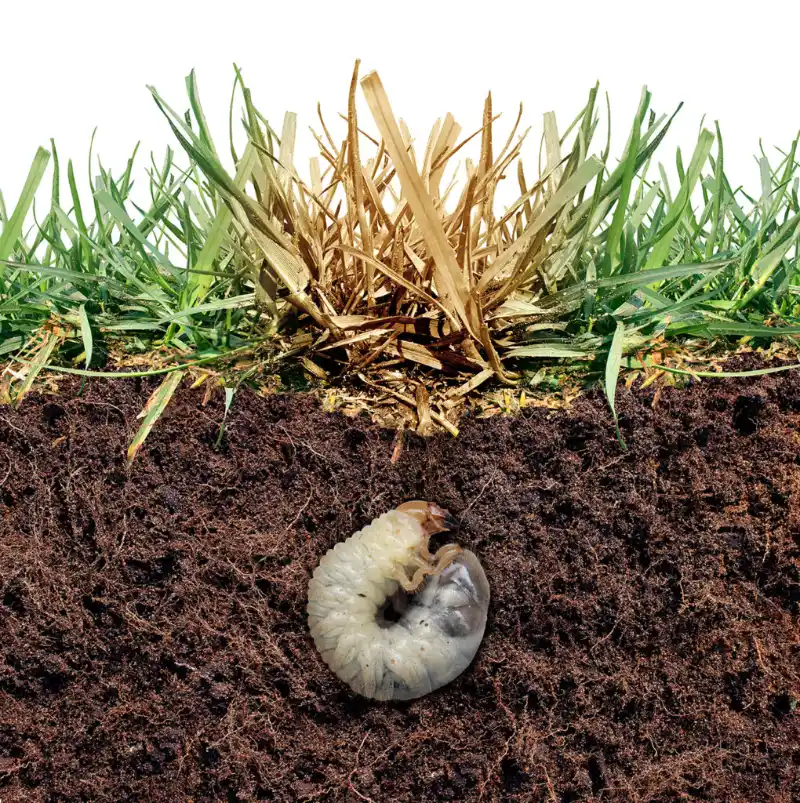
Hatching in summer, the larvae feed voraciously on roots in the subsoil. They will even inhabit potted plants. After hatching they continue to feed and grow, reaching their largest and most destructive stage during autumn and winter.
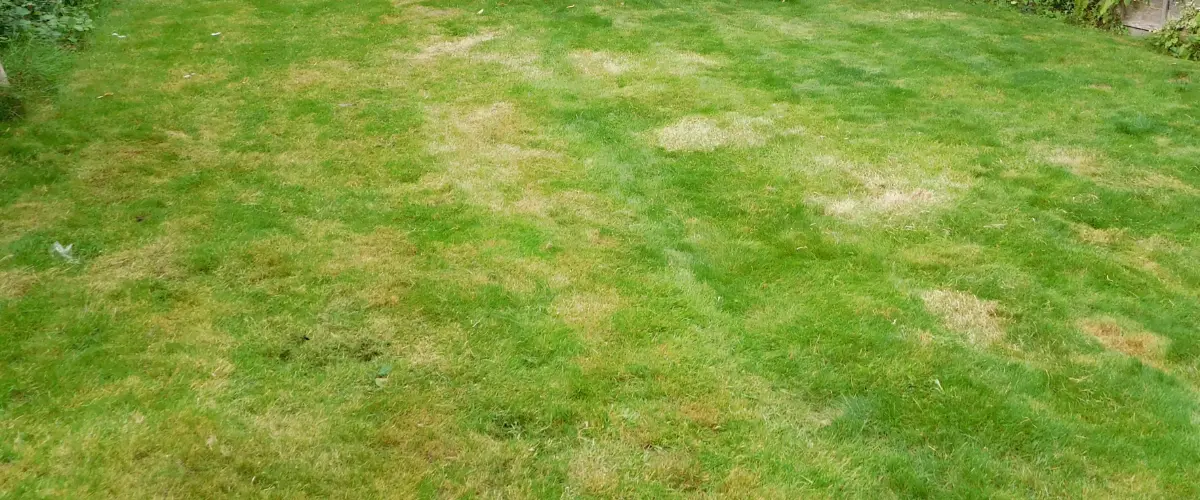
Look for dead or brown patches of lawn, or plants that seem to wilt and die even though you are watering them well. Lawns may also ‘disconnect’ from the soil, a bit like the edge of a carpet, indicating root damage. Another clue is if birds are especially busy pecking at your lawn - they could be feeding on grubs near the surface.
With a sharp spade, remove a ‘cube’ of affected lawn to the width and depth of your spade. Place the cube of soil into your wheelbarrow. Using gloves if you are squeamish, break apart the cube and look for white grubs with a tan or brown head, that curl up when exposed to the light. It pays to test a few suspect areas of the lawn to be sure of your result and to get an idea of the extent of the infestation.
Grass grubs (Costelytra giveni) are typically around 6-20mm in size. The larvae of the bronze beetle (Eucolaspis brunnea), are smaller, but will also damage grass roots and plants. In the upper North Island, black beetle (Heteronychus arator) cause damage similar to these but can be distinguished in the timing of their onslaught, which is typically earlier - from December to March.
The Tasmanian grass grub (Acrossidius tasmaniae) is active through the North Island, Canterbury and Marlborough, identified by its black (rather than tan) head. This grub creates vertical burrows in the soil, but the main damage it causes is to foliage above ground level.
Luckily there’s a solution that will control all of the above plus other nasties like porina caterpillar and army worm.
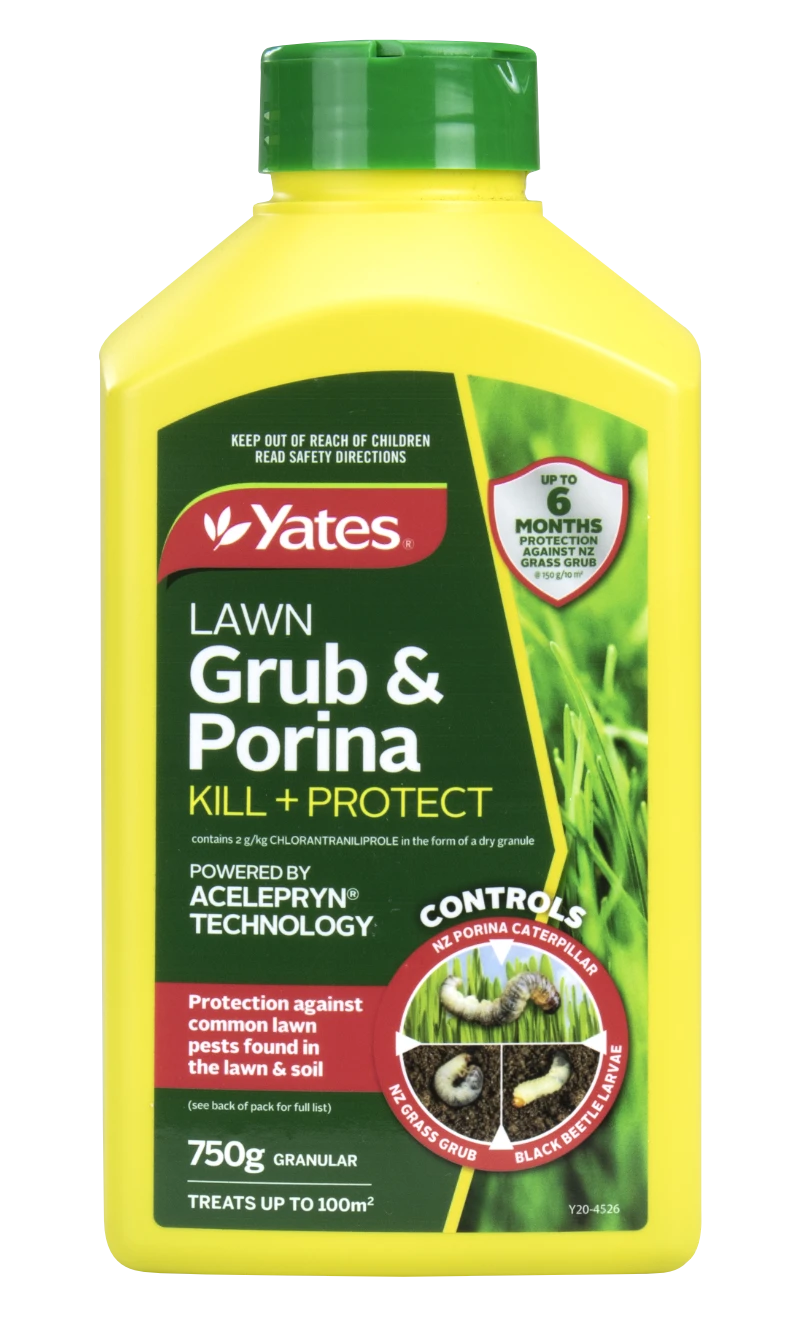
Yates® Lawn Grub & Porina Kill +Protect will both kill the grubs and the adult stage. When used at the recommended rate one application will protect a lawn for up to six months.
Easy-to-use Yates® Lawn Grub & Porina Kill + Protect is a granular product, available in three convenient pack sizes. The new 300g shaker pack will cover a lawn area of 40 square metres, making it ideal for spot treatments and smaller areas. The 750g is suitable for coverage up to 100 square metres. For larger lawns the 2.5kg pack will cover a surface area of garden or lawn up to 333 square metres. Avoid mowing for at least 24 hours after application to lessen the chances of removing the granules.
To get your lawn back to full health and vitality, and to make it more resilient against future pest attacks, try Yates Dynamic Lifter Organic Lawn Food. A good regular feed will improve soil structure and moisture retention, which in turn pays dividends in achieving a lush green lawn.


For more information and data sheets visit www.yates.co.nz