
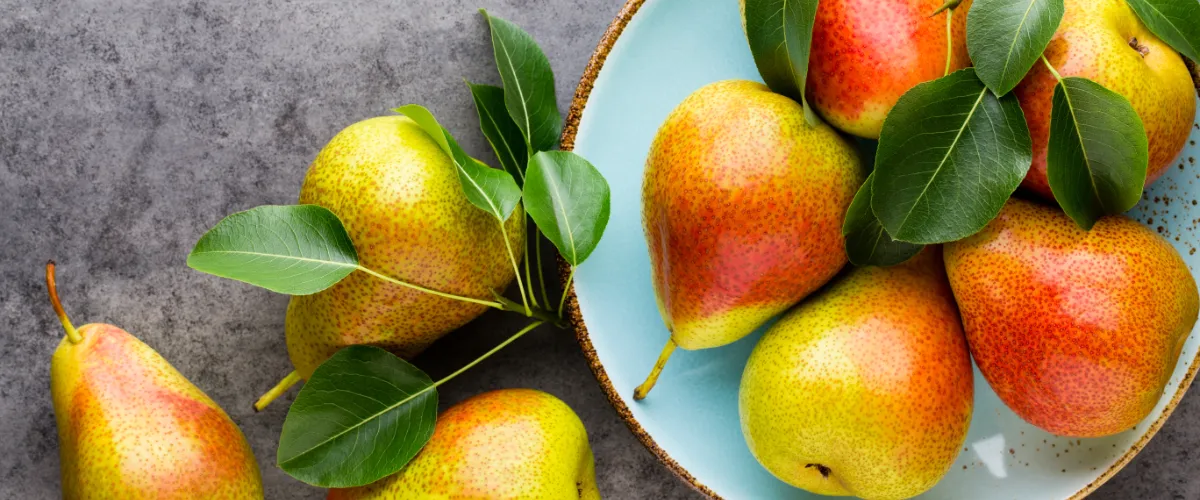
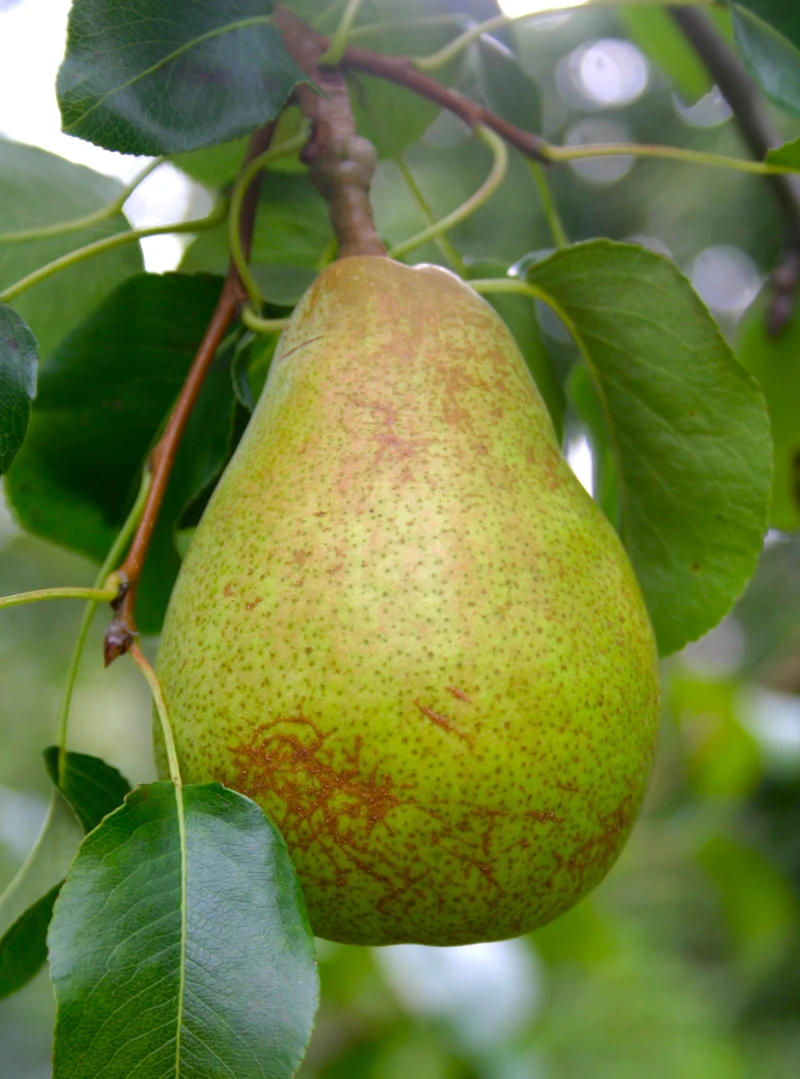
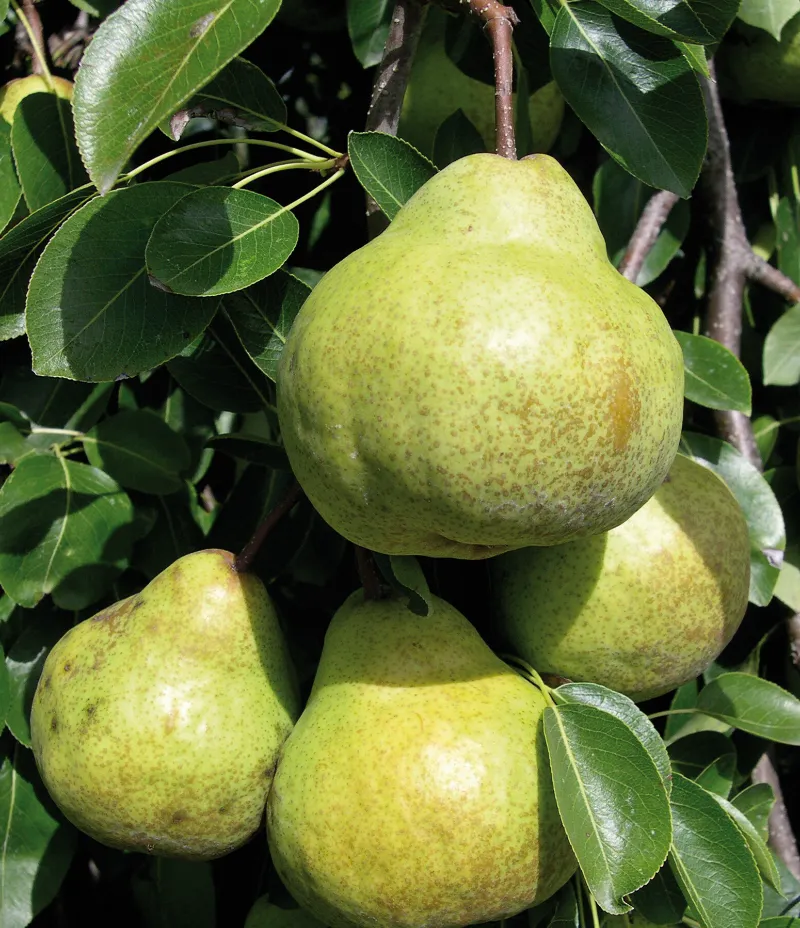
Elegant fruit suspended like jewels in the late summer sun as it filters through the leaves of your very own tree, are so much more enticing than even the best grocery store display, and the taste is beyond compare. Because growing pears isn’t just about the free fruit you eat, it’s about that sense of satisfaction that comes from growing something to eat and something to share.
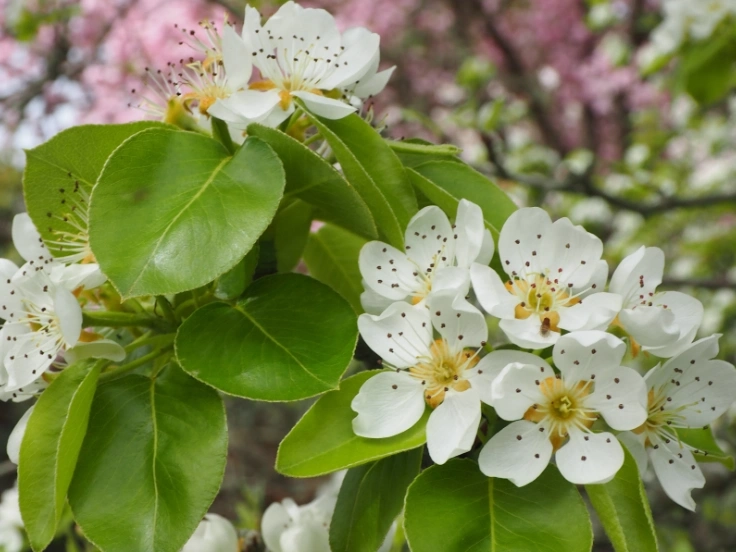
Each season brings its own rewards; blossoms in spring, lush green foliage in summer, golden leaves in autumn, and leafless limbs to let the sun through in winter. Pear trees are elegant, easy care, and long-lived. Even though pear trees are quite capable of lofty heights, a good crop of juicy pears can be grown in surprisingly small garden spaces.
There are two main kinds. European pears (Pyrus communis) are soft and sweet when ripe. Nashi, or Asian pears (Pyrus pyrifolia) are round and crisp like apples. Nashi pears have been grown in New Zealand since 1982. European pears arrived in Northland with the missionaries in the early 1800s. One of the original pear trees is now over 200 years old. The Samuel Marsden Pear Tree in Kerikeri is the oldest surviving exotic fruit tree in New Zealand.
Pears and their closest relatives, nashi pears, apples and quinces (commonly called ‘pipfruit’), are classified by scientists as ‘pome’ fruit. All are formed around a core (of fused ovaries) containing multiple small seeds. The word pome comes from the French word for apple. Other edible pome fruit include medlar and loquat.
Fun fact: If you are a pome fruit lacking a certain gene (called the ‘ovate’ gene), your end that is next to the flower’s petals and ovaries will grow bigger than your stem end, so you will be pear-shaped.
Pear trees thrive where apples thrive, but will generally tolerate an even wider range of soils and climates, provided they are not waterlogged in winter. They bloom in early spring, after plum and peach trees but before apples. Most pear trees grow taller than apples but their strong upright growth can be pruned and trained to easily fit a smaller garden (see below).
Most pear varieties are not self-fertile. This means that, in order to produce fruit, their flowers must be pollinated with pollen from another (not too closely related) pear variety that flowers at the same time. You will need another tree nearby, either in your own garden, or if there is no room for two trees in your own garden, somewhere in the close neighbourhood within a bee’s flying distance. European pears and nashi pears will successfully pollinate each other. Some pear pollens are also compatible with quince.
Alternatively, you could plant a double grafted pear tree giving two varieties on one tree. A few pear varieties are partially self-fertile, but as for most fruit trees, even self pollinators produce more fruit if they are cross-pollinated with a different variety. Useful information about pollinators can be found on the Waimea Nurseries website, waimeanurseries.co.nz.
Like all deciduous trees, pears are ideally planted when the tree is dormant in late autumn or winter. Planted as 1–2-year-old trees, most start producing within 3 years and, with proper care, will carry on fruiting for decades.
Choose the right spot. Plant your tree in good well-drained soil and where it gets at least six hours of sun each day. If the sunniest spot is along a fence, you might consider espaliering. Avoid low-lying areas where frost or water collects. Some shelter is helpful, but good air circulation is important to prevent disease.
Plant with care. Dig a planting hole that is twice as wide, but the same depth as the root ball of your new tree. Add some slow release fertiliser and position your tree in the centre of the hole then carefully replace the soil, firming it down as you go. Water thoroughly and add a layer of mulch around the base (but keep mulch off the trunk). Stake at planting time to avoid damaging the tree later. Most young fruit trees need support while they get their roots established, particularly if exposed to wind.
Water young trees. Some watering will be needed in the first few summers to ensure the soil doesn’t become dry. Water stressed trees will grow poorly and produce less fruit. Watering and feeding during the first two years after planting promotes strong vigorous growth and trees that will be more tolerant of dry spells once established. Even older trees appreciate deep watering in dry spells.
Prune in winter to improve light penetration for fruit development and air movement for disease prevention. Remove damaged weak and crossing branches. For more information about pruning go to waimeanurseries.co.nz.
Very early ripening in mid summer is the first truly dwarf pear, Garden Belle®. This attractive tree it grows to 3m tall with white spring blossoms, glossy foliage with good autumn colour.It is best near another Pear or Nashi for cross pollination.
Old 19th century varieties are still popular in today's gardens. Early maturing Williams Bon Chretien (also known as the Bartlett Pear) is a long necked pear with smooth green-yellow skin. Bright green Packham’s Triumph ripens a bit later and is more squat in shape than Williams Bon Chretien. A last harvest pear ripening April into May, Doyenne du Comice is highly regarded as a fine gourmet dessert pear - large and richly flavoured ‘like sweetened cinnamon’. A sport of Doyenne du Comice, Taylors Gold is similar to its parent but has uniformly russeted bronze skin.
For mid season crops, the choice includes the elegant long-necked Beurre Bosc with bronze skin and sweetflesh, and partially self-fertile Conference.
Another partially self-fertile option with a generous April crop of small reddish fruit, Seckel is an easy care performer with creamy white, sweet juicy flesh. Stunning crimson-skinned Starkrimson is an early bearer. Bright red on one side, dark the other, it's a decorative option for the fruit bowl with a sweet mild flavour. Great for kids.
May ripening Winter Cole and Winter Nelis extend the pear season and store well for winter eating. Both are highly reliable and productive trees.
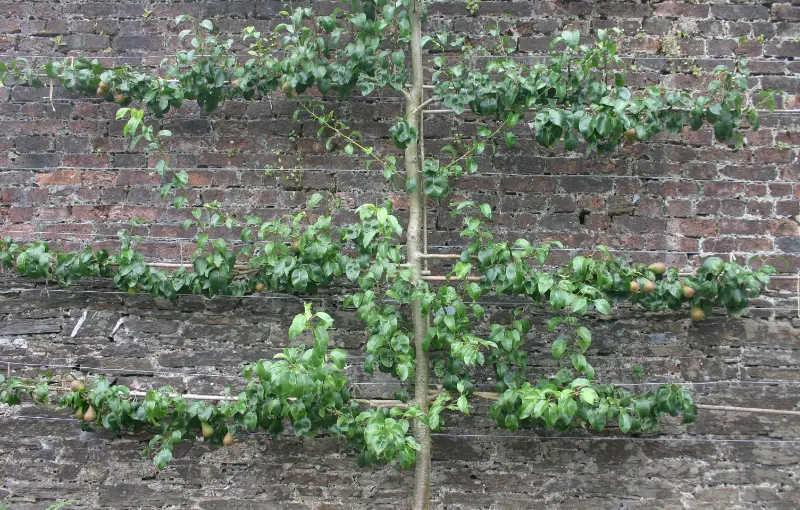
Pear trees are naturally upright growers. However, it is the horizontal branches that produce the most fruiting spurs. Also, encouraging sideways growth reduces the overall vigour of a tree because sap flows more slowly in horizontal branches than it does in upright growth. For better fruiting, easier picking and a smaller more manageable tree, supple young branches can be trained horizontally, tied or weighted down until old and thick enough to stay in place on their own.
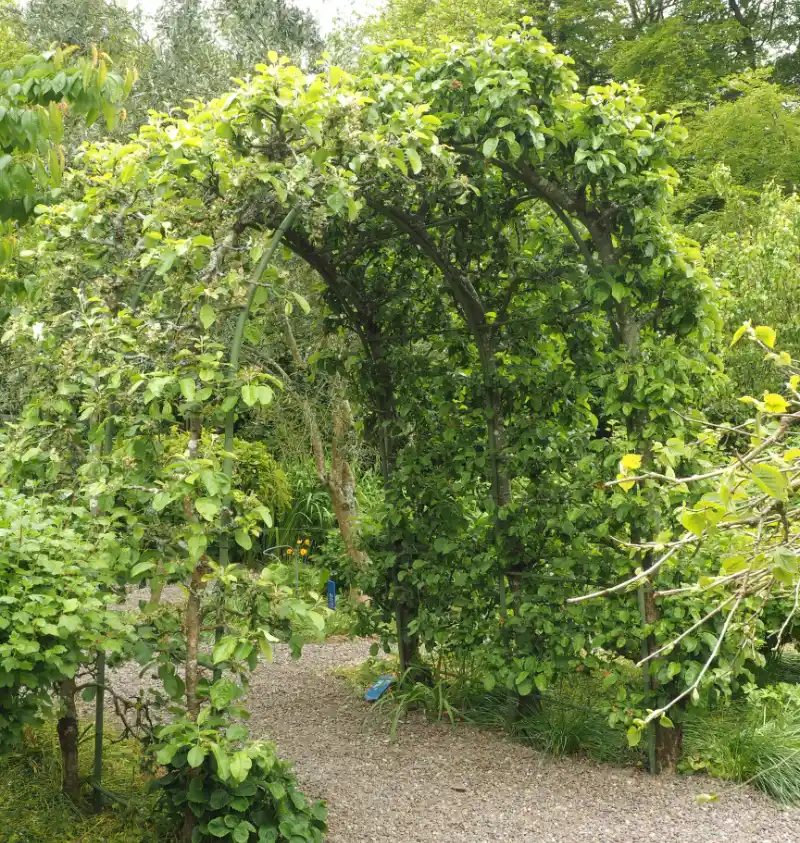
Pears are therefore ideally suited to espaliering (growing two-dimensionally on wires along a fence or wall). Otherwise, a tiered central leader shape tree is the ideal way to achieve a near horizontal branch pattern: layers of branches radiating out from a main trunk every 60-80cm, starting about 1m above the ground. Growth between the tiers (except for fruiting spurs) is removed.
As always, the first line of defence against pests and diseases is to be aware of the signs and symptoms. Of those affecting apples and pears, Fireblight is arguably the most destructive: flowers turn brown and die, young shoots turn black and curl over and whole branches may suddenly die, dark lesions appear on branches and an amber ‘ooze’ may appear.
The chief remedy is to cut off infected branches well below visible symptoms and ban them from the garden. To minimise the likelihood of a fireblight attack, limit nitrogen fertiliser (excess grow this more vulnerable)and improve airflow around trees.
The problematic insect pest Codling Moth is more common, but easier to deal with than the deadly fireblight. Its larvae bore their way into fruit in late spring, leaving a tell tale sawdust and mushy trails in their wake. They can make a real mess of fruit, especially if you let populations get away on you.
Codling moth over-winter in bark crevices and leaf litter, emerging as adults in spring, often at blossom time,to lay eggs on fruit and leaves. And the cycle begins again. There can be several generations of codling moth between flowering and harvest.
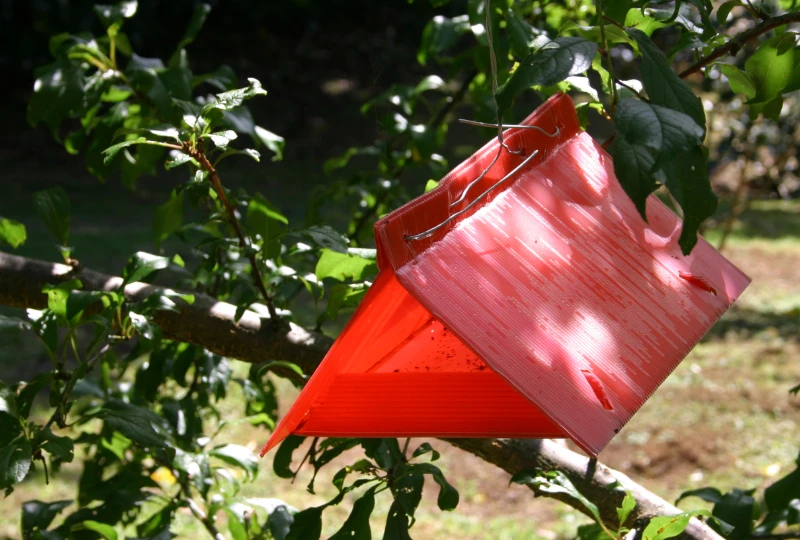
Hanging pheromone traps just before bloom can be enough to keep populations low on its own - or even more effectively - to see when it’s time to spray. Yates Success Ultra Insect Control, derived from beneficial soil bacteria, is effective against codling moth. As soon as the petals start to fall, it’s time to act to prevent infestation. Spray apple and pear trees every 14 days.
A clever traditional trick is to tightly wrap corrugated cardboard bands around the branches and tree trunk. Around autumn when the grubs have finished feeding, some will head down the trunk to find a hiding place to build a cocoon. The idea is to trick them into cocooning inside the corrugated cardboard, which you remove and destroy at the beginning of winter. This will partly reduce the number of moths for next season, even though it doesn't target grubs that have fallen onto the ground.Pick up all fallen fruit after harvest - they are havens for overwintering pupae.
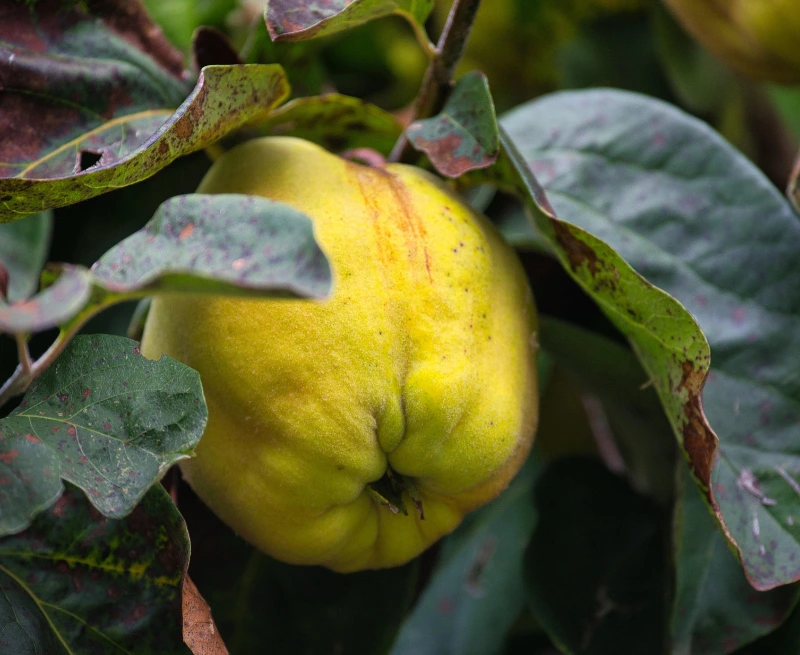
To plant a quince tree is to anchor a piece of ancient history in your garden. The quince tree (Cydonia) has one of the richest and oldest histories of any cultivated fruit tree. Long before apples and pears, quince was once the fruit of poets and kings. Now it is experiencing a renaissance among gardeners and cooks drawn to the decorative fragrant fruit and culinary uniqueness, and it's beautiful supersized spring blossom.
Quinces are not eaten raw, but transformed into delicious desserts and jellies with the scent of honey and roses. The trees are tough and self fertile and easily accommodated in a small garden as they are easily pruned (or grown as an espalier) for size control.


Find out more about fruit tree varieties and how to grow them at waimeanurseries.co.nz