

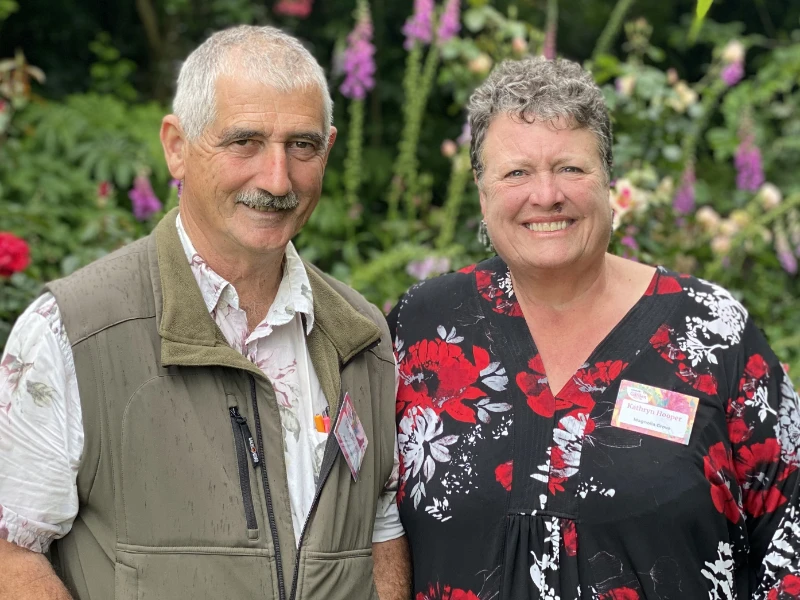
Behind a modest home in rural Taranaki, Vance and Kathryn Hooper have created a garden of hidden treasures that regularly stuns visitors. In fact, Magnolia Grove is much more than its namesake plant - it’s a living laboratory, a horticultural haven, a tropical experiment and a garden of many parts that keeps evolving.
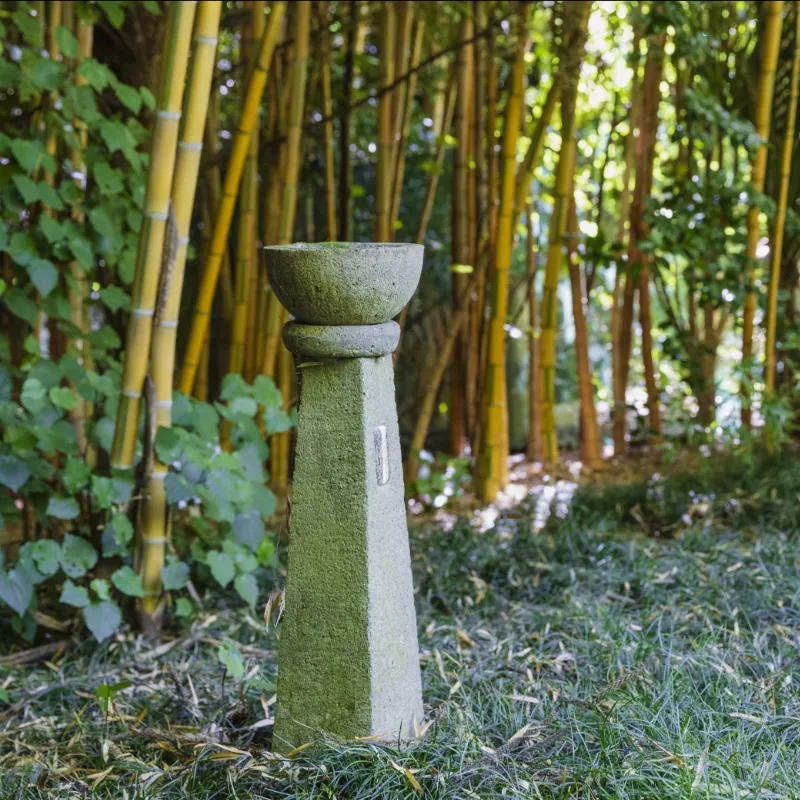
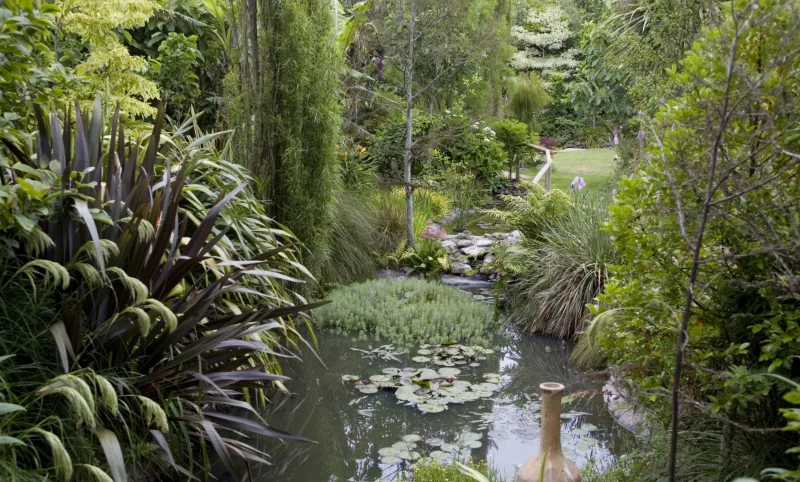
In 2025, heading towards its 16th time opening for the Centuria Taranaki Garden Festival, visitors will find cacti and succulents, a bamboo forest, bee and conifer gardens, four ponds, rose beds, a formal garden room and a bounty of bananas.
“People often get a surprise when they come into our garden because they're not expecting it by looking at the front of the house,” says Kathryn. “They say, ‘Wow, you would never have believed this was here.’”
While the early November festival is not technically magnolia time, Vance, a mix of mad scientist and magician, plans to have a few of his named hybrids bursting with blooms in the Waitara garden. Experiments have shown him that if he pulls plants out of the chiller five or six weeks before hand, they will be ready to put on a show when it counts.
Which happened when his much-lauded and awarded Magnolia Genie made an appearance at a giant horticultural show in Essen, Germany, a few years back. It was in full bloom for the January event, leading to Genie landing the award for best novelty introduction of a tree or shrub for that year.
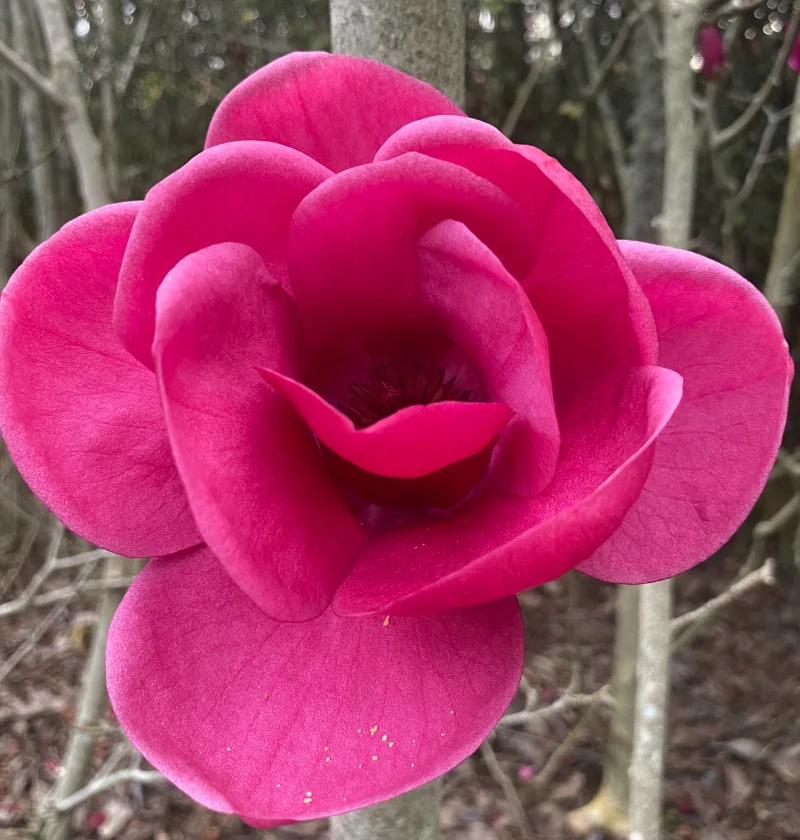
The deep-crimson Genie has granted many more wishes for Vance, including a Dutch Royal Horticultural Society outstanding garden plant award about five years ago.
Vance has bred about 15 named magnolia hybrids and is excited about a new beauty called Watermelon, which was one out of 80 seedlings.
“It's like a sculpted flower cut from a watermelon,” he says of the magnolia to be released in garden centres this year, with limited availability. “It’s the perfect form and it’s weather resistant.”
He’s also proud of Emperor and Ice Queen, which both produce perfect cup-and-saucer-shaped flowers. “Emperor is a good red that’s doing well overseas. It’s like Genie on steroids. Ice Queen is candlelight white. It’s not a big growing tree, but heavy flowering.”
For Vance, magnolia blooms are illuminating. “When you see a magnolia flower, it’s like bright light therapy - it stimulates your mind!”
He has received two Royal Horticultural Society awards for his contribution to the plant world. In 2024 he was awarded the Reginald Cory Memorial Cup for his contribution to ornamental plants and in February 2025, he received the Jim Gardiner Magnolia Cup.
“It’s reassuring that people appreciate what you are doing,” says Vance, whose entire working life has been in horticulture.
That has included working for esteemed Taranaki plant company Duncan & Davies from 1979 to 1994, along with a number of other nurseries. He went full-time in his own nursery on Mahoetahi Rd in 2016.
While Vance is a horticulturist and plant breeder, and Kathryn an Intermediate School Deputy Principal, they both work in their garden. Each comes from good gardening stock.
Kathryn says her maternal grandmother had a lovely garden in South Taranaki. “They lived on a dairy farm and she kept the garden up as well as looked after six children, milked the cows and all of that in the time of coppers for doing laundry.”
Her mother, Mary Dickson, was one of the garden festival originals - and the catalyst for Kathryn and Vance to open for the annual spring event. Mary had a lovely country garden before moving into Hāwera, where she developed a town garden filled with precious plants. Even now, Mary has a small but pretty garden on the deck of her home in a retirement village.
Vance’s garden roots run deep. “I've got a family tree that goes back to 1721 and there are gardeners and cattle doctors (vets) scattered through that,” he says. “My grandmother kick-started my gardening career when I was about 10 with cactus cuttings and things.”
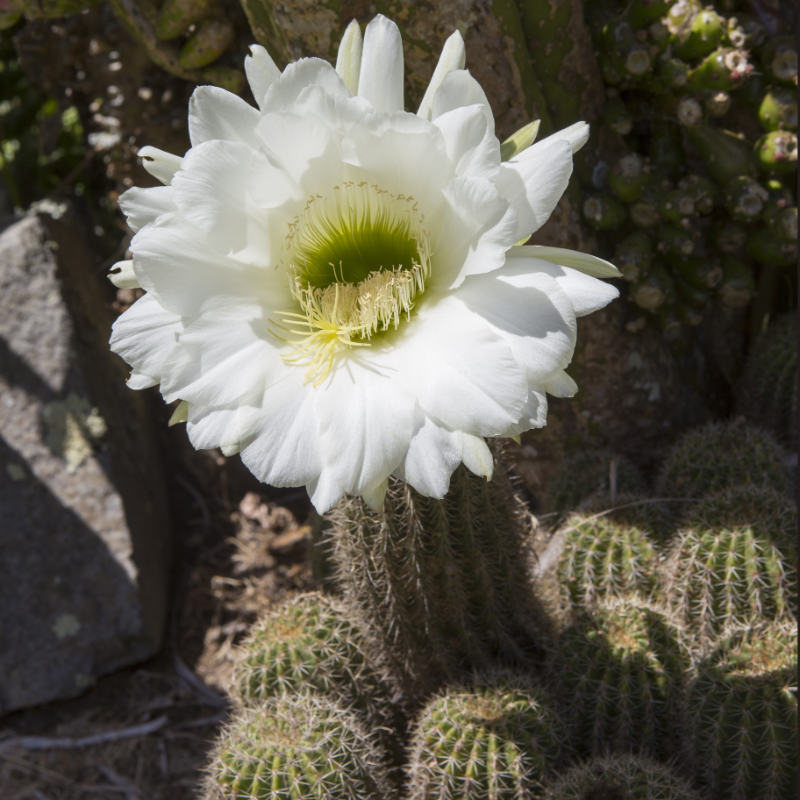
Cacti still feature large, along with succulents, in a grove beyond the house. Dragon trees (Dracaena draco) are the shaggy gatekeepers to an area bristling with American cactus species, African aloes and euphorbias, plus Australian Xanthorrhoeas (grass trees) and ancient Brachychitons.
Another spiny plant was prevalent when Kathryn and Vance took over the bare paddocks of a subdivided dairy farm and share-milkers’ house just over 20 years ago, when the only protection from the wild west wind was a barberry hedge.
They replanted with pines, cryptomeria, rewarewa and put up cloth windbreaks for extra protection. When the neighbouring land came up for sale, they bought that too, so now have four hectares in total for the garden and nursery, and space for hybrid trials and the “Big Banana Experiment”.
To create their garden, they purposely over-planted and are now cutting back to let in the light. Vance says the concept is like “carving a garden out of a forest”.
“One of the most satisfying things is we actually had a morepork baby raised in the garden in 2018. And that's why I've been a little hesitant to do too much clearance, but the moreporks live in the bananas now too. They (the birds) don't like getting wet, so banana leaves are good for keeping the rain off them.”
This sheltered place is also warm. “It is a microclimate that's been generated through shelter from the wind and stored warm air in the winter. You're only talking a few degrees, but it's significant,” Vance says.
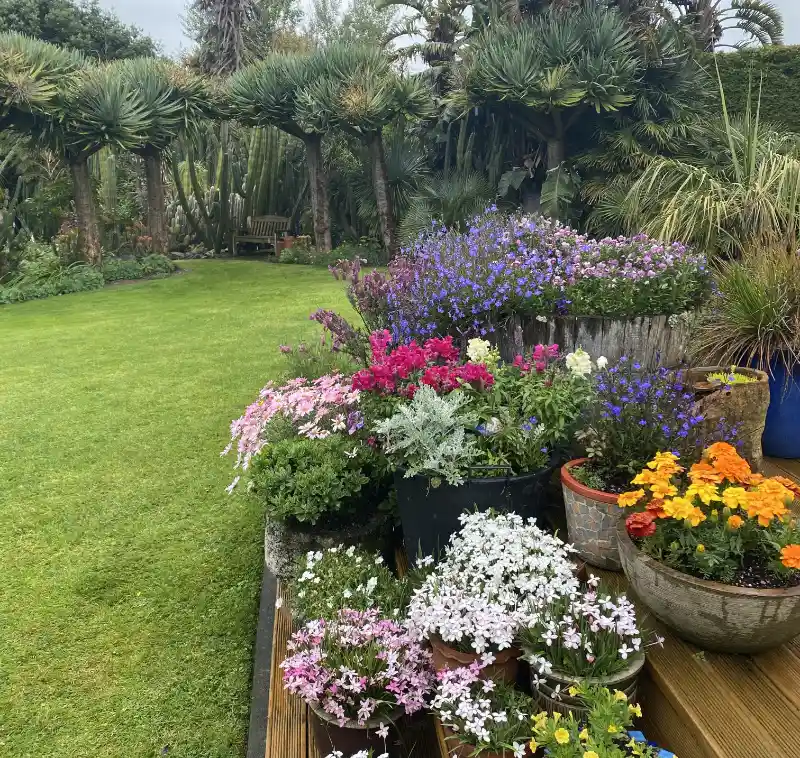
Echoing the warmth of this unfurling garden, a bamboo forest transports visitors to exotic lands; a conifer garden was inspired by a trip to Melbourne and Kathryn’s deck of potted colour looks spectacular all year round.“Last year, I think was the most photographed area of the festival because people wanted their photos sitting on the deck with the flowers around them,” she says.
There is also an abundance of edibles. Citrus trees are bright with fruit, Kathryn’s raised vege garden is packed with produce and other fruit trees provide good crops. “I don't let food go to waste. I make pickles, stew the fruit, freeze it, bottle it, make chutneys.”
From their garden,she also dehydrates pears, feijoas, apples, persimmons and bananas. “The grandkids love them,” she says of the tasty slices doused with lemon juice to prevent discolouring before dehydration.
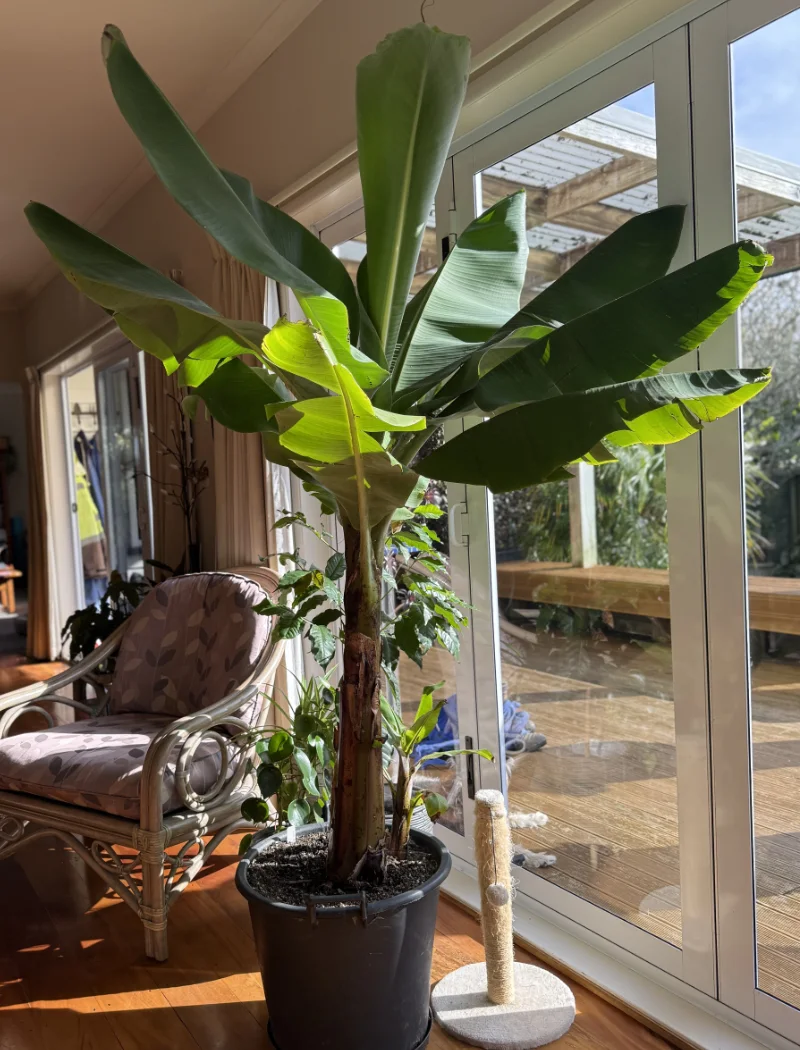
Bananas are Vance’s latest obsession. There’s even a super dwarf Cavendish banana in a pot, sunning itself in their dining room.
“One of the main reasons I got into them was I needed a challenge to reinvigorate my plant passions,” he says. “If you look at anybody's plant-collecting careers, they generally swing from place to place or species to species. And you sort of have your pets for a while and then move on to something else.”
But bananas - the world’s largest herbs - aren’t new to Magnolia Grove. They have had a couple growing in the garden since it started. In 2013, they put one by the greenhouse, which had good crops from 2019 to 2021.
Vance began trial planting in December 2021, starting with five or six in a row. They now have up to 24 varieties and 170 plants, mostly located in the main orchard where there are about 80 bunches ripening on the palm-like plants. “This is really the first year of production. We're self-sufficient in bananas now.”
So far, the best performer is Misi Luki, which is a ladyfinger type. “Wherever bananas are going to grow, that one is guaranteed to grow,” says Vance. “I'm almost in a position to make recommendations on other varieties now, but they will be needing a little bit more TLC than MisiLuki.”
Vance says growing bananas in Taranaki has been a steep learning curve, but he’s lucky to have grower Ben McNeill as a mentor. Ben lives in Waimārama, but has experience with commercial growing in Australia.
Kathryn says her husband’s interests have even expanded to the Pacific Island where her daughter and family live. “Every time we go to Rarotonga, Vance will go on an expedition to study the bananas!”
Vance says Taranaki is not a typical home for the tropical fruit. “They are way, way out of their comfort zone, and we need to extract every little incremental benefit that we can.”
Ideally, bananas need a frost-free situation, which isn’t quite the case in the North Taranaki garden, although they don’t get so many frosts these days. The best conditions include protection from wind, along with companion planting and lots of sunshine.
“We've even got bananas in the flower garden now because they're being trialled in different areas,” says Kathryn. They feed them with as much compost and organic matter as they can.
The banana leaves are sought after for use in a hāngī, the Filippino community use banana blossoms for salads, and the fruit has been snapped up on Marketplace.
During the Taranaki Garden Festival Vance will be running four ‘Let’s Grow Bananas’ workshops as part of the Mitre 10 Garden Speaker Series. Their garden means a lot to them both and Kathryn and Vance love to share it with others.
“We're so proud of our garden and really enjoy it,” says Kathryn, a self-confessed perfectionist. “We just don't have enough time to fine-tune it as much as we’d like. One of my desires when I do retire, eventually, is to actually spend more time in the garden.”
Vance would like to do the same, but ever the scientist, Magnolia Grove will always be his outdoor laboratory.