

Revered and treasured for centuries, tulips have a rare beauty that is uniquely their own. When ‘tulipmania’ struck Europe in the 17th century they became the subject of extreme obsession, traded for capital gain and leading to financial ruin for many.
The sight of tulips blooming in spring is especially satisfying when you’ve grown your own. Like many of spring’s most exquisite blooms, their appearance is a fleeting once-a-year delight - a brief thrill but one that’s well worth the splurge. Mid-May to June (April to May in coldest regions) are the key planting months and bulbs arrive in garden centres from March onwards.
While technically perennial, most tulip varieties bloom reliably for only one year due to years of selective breeding to get the most beautiful flowers. They hail from high altitude regions of the Northern Hemisphere where winters are cold and summers are hot and dry. In their native habitats the bulbs survive underground to bloom again for several years. In gardens with similar natural conditions, they may do the same, but a repeat performance is rare two years in a row.
Even in our colder climates it can be difficult to keep the soil dry enough over summer for the tulip bulbs to survive without rotting, but some gardeners do achieve success growing tulips as perennials. To do this, bulbs are best lifted about six weeks after flowering (when the leaves have died down) and stored over summer in a dry place. A temperature that stays within 18-21ºC gives the best chance of flower initiation.
For consistently good displays, plant new bulbs each autumn, especially when growing tulips in pots.
But in any garden, the easiest and most reliable pathway to a rewarding spring display is to purchase fresh bulbs and give them a chill in the fridge before planting into well drained soil or pots. Planting a range of tulip varieties extends the flowering time, while planting many of the same variety will create an impressive display.
To ensure top quality long-stemmed blooms, some winter chilling is recommended. This is done by placing bulbs in the fridge for eight weeks prior to planting and then planting in late May, when the soil has cooled down, ideally below 12℃.
Sometimes bulbs have been chilled before they reach the stores but if in doubt, chilling before planting is still the best course of action. Insufficient chilling can result in flowers hiding among their leaves on stunted stems or sometimes no flowers at all.
Chilling tulip bulbs in the fridge for at least 6 weeks before planting will replicate winter chilling, prolonging their flowering. Place the bulbs in a paper bag, in the centre of the fridge where they won’t freeze, and away from ripening fruit (the ethylene released by fruit can damage the developing tulip buds). An ethylene absorbing sachet in with the bulbs helps prevent this.
The warmer your climate the more care should be taken with chilling.
Tulips do best in sunny, sheltered locations with well-drained soil. Improve heavy clay or sandy soils with the addition of plenty of compost before planting. Planting tulips between perennials in a border can be effective, as the emerging foliage of the perennials will hide the leaves of the tulips as they die back.
Provided there is good drainage, deeper planting (15-20cm) helps to keep bulbs cool. In heavy soil, add a layer of sand below and above the bulb.
Moving potted tulips away from the sun until flowering time also makes sense, as pots can get hot when the sun is on them. Some gardeners sink their pots into the garden for extra cooling in winter. Bulbs planted in plastic nursery pots can be inserted into decorative containers at flowering time.
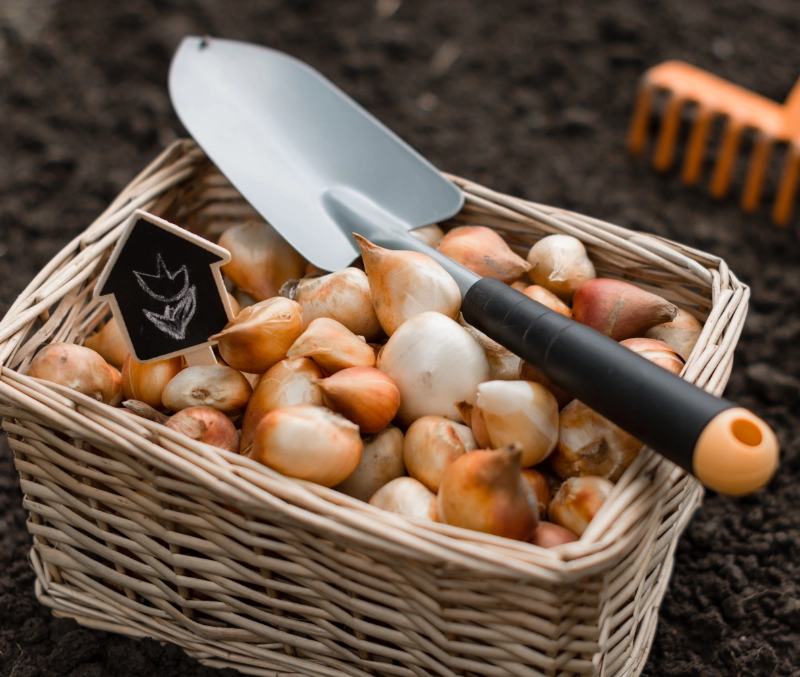
Dig a planting hole with a garden trowel or bulb planter, adding a small measure of bulb fertiliser. Drop the bulb into the hole with the pointed end up. Plant around 10-15cm deep in cool regions and 15-20cm in warmer areas, and up to 10cm apart. For the best display, plant tulips en masse.
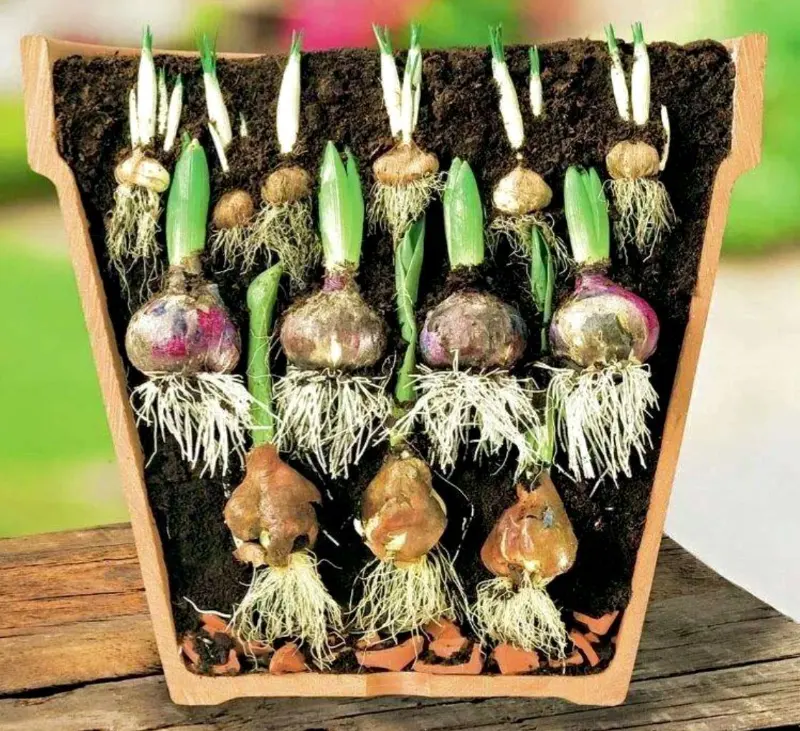
Tulips grow very well in pots, but these need replanting fresh each year. Half-fill the container with quality potting mix or bulb mix. Plant the bulbs at three times their depth, with a few millimetres between each one to get as many in the pot for the biggest impact. Top up with the potting mix.
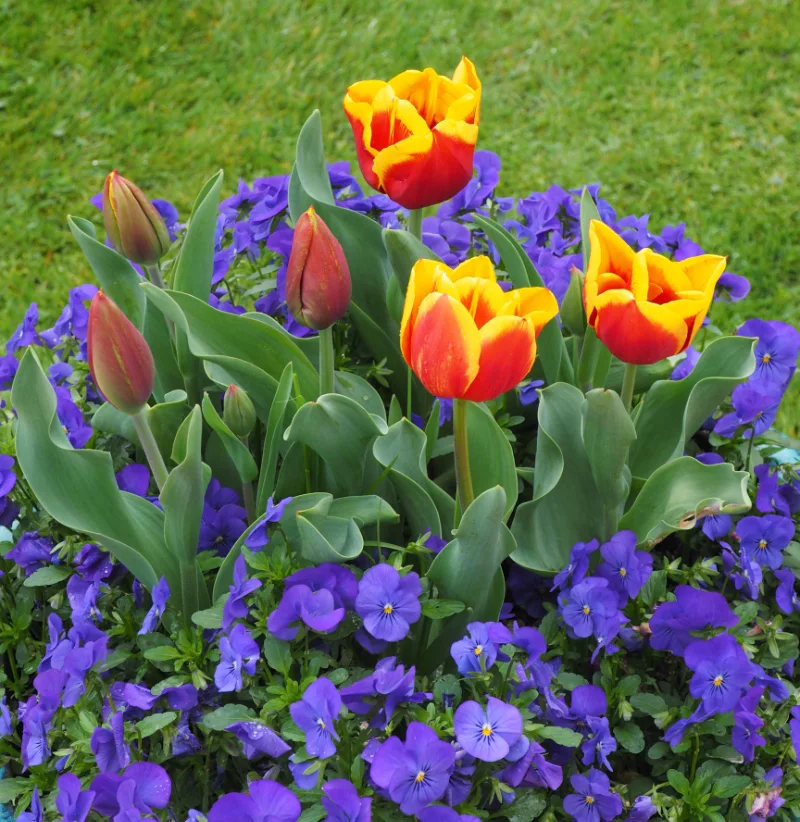
You can also combine tulips with other spring bulbs in a container for a more long-lasting display, by planting in layers. Larger bulbs fill the deeper layers, with smaller bulbs sitting above them. In large pots, a top planting of flowering annuals will create interest before the tulips emerge. Violas are a good choice.
Feed the plants with bulb food when leaves and buds appear, and again after flowering. This ensures the bulbs have the nutrients needed for new flowers next year.
Tulips can stay in the soil year-round for reflowering the following year. But to get the best flowering, it is important to allow the leaves to transfer as much energy as possible back to the bulbs.
After flowering, remove the dead flower heads to prevent energy being used to produce seeds. Wait to cut back the foliage until it turns yellow, usually about six weeks after flowering. Cutting back the foliage too early could result in weaker bulbs the next year.
Five reasons why spring bulbs may fail to flower in the first season after planting……
For the longest vase life:
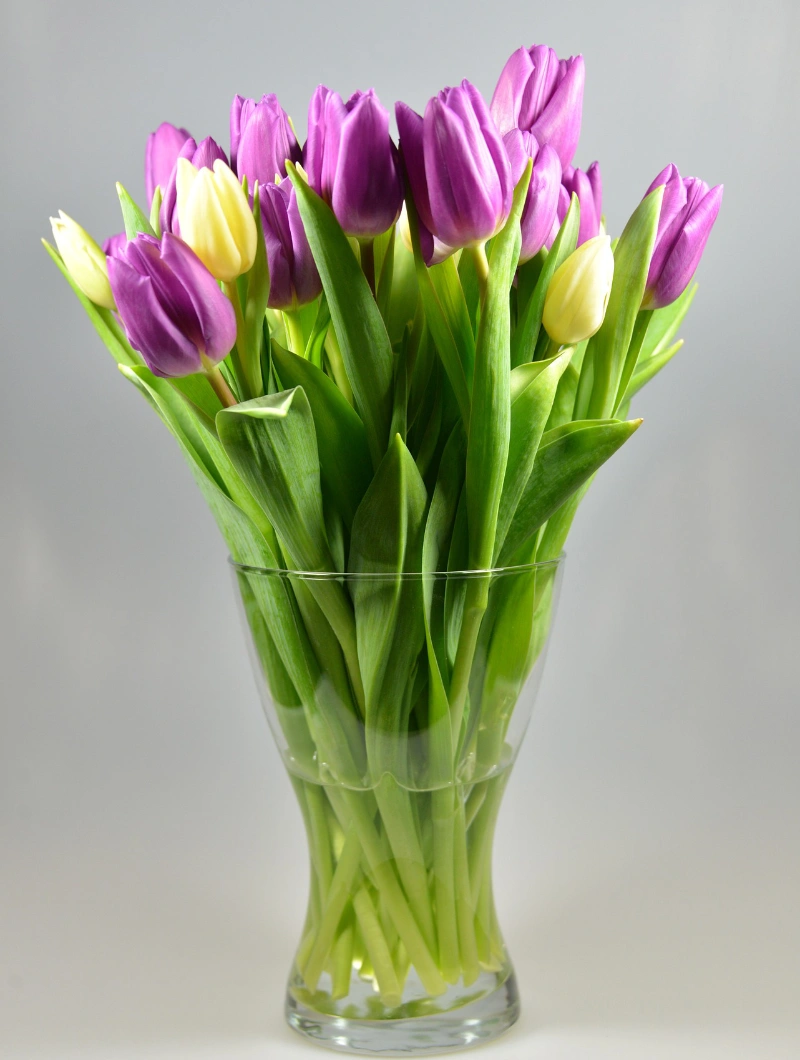
With proper care, tulips should last about seven days after opening.