
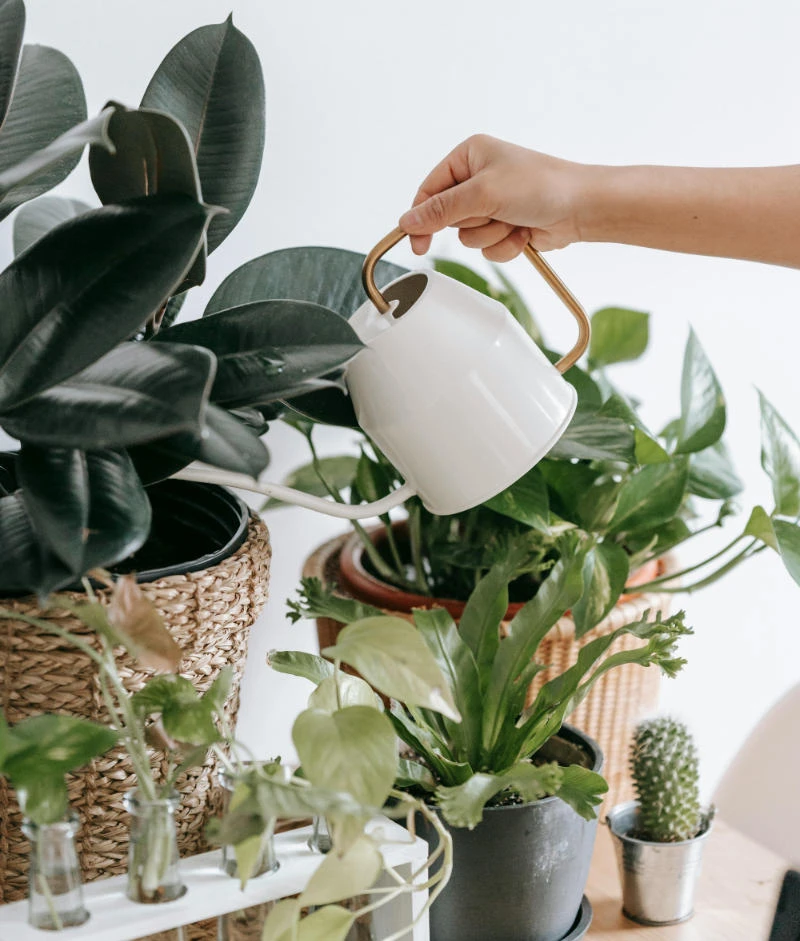

Warm weather speeds up growth, as well as water loss via evaporation and transpiration, so plants need more water at this time of year than in the cooler months. The sun’s intensity also means that plants may need moving to cooler spots in the house to avoid dehydration and sunburn.
But try not to kill your plant babies with kindness! Even in summer, overwatering is a common mistake as constantly wet mix can lead to root rot. Test with your finger and allow the top layer of potting mix to dry out between waterings.
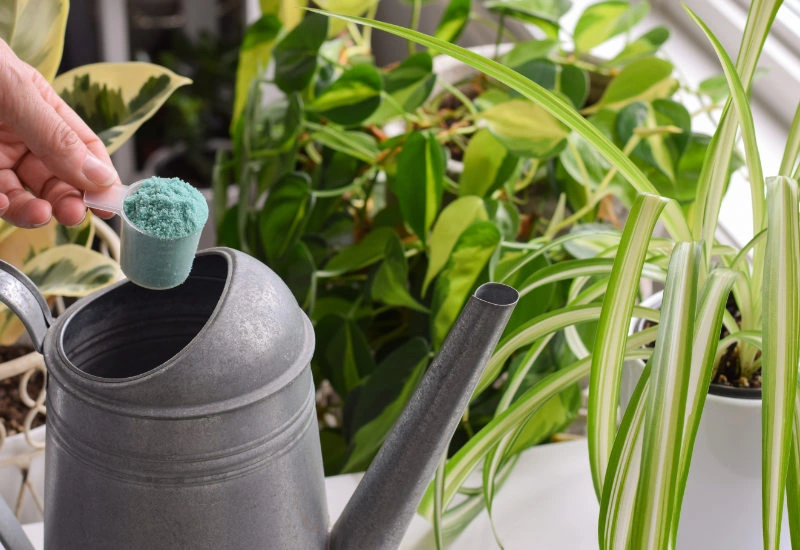
When plants are growing they use more nutrients. Modern controlled release and liquid fertilisers keep it simple, with specific fertilisers available for different types of plants. It’s important to use a balanced fertiliser to supply the correct proportions of nitrogen, phosphorus, and potassium. Plant foods for flowering plants have a higher potassium content.
Liquid feed little and often, or use controlled release fertilisers as directed to avoid overfeeding. Ferns are especially sensitive to overly concentrated fertiliser.
Bear in mind that freshly potting plants will have enough fertiliser in the potting mix for their first few months over summer.
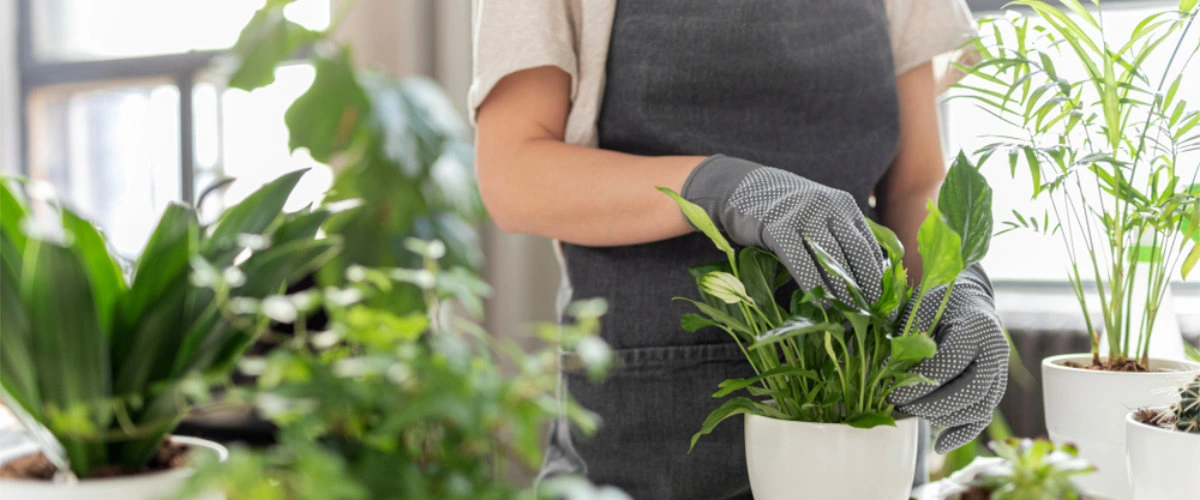
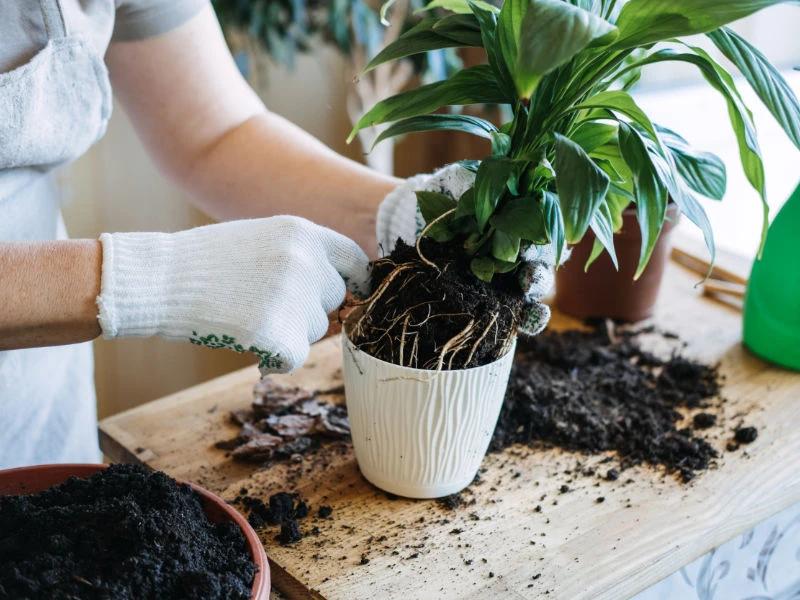
It’s amazing to see what fresh potting mix can do for a lacklustre plant. Houseplants can be surprisingly forgiving but, sooner or later, they need repotting. Old potting mix lacks useful nutrients and after years of watering, contains a build up of residues that can be toxic. Watering too is infinitely more effective after a repot, because old potting mix clogged with overgrown roots will actually repel water. Freed up roots in fresh soil can access the water the plant needs for lush healthy growth.
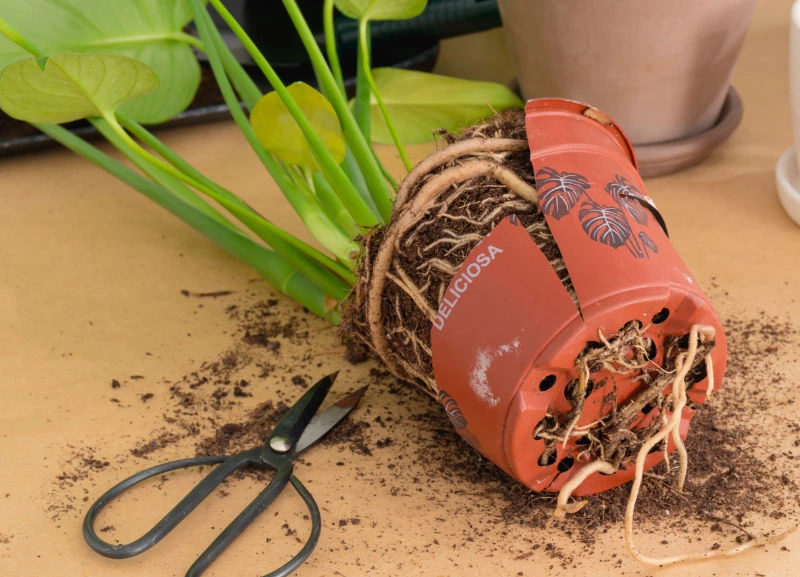
At the same time,removing dead black roots at repotting time stimulates fresh young roots which prolongs the plants life. When we do overwater from time to time, most pot plants will recover and carry on growing, but the dead and damaged roots we can’t see can become an entry point for opportunistic fungus diseases.
Some plants benefit from repotting every year. Others can wait longer. Poor growth and yellowed foliage are clear signs it’s time to repot. Whether you want them to grow bigger or not, plants in fresh potting mix are both stronger and more beautiful than those languishing in old potting mix.
Choose a good quality potting mix to suit your particular plant. These are blended with the right ingredients to provide the ideal balance of drainage and water holding capacity. There are specific potting mixes for plants like orchids and succulents which have extra drainage requirements.
Repot into the next sized pot, measuring about 5cm more in diameter than the plant’s previous pot. Too much extra space results in excess potting mix acting like a cold wet blanket around your plants roots which can cause them to rot.
Drainage holes are essential. A pot with drainage holes can be placed inside a decorative outer pot, but take care not to overwater. You can’t easily see the excess water as you would if using a saucer. Ideally take plants out of their decorative pot to water them, replacing them once the excess water has drained away completely.
If you don’t want your plant to grow larger, you can return it to the same pot with fresh potting mix. If repotting into the same pot, remove the plant from its pot and then remove up to a quarter of the old potting mix from around the roots. Tease out any matted roots, letting the old potting mix fall away. Use clean sharp scissors to remove any roots that are rotten or broken. If you remove a lot of root mass, it helps to trim the top of the plant by about the same amount. Take the opportunity to wash the pot out before repotting.