
The garden in summer is filled with life. Honey bees and bumble bees are a conspicuous delight - hard to miss as they go about their blissful business pollinating the plants that will feed our families as they forage from flower to flower gathering food for their own.
It’s a lovely time to sit quietly in the garden on a warm sunny day and soak up all the drama that’s going on around us. Look super close and you might see the even smaller pollinators that usually go unnoticed.
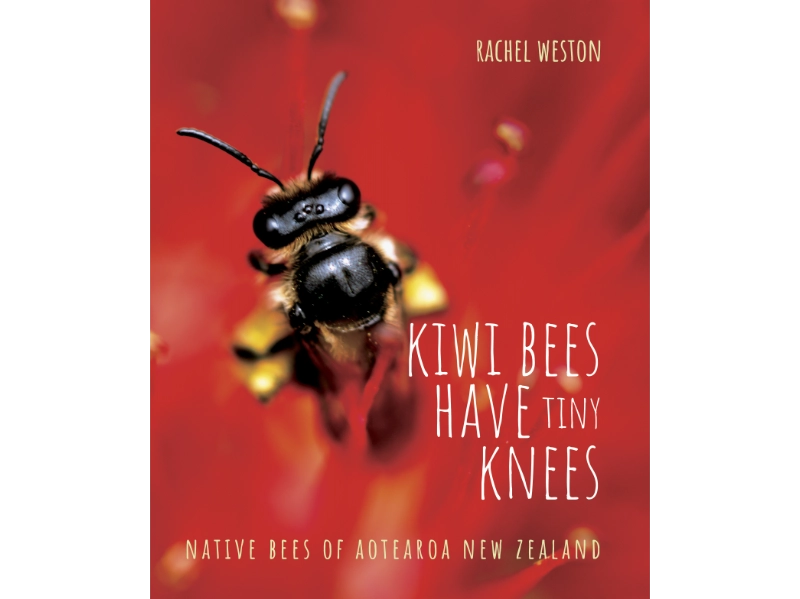
Most people are unaware of New Zealand’s own native bees. Until quite recently, so was children’s author Rachel Weston. Her book, ‘Kiwi Bees Have Tiny Knees’, is a fascinating read for all ages.
As Rachel puts it,
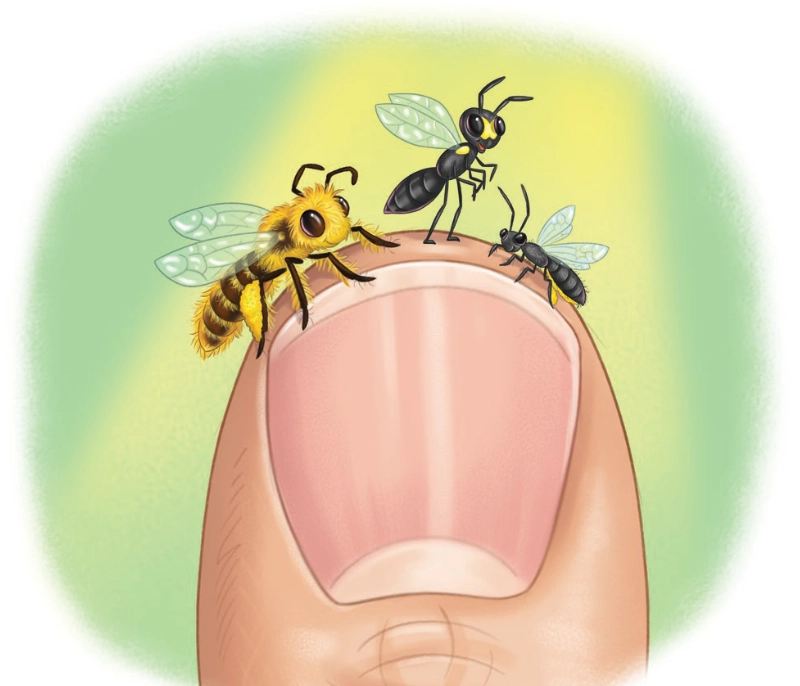
“If bumble bees are like the Big Mack trucks bustling down the highway and honey bees are like a million whizzing cars, then native bees are the zippy little scooters.”
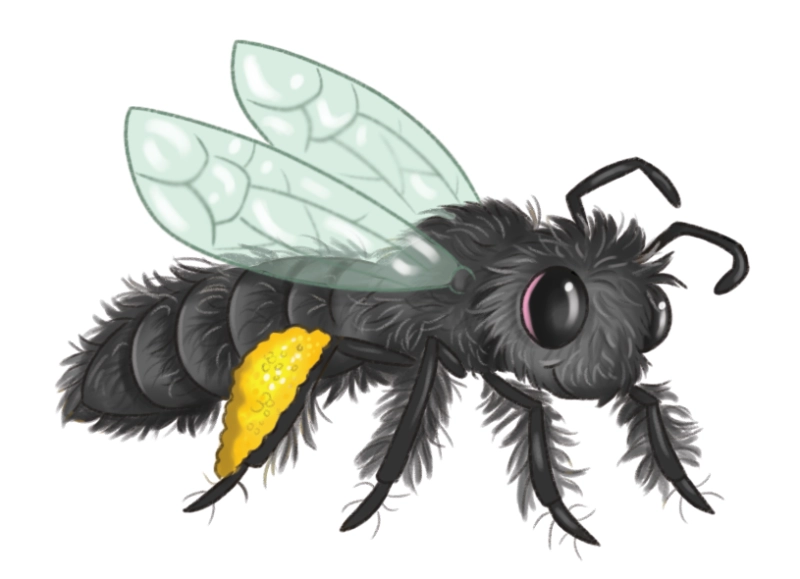
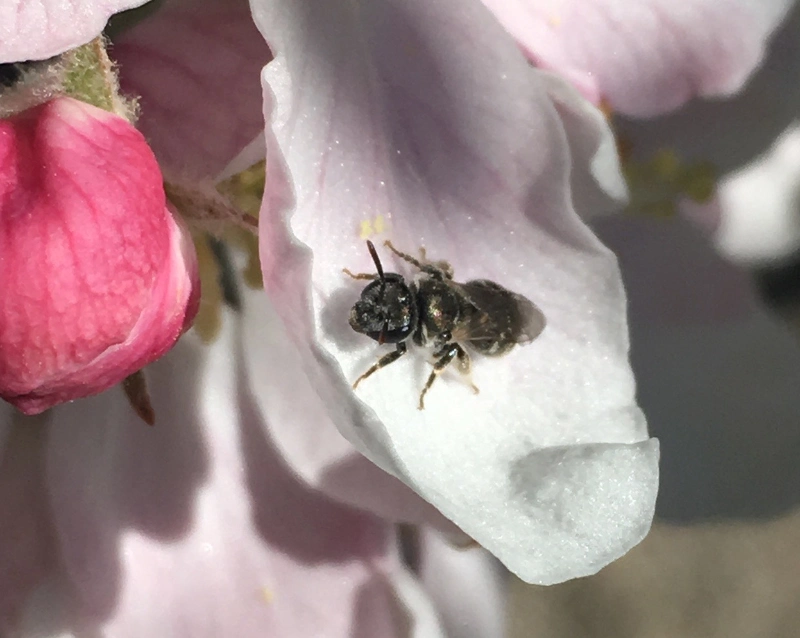
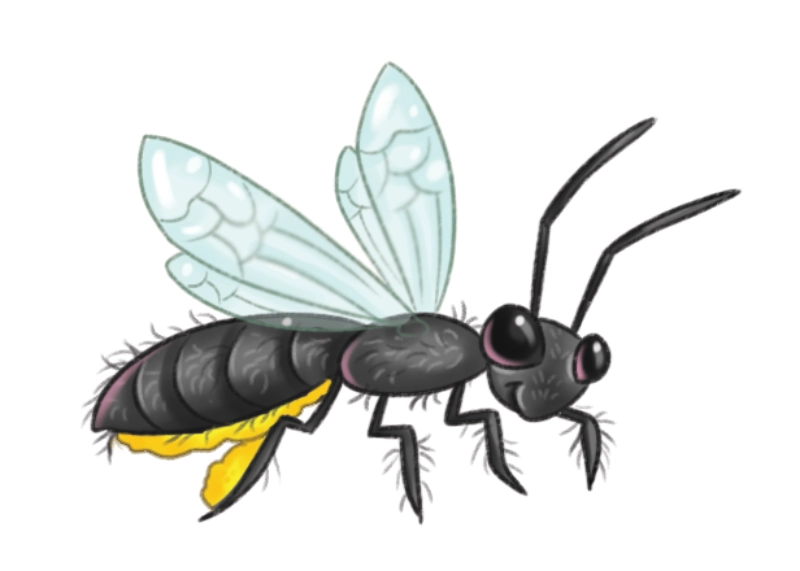
At an average length of just 5mm, native bees are often mistaken for tiny black flies. Aotearoa has 28 native bee species. All but one occur only in this country. Unlike honey bees, they are lone workers. They do not build hives but nest mainly in the ground, foraging for food close to their nesting holes. Well established in this land for centuries before honey bees and bumble bees arrived with the European settlers, our tiny native bees don’t make honey and they don’t sting.
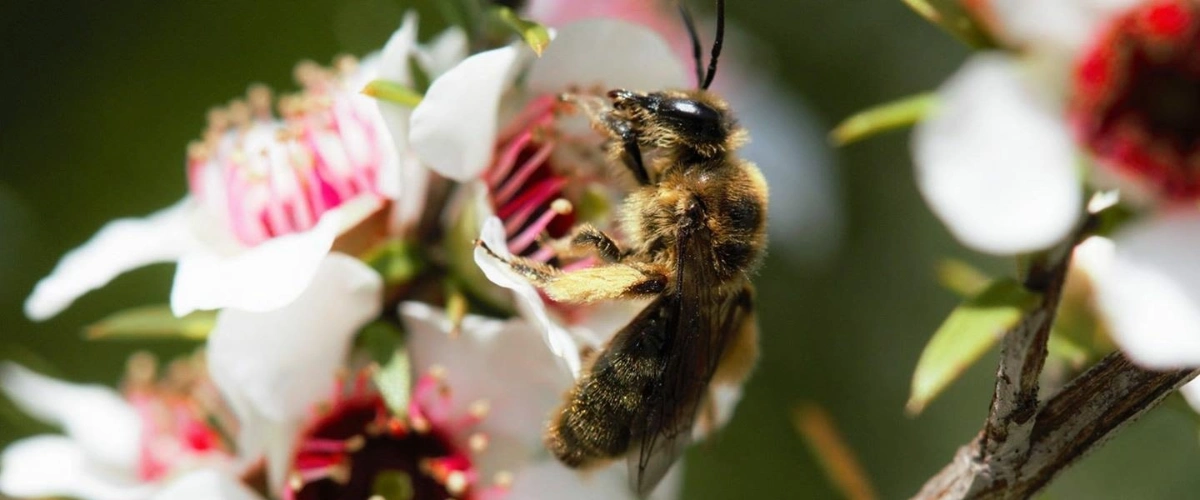
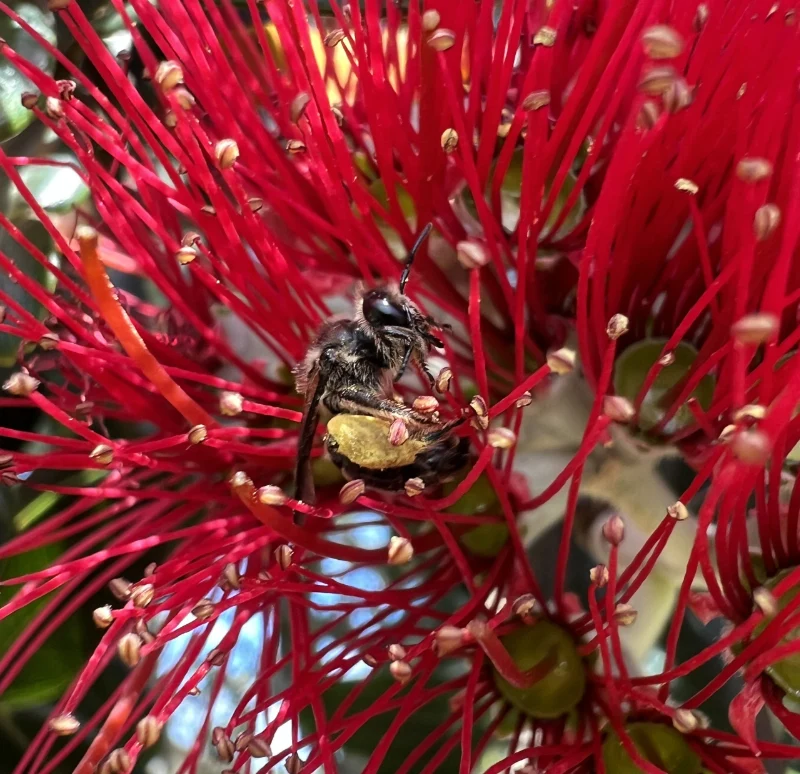
They visit both exotic and native plants but have evolved to have especially close relationships with our native flora, and are considered important pollinators for a wide range of native plants including pohutukawa, mānuka, kānuka, harakeke (flax), hebes. Get up close with a hebe bush in full bloom on a sunny spring or summer’s day and you might be amazed at what you can see.
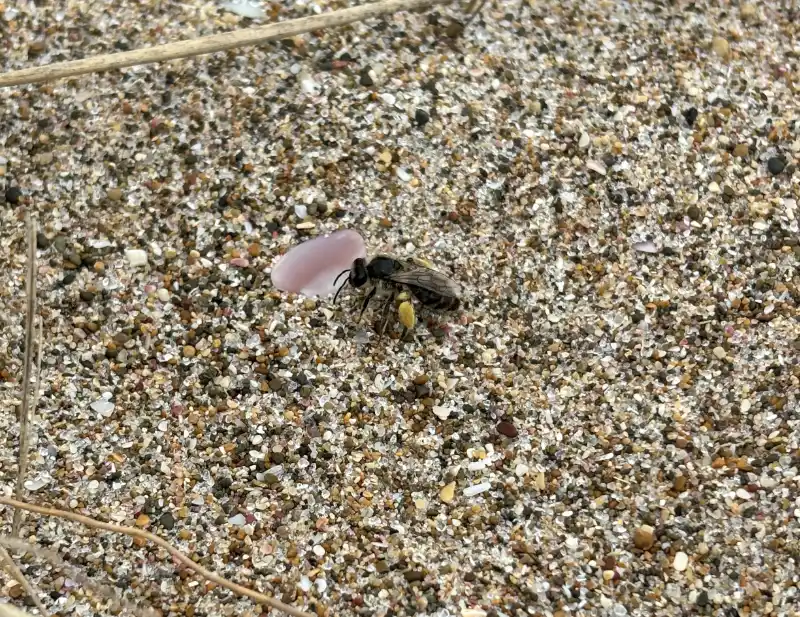
Native bee nesting sites are found on sandy beaches, clay banks and sunny roadside verges. And, if you are lucky, in your garden. They always nest within close flight of a flower food source and only fly about in spring and summer, hibernating underground as eggs, larvae and pupae over the winter months.
Each female lays up to 12 eggs, but doesn’t live to see her eggs hatch. The male babies emerge from the eggs a little before the females and then die after mating. Females go on to forage and build their own nests,storing away food for their future offspring (larvae) to feed on. A native bee’s foraging range is much smaller than that of a honey bee; most will not venture beyond 100m of her nest.
In ‘Kiwi Bees have Tiny Knees’, Rachel Weston beautifully describes how to get up close with native bees. “Bend down close to the ground, keep still and watch for a few minutes. Your eyes will adjust to seeing tiny bee blurs whizzing past you just above ground level. Little yellow dots on their legs will help you identify that they’re bees. Even though they are speedy and hard to track with your eyes, eventually you’ll notice them land and disappear into the ground.”
Apart from planting their favourite native plants, gardeners can encourage bees (of any type) to visit our gardens by minimising the use of pesticides and weed sprays. The full impact of sprays is still unknown but it is known that chemicals can disrupt their navigation system to the extent that bees cannot locate their food flowers or will lose their way home, so cannot build their nests.
Population growth and modern agriculture has led to habitat loss for many native insects. Climate change is putting further pressure on indigenous bee populations worldwide as drought, flooding and fires all contribute to habitat loss. As much as we love our honey bees and bumble bees, they do also pose a problem for native bees in areas where they share the same food source. New Zealand’s honey bee hive numbers have escalated in recent years and, in the 'gold rush’ for Manuka honey, indigenous forest habitats are highly valued by beekeepers. With honey bees themselves at risk from overcrowding and disease, could it be that we will one day depend even more on our quiet little native bees to do the work of pollinating our food crops? Native bees love to forage on natives but some have also adapted to introduced plants such as kiwifruit. Unlike honey bees they are not affected by the deadly Varroa mite.
Hopefully, with more awareness and understanding, future generations of kiwis will be better equipped to care for our precious native bees and other endangered invertebrates, some of which may yet to be discovered.
New Zealand has three native bee groups (genera) of which Leioproctus (hairy bees) are the largest group and the largest in size. The other two groups are Lasioglossum (sweat bees), our tiniest native bees, and Hylaeus (masked bees). While hairy bees and sweat bees nest in the ground, masked bees nest in twigs and branches,in holes drilled by other insects and hollow dead stems. Masked bees are also especially fond of flax flowers.
Discover more in “Kiwi Bees Have Tiny Knees” by Rachel Weston and at blog.tepapa.govt.nz; fortheloveofbees.co.nz
Thank you to Weston Books Ltd. Photographs and illustrations featured in this article are from “Kiwi Bees Have Tiny Knees” by Rachel Weston. Purchase Rachel's books at https://www.rachelweston.co.nz
Banner photo - Hairy bee in manuka