
The popular concept of a ‘food forest’ might seem far from reality in a small urban garden. But if you regard a food forest simply as layers of food-producing plants, then even a little landscape can be made more productive. Fruiting plants can serve many purposes; as small ornamental feature trees, shade trees, groundcovers, screens and even hedges.
Most fruit trees can be trained and pruned to control size. We also have a wide choice of varieties that are grown in the nurseries as grafted trees, their 'dwarfing' roots keeping rampant topgrowth in check. Others are especially bred to be naturally small growing while still producing loads of fruit. Winter is the main planting time for deciduous trees such as apples, pears, plums and peaches. And now summer is upon us, evergreen fruit trees are widely available for planting in gardens or large containers. Citrus, feijoas, figs, tamarillos, olives, guavas and pomegranates can all be adapted to small garden spaces, whether you grow them as little feature trees in the garden soil, in containers, as espaliers or as hedges.
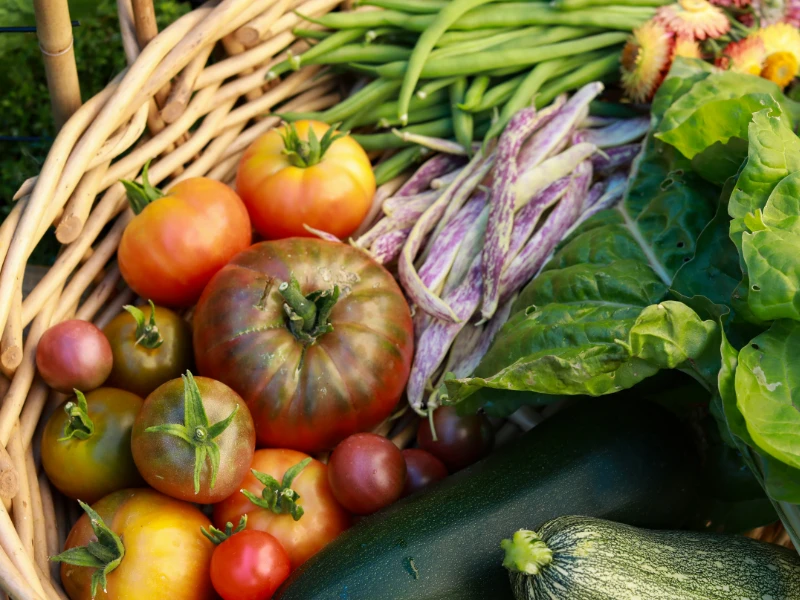
Vertical gardening is on the rise in urban spaces. A fruiting passionfruit or grape vine can provide summer shade or privacy screening, as can a summer squash or cucumber vine. If the groundspace is small, there may be a warm north-facing wall, a sunny spot for an obelisk, or room for a teepee in a large pot. Summer veges to grow vertically include beans, cucumbers, tomatoes, melons, and with a very sturdy fence for support, even pumpkins and squash. The latter can look spectacular when grown over an archway.
Edibles grown in pots can be needy when it comes to watering and feeding, but the rewards will make up for any extra love you have to give. Heat loving tomatoes, capsicums, chilli and eggplants will thrive in containers, as will cucumbers and zucchini given a large pot with ample watering. Strawberries make excellent container subjects too. There is no doubt that it’s easiest to maintain fruit trees when they are allowed unrestricted ground space to spread their roots freely, but many a fruit tree can be enjoyed in a large pot provided it is well tended to keep up with its needs.
For those with less time for feeding and watering, the hardy Mediterranean herbs, such as rosemary, thyme, oregano, sage and bay make surprisingly forgiving container plants.
When you prioritise family favourites, then manage planting and pruning to devote the most growing space to the fruits and vegetables you most want to eat, it’s surprising how much food can be grown in a small space. Consider replacing underproductive (or over productive) plants to make space for something more desirable.
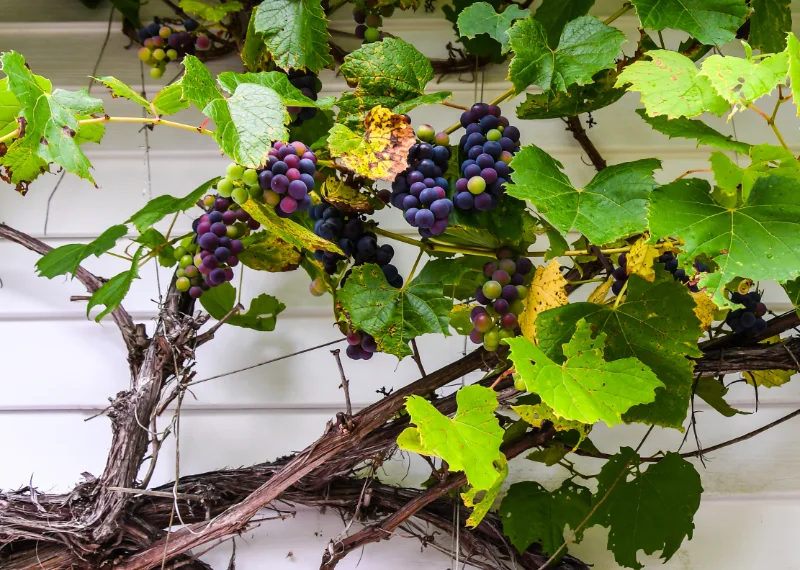
Draped over pergolas, fences and walls, or along a low border fence, grapes impart a relaxed ‘al fresco’ feeling that’s perfect for outdoor entertaining. Lush green foliage is followed by delicious fruit and then beautiful autumn colours. Grapes can even be grown in pots. They thrive in full sun and grow well in a wide range of soil types although a light, well-drained loam is ideal. Good air circulation and preventative copper sprays deter fungal diseases while watering during summer dry spells ensures bumper crops of juicy berries.
Choose from a wide range of delicious table grapes. Old favourites ‘Albany Surprise’ and ‘Schuyler’ are loved for their sweet black fruit and good disease resistance. ‘Niagara’ produces bunches of sweet green-white grapes with a thin skin and a low seed count. Red-purple ‘Candice’ is a favourite seedless grape. Pruning while the vine is dormant, before new growth begins in spring, helps to keep grape vines in peak productive health. First, remove any dead, diseased or damaged wood, cutting right back to the main stem. Then, choose well-spaced healthy canes and secure them to your support structure, removing unwanted canes that will create overcrowding and potential disease problems. Fruit is produced on the new spring growth. In summer, further removal of excess growth keeps the vine well ventilated and lets the sun though to ripen the fruit.
TIP: Remove leaves that are shading grape bunches to help ripening.
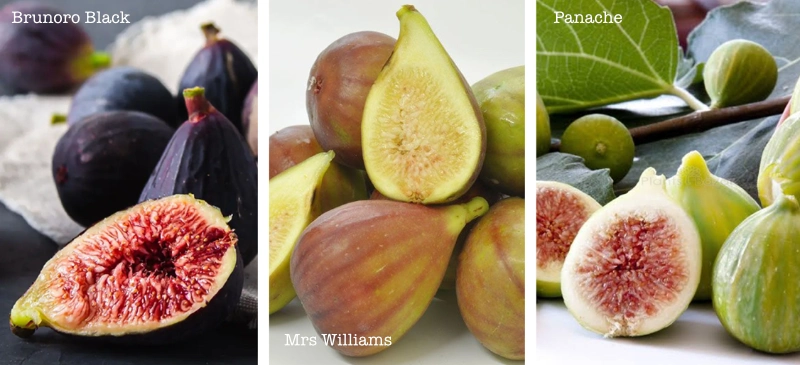
The sweetest most delicious figs are picked from trees on warm rocky hilltops of the eastern Mediterranean - and anywhere else that imitates those hot dry summers and well drained soils, including many parts of New Zealand. Even in our cooler climates, a sheltered microclimate such as a sunny north facing wall can produce a delicious crop.
Either way, a fig tree makes an attractive addition to any garden with its shapely scented leaves. Trees respond well to pruning, make great espaliers and perform well in large pots, where the restricted root zone helps control the size of the tree and can also make trees more fruitful. In order to produce large succulent fruit, potted trees need plenty of water during the growing season. Water when the potting mix is dry about 3cm below the surface. Leaf drop is a sign that trees have become too dry. When fruits start developing, feed with high potassium fertiliser, such as tomato food. Prune each year to keep the size in check and to keep the framework of the tree open. Sunlight is needed to ripen the fruit. Pruning is best done in late winter or summer as spring pruning causes trees to bleed a lot of sap. Remove dead, crossing and weak branches while shaping the tree in winter. Remove excess shoot tips in summer. If your tree has grown too large for its space, you can prune it back hard, even though this will mean sacrificing some fruit. Gloves are recommended to protect your skin from the sap. More detailed pruning advice and images can be found at edible.co.nz. Figs have a short shelf life and are difficult to transport, a good reason to grow your own. Many varieties will produce two crops per year, in summer and again in autumn, when pruned correctly.
FUN FACT: Botanically speaking, the fig we eat is not a fruit but a bunch of male and female flowers all enclosed within a thick outer skin. The figs we grow in New Zealand are parthenocarpic, which means they develop and ripen without fertilisation so they don’t need to be pollinated.
Overseas, the non-parthenocarpic fig varieties are pollinated by the fig wasp which enters via a small opening in the end of the fig. New Zealand does not have that particular wasp, so our fruit is not pollinated. The seeds, while still giving our figs their lovely crunch, are not fertile, so new trees are always grown from cuttings.
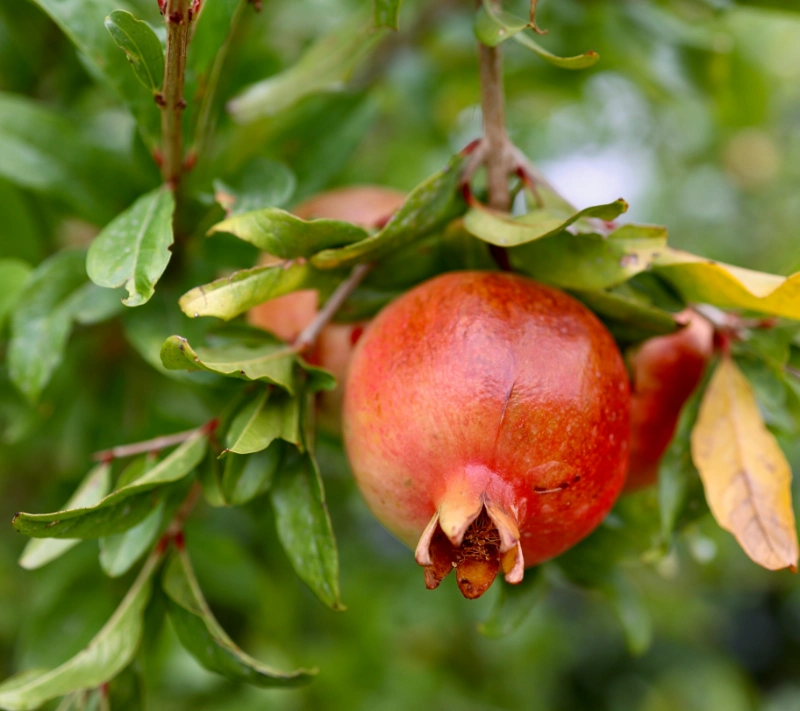
A long hot summer climate presents the perfect opportunity to plant a pomegranate tree. Grown as a large bushy shrub or trained as a small tree, pomegranates are deciduous so they are fully cold hardy, and are pretty in any climate with their frilly scarlet-orange flowers. However, six to seven months of warm temperatures are needed for the fruit, about the size of an orange, to reach maturity with maximum sweetness and juiciness. The fruit will not ripen once picked. Pomegranates can be grown in containers and also lend themselves to espaliering flat against a fence or wall. Plant them in a warm sheltered position with well-drained soil. Ample and consistent moisture is needed through summer and autumn while the fruit is growing. Erratic watering can cause the fruit to split. Relatively slow growing but long-lived, pomegranates respond well to a post-harvest trim. Fruit is produced on new season’s growth. The popular variety, ‘Wonderful’ is deep red and juicy, ready for harvest from March to May, 5-7 months after flowering. Pomegranate ‘Eversweet’ is almost seedless with sweet juice, even when the fruit is not fully mature.
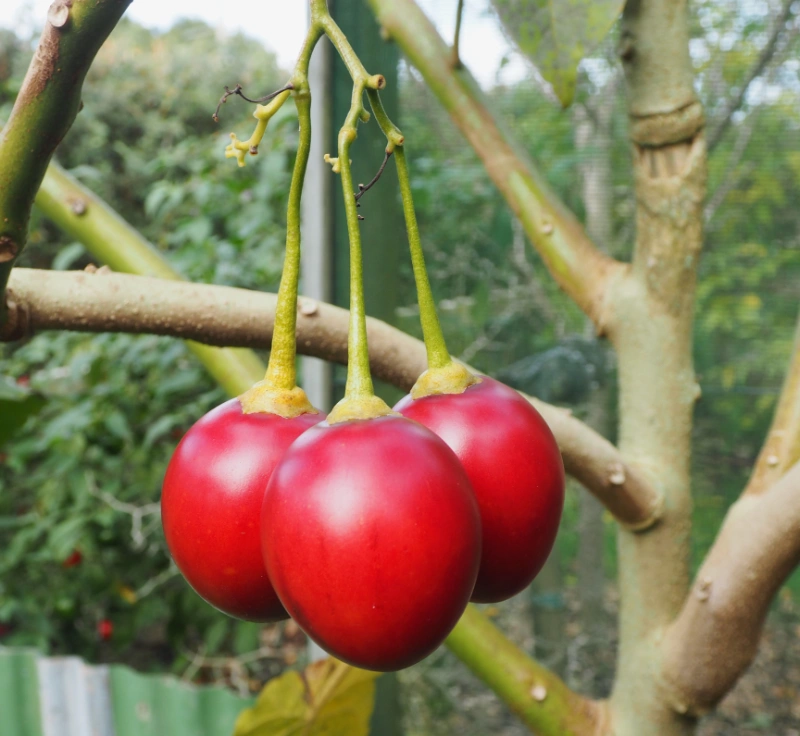
Tamarillo trees (aka tree tomatoes) are attractive small garden trees with large heart-shaped leaves. They thrive in a warm sunny spot, with shelter from heavy winds. They need lots of water in well-draining soil that’s high in organic matter. Frosts, if not too severe, will naturally prune the tree without killing it, but wait until the frosts have passed before removing any dead leaves or branches. In any case, a hard prune after the last frost will maximise next season's fruit. Fruit forms on the new growth and is ready for harvest over autumn and early winter. In frost-free gardens, trees are pruned more often to prevent over-crowding. For best fruiting, feed with balanced, low nitrogen fertiliser, such as tomato food, over the spring- summer growing season.
TIPS:
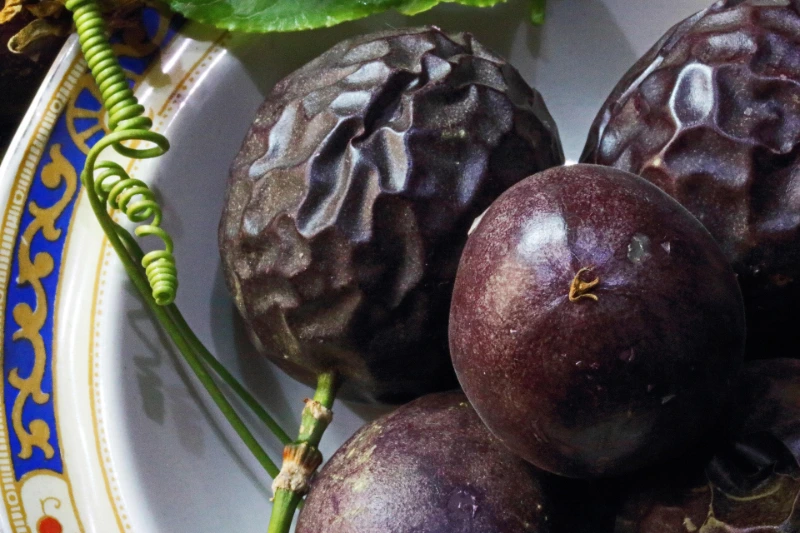
A passionfruit vine is a great choice if you want a climber to quickly cover a fence or pergola with the bonus of delicious fruit ripening from mid summer into autumn when the skins turn purple and drop to the ground. Vines will often bear fruit within the first year if planted in a warm sunny position with shelter from wind and frost. In ideal conditions they grow vigorously (five or more metres in a year) with curly tendrils clinging to the nearest support. As sub-tropical evergreens they prefer light well-drained soil with lots of summer watering, especially when flowering and fruiting. Avoid watering the leaves to avoid disease problems. Mulching will help retain moisture and protect the shallow roots. Passionfruit plants come to the end of their natural life after about 5 years, so starting a new plant every two or three years ensures a continuous supply. Plant in spring after the risk of frost has passed. Enrich the soil with compost and slow release fertiliser. After planting, pinch off any side shoots and train the leader until it reaches the trellis or support. Then pinch out the growing tip to encourage side branching. Fruit is carried on the current season’s growth. Spring and summer pruning of mature vines helps to prevent overcrowding and disease problems.
For best fruiting, passionfruit respond well to regular feeding. Slow release citrus fertiliser, applied two or three times each spring-autumn growing season, is ideal. Supplement with extra liquid feeding during fruiting, especially when growing passionfruit in a tub.
TIP: Clear away fallen leaves to prevent the over wintering of pests and diseases in the soil. A clean up spray with copper and horticultural spraying oil.
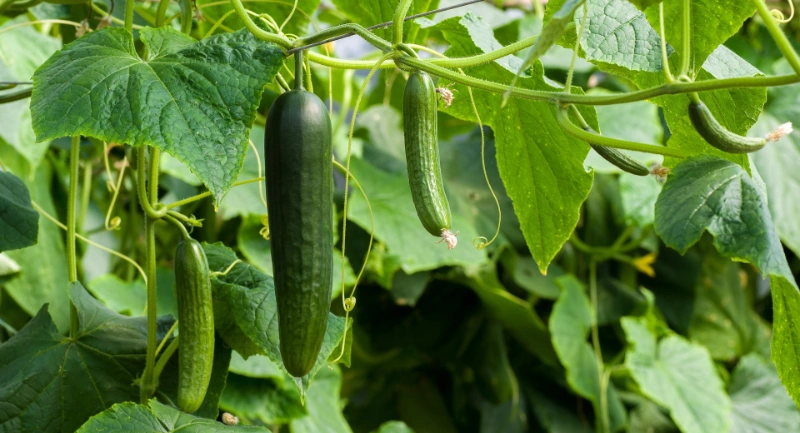
Cucumbers, melons, squash and gourds. All cucurbit vines will climb if encouraged. For cucumbers and small melons or squash, a strong, 1-2m tall trellis or other support structure keeps the fruit off the ground while saving valuable space. Vigorously growing melons, squash and gourds make a striking summer display when trained up over a sturdy pergola or archway. Cucurbits can be planted outdoors as soon as the risk of frost has passed. In cooler climates seedlings are often started in pots under shelter. In warm climates where summer is long, it is easiest to sow directly into warm soil. Seeds sprout quickly and grow fast once the soil has reached a constant 18℃. Plant in full sun. If planting seeds, plant 2-3 seeds in each spot and then thin them out to leave the strongest seedling. Wet seeds are prone to rotting, so water them well at planting time, but don’t water them again until they have sprouted. Don’t be tempted to plant too close together as cucurbits are prone to fungal disease if there isn’t enough airflow around the vines. Allow 20- 30cm between cucumbers, a metre or more for pumpkins, zucchini and melons. Follow the recommendations on the seed packet. To support the rampant growth, feed with regular light applications of balanced fertiliser every 3-4 weeks. Avoid wetting the foliage, but keep the soil evenly moist. Mulch to preserve soil moisture. An inconsistent supply of water can lead to poor fruit quality.
Improving fruit set
Inadequate pollination leads to poor fruiting on cucurbits. Planting flowers to attract more bees may solve the problem. Otherwise, pollinating flowers by hand, ideally first thing in the morning, is another way to ensure an abundant crop. Male and female flowers are on different parts of the plant and easy to tell apart when looked at closely. Males have long slender stems while females have a swollen base. Use a paintbrush to transfer pollen from the male flower onto the stigma in the centre of the female flower.
Dwarf beans mature very quickly to produce the bulk of their crop over a two to three-week period. Climbing beans take a few months to mature, but they produce about three times the yield per square metre as dwarf beans and will keep on bearing until the first frost. Install a support structure before sowing climbing bean seeds. It could be a wire frame on a fence or a large teepee. Beans, both dwarf and climbing, grow best when seed is sown straight into warm garden soil. Prepare a sunny patch of well-drained soil. A spot where a crop of lettuces or root veges grew the season before is ideal. Sow seed at the recommended spacing and water well. This is usually enough to keep the soil just moist while you wait for the seeds to germinate. Seeds may rot in soil that is too wet. After the seedlings have emerged, apply organic mulch such as pea straw to keep the soil moist, block weeds, and to help keep roots cool during hot weather (which can cause flowers to drop off prematurely). Once the plants are growing strongly, water deeply at least once a week. In good soil, beans generally don't need extra nitrogen because of the beneficial nitrogen fixing bacteria that live in their root nodules, however they respond well to balanced liquid fertiliser, such as tomato food, over summer. Seaweed solution promotes strong healthy roots.
TIP: Pick beans frequently and eat them while they are young and tender.
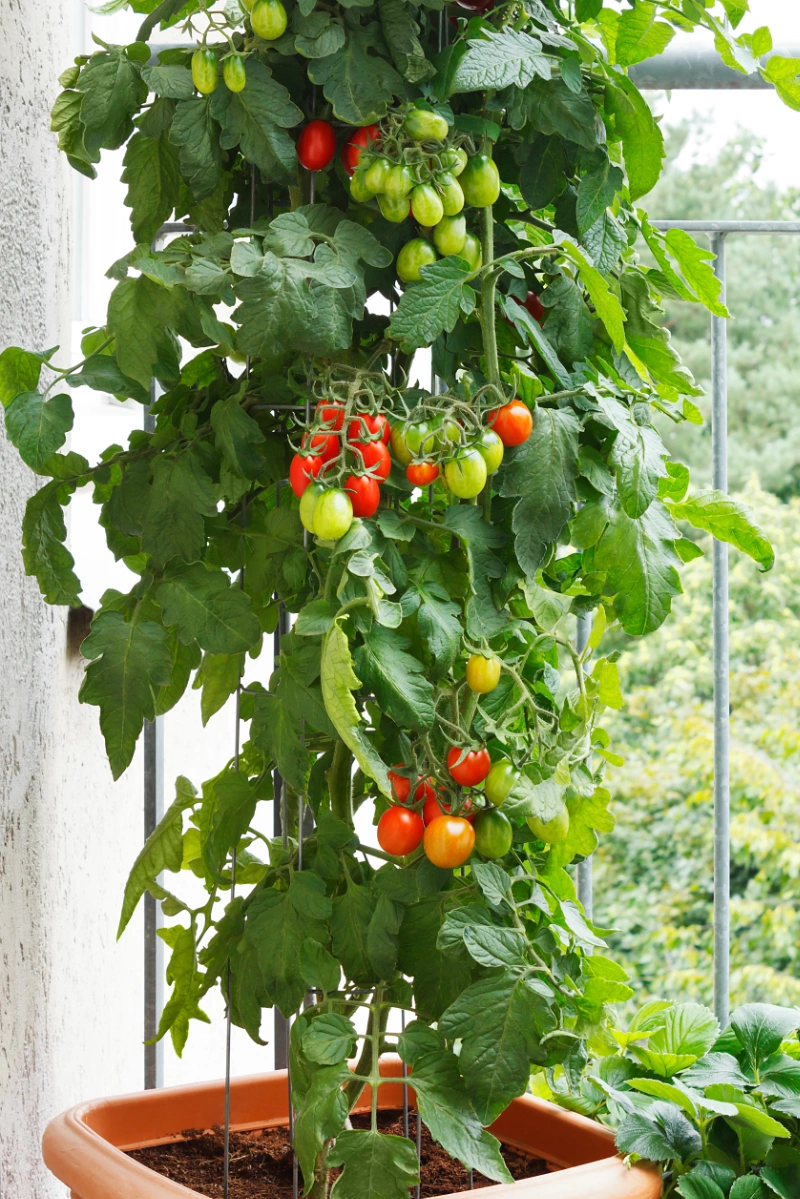
Tomatoes grow well in a soilless medium. Fill a large pot or grow bag (at least 30cm wide) with outdoor container mix. For tall tomato varieties, evenly space three bamboo stakes around the edge of the pot, tying them at the top to make a teepee. Or firmly place an obelisk in the centre of the pot. Plant your tomato plant in the middle and water thoroughly. As your plant grows taller, tie it loosely to its support. When flowers appear, start feeding every week with liquid tomato food. Water every day to keep the potting mix moist. Train your tomato as it grows; remove excess growth that will block the sun from fruit and to encourage airflow to prevent disease problems; with clean hands remove any unneeded laterals. These are the young side shoots which sprout between the main stem and the leaves. When the plant has reached the desired height, snip out the top growth to channel its energy into the ripening fruit.
Chillies, sweet peppers and eggplants are ideal for growing in containers. They need four to five months of summer warmth from seed to maturity. Choose a good-sized pot for each plant (at least 25cm diameter for one plant) and keep it well watered. Mulch with straw to conserve moisture. As soon as fruit appears, feed with a balanced fertiliser, such as liquid tomato food. Avoid wetting the foliage as this encourages disease problems. Stake eggplants to support the heavy fruit.
As the weather warms up, plants are bursting into active growth, flowering and fruiting, and that means it’s feeding time for just about everything. Now’s the time to give vege gardens and fruit trees what they need to keep them healthy and productive throughout the season.
In nature, plants get all their nutritional needs met from their environment. In a garden, we remove soil nutrients from the system every time we harvest, prune or mow, so we need to give it back. Mimicking nature, compost and well-rotted animal manures can meet all plant nutritional needs if added in enough bulk. Adding lots of organic matter also supports healthy soil and nutrient uptake. In town-sized gardens without a constant supply of bulk organic matter close-by, and for gardeners growing edibles in pots, a wide choice of plant foods offers precise and convenient feeding.
Fertilisers designed to meet the specific needs of the different plant groups give fast reliable results without waste when applied as directed. Some release their nutrients gradually in step with plant growth and only need to be applied once or twice in a season. Others provide a quick pick-me-up and are fed in small repeated doses.
Used in conjunction with manures and fertilisers, natural seaweed is a very effective 'biostimulant' with many benefits. It can reduce transplanting shock by stimulating rapid root recovery and helps plants recover quickly when attacked by pests. Seaweed also boosts plants’ resistance to frost and drought. Applied to soil or foliage, seaweed solution has been shown to improve both productivity and quality of fruits and vegetables.
Plants growing in pots need regular feeding. Controlled-release and liquid plant foods are ideal for pots, planter boxes and hanging baskets.
The NPK on a fertiliser pack represents the relative ratio of the three ‘macronutrients’ that plants need in the biggest quantities.
Just as essential, but needed in smaller amounts, are the ‘micronutrients’ (or ‘trace elements’) which include iron, calcium, magnesium and many more.