
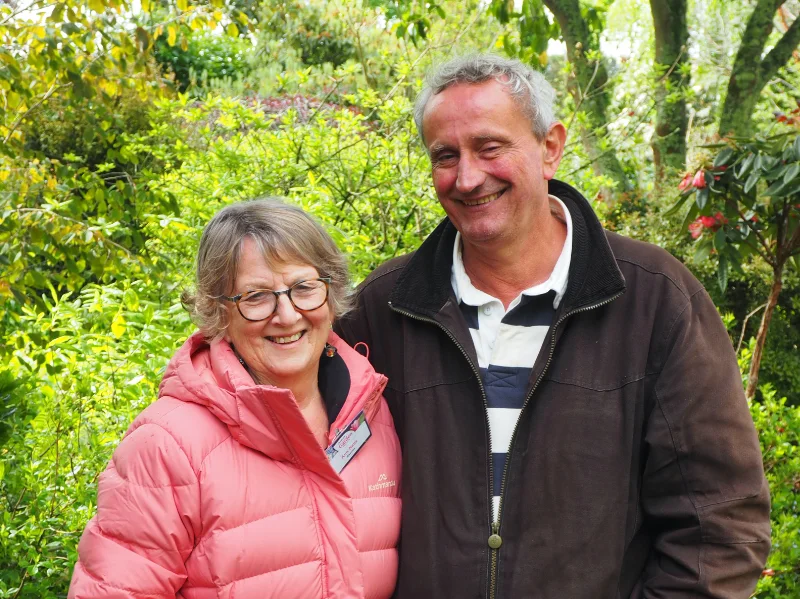
With its idyllic soils and climate, Taranaki is arguably one of the best places in the world to garden. Ann and Vince Naus wouldn’t disagree. Their garden, ‘Riverlea’ is a highlight of the annual Taranaki Garden Festival, which attracts thousands of visitors every year.
Of Riverlea’s microclimate in coastal north New Plymouth, Vince says wind presents the greatest challenge. “We’ve had to plant lots of shelter to combat the westerly wind but, unlike much of Taranaki, salt laden westerlies are not so much an issue here. We have no extremes of cold and heat, and the free draining soil with plenty of rain allows us to grow all our favourite plants.”
Of course there is more to making a beautiful garden than perfect growing conditions. Horticultural prowess is something this pair havei n spades. You can tell by the way Latin plant names roll off their tongues and by the botanical depth of their beautiful expansive garden. A passion for plants is its reason for being. “It’s in our DNA,” says Ann.
They both enjoyed childhoods immersed in gardening. The young Vince helped in the family market garden alongside his Dad, for whom gardening extended beyond vegetable production to a deep passion for ornamentals. Vince remembers endless nursery visits on the hunt for treasures for the family garden. Studying horticulture at Massey University was a natural next step.
The couple met while working at the renowned New Plymouth nursery, Duncan and Davies, later combining their talents to build an award winning garden centre business, Big Jims of New Plymouth, which they owned for 23 years. Now retired from retailing, they're loving the extra time they have to spend in their garden.
The foundations for Riverlea were laid while they were still busy with the garden centre. “Our garden has always been our get away,” says Vince of their peaceful 4ha paradise, almost a half of which is now garden. “One of the things we love most about our garden is how it is constantly changing with the seasons. Our garden has always been our getaway.”
The best part of the day is in the evening when the light shows the garden to perfection. This is when you are likely to find them wandering around their garden. The creative process is a joint effort. “We both see the same picture,” says Vince. “Often it's a case of how to use favourite plants rather than the other way around, but we do enjoy theming our planting schemes.”
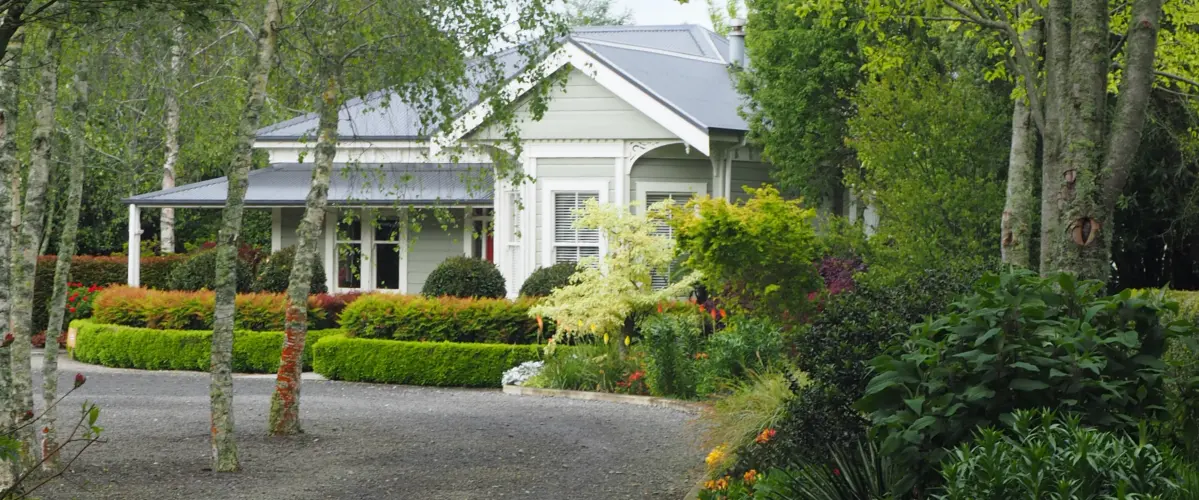
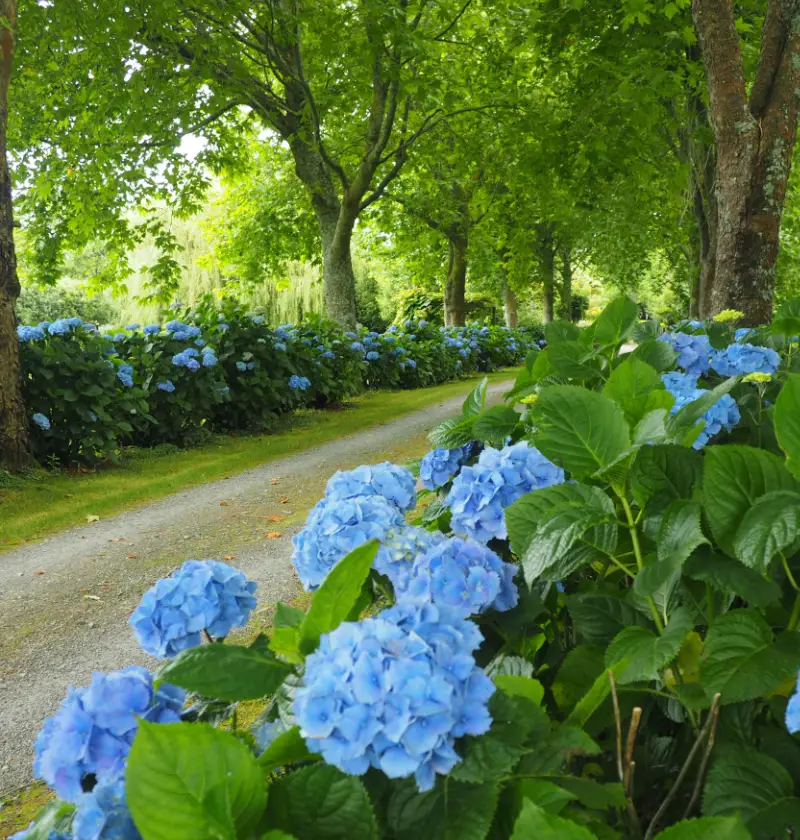
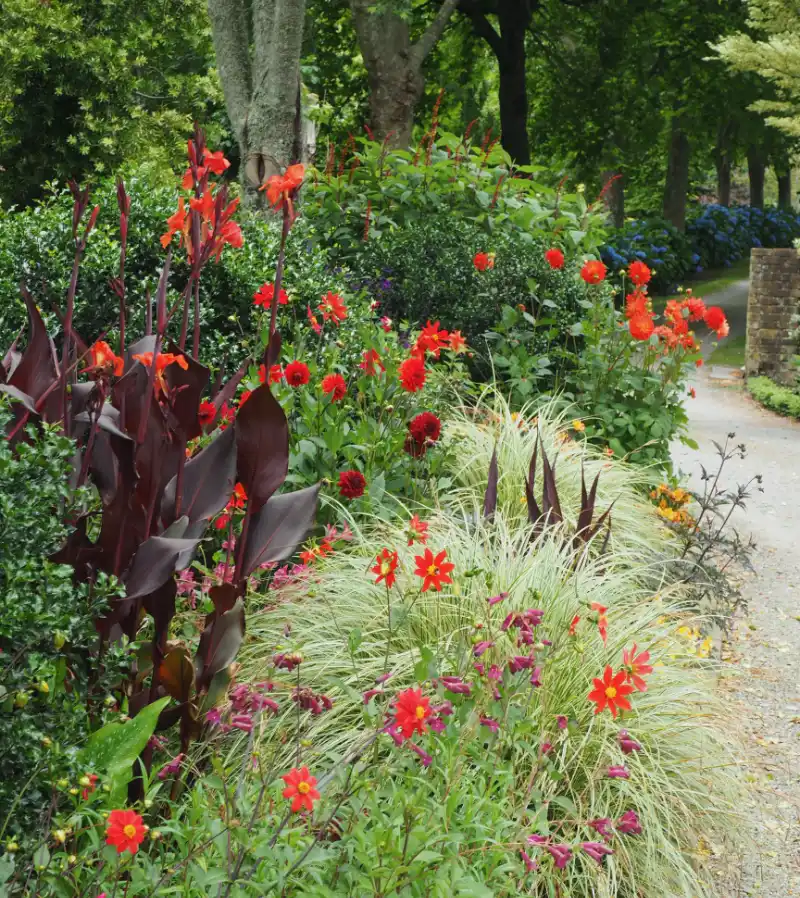
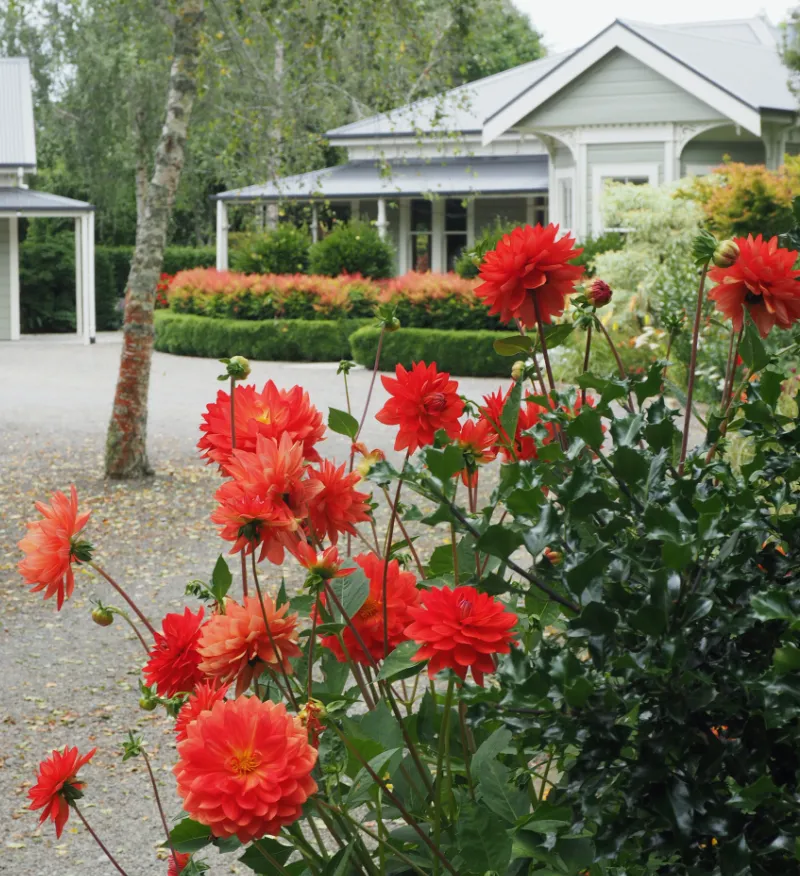
A series of garden rooms and themed walkways flow seamlessly from one to the next, beginning with a cool shady driveway lined with plane trees and blue hydrangeas. The driveway opens out to a welcoming entry courtyard with a grove of birches rising up from the gravel and an eye catching ‘hot flower border’ in flaming reds and oranges.
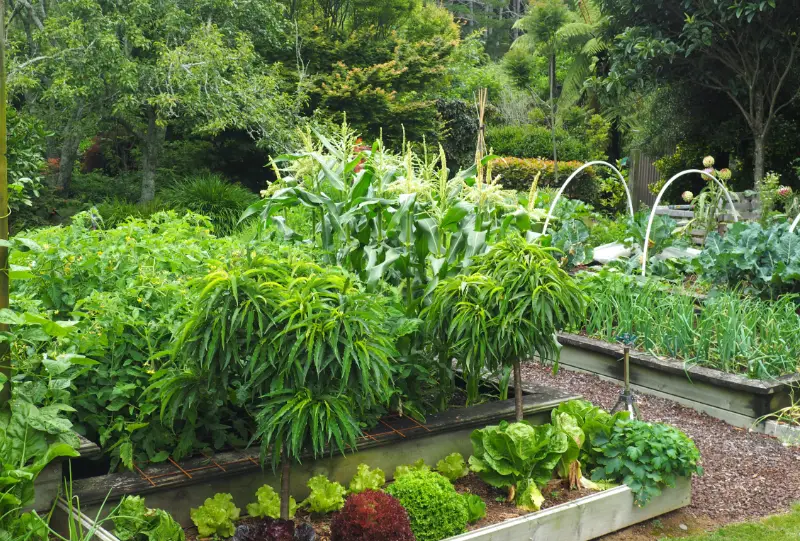
From here the garden meanders on through woodland areas and rose gardens to a grand formal lawn walk with wide flower borders. Wide brick steps descend from here onto another lawn and a hedged archway leading to a gracious croquet lawn and around the corner to a breathtaking Japanese maple walk. Past the vegetable garden another sunny lawn area leads to a native bush walk along the stream. A particular highlight is the ‘aboretum’ filled with favourite trees, including rare specimens not often seen. Also tucked away is an orchard featuring a full gamut of fruit trees.
A trip to England in 2011, provided the inspiration to complete the wide lawn walk with its double herbaceous border. It’s a highlight for spring visitors, but Ann says there is something here for every season.
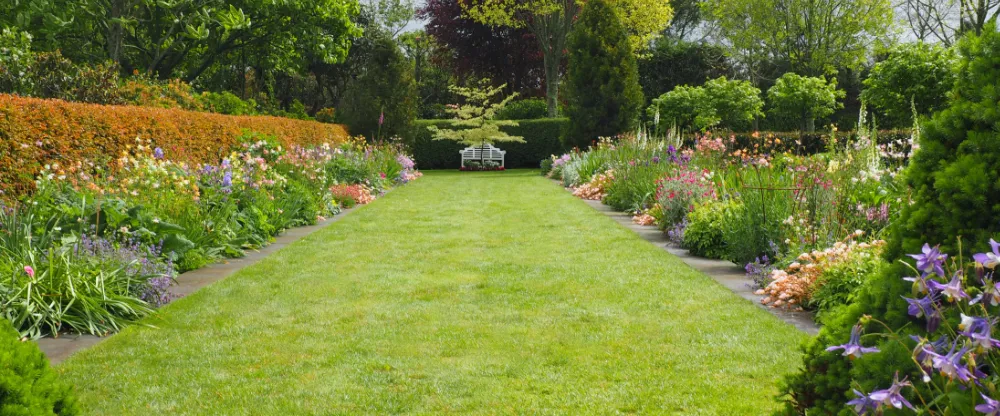
In spring, the irises and tree peonies star alongside aquilegias, apricot Tritonia and purple Tulbaghia to name a few. Summer is show time for dahlias, phlox and delphiniums. Moving into autumn there are salvias, asters, achilleas, and also chrysanthemums which they are trying this year. Also colouring up for autumn is a row of neatly rounded ‘Gumball’ liquidambars rising up above the flowers and framing the pastoral view beyond. In late winter daffodils and jonquils will steal the show.
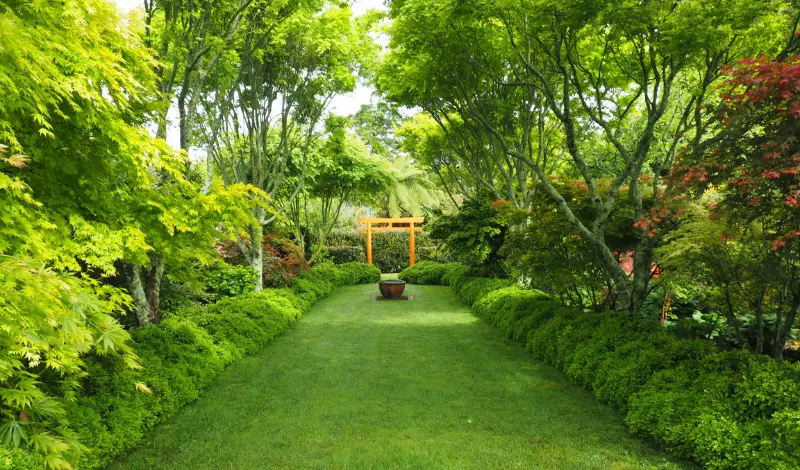
A picture of lush contrasting greens, Ann and Vince’s maple walk is a refreshing place to linger on a hot summer day. Its main canopy is an avenue of mature Japanese maples (Acer palmatum) grown from seed.
Beneath these is a collection of smaller Japanese maple cultivars that turn various shades of gold, orange, pink and red in spring and again in autumn. Flanking the lawn, a stunning pair of 12 year old Korean box hedges (Buxus ‘Koreana’) is left untrimmed to show off its natural mounding form.
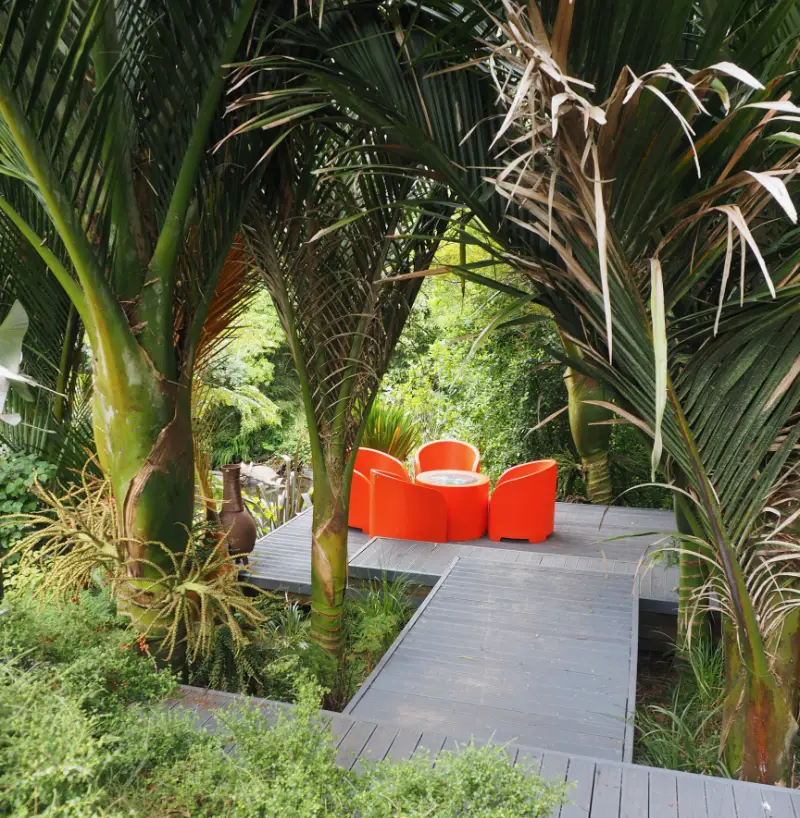
Natives, adding to those that were already growing on the property, were the natural choice for planting along the stream boundary. Here they have planted nikau, kauri, rimu, totara and a texture-rich assortment of native shrubs which look like they’ve always lived here. As an entrance to this area Vince has built multi-level decking around a grove of towering nikau palms complete with a special sitting place to enjoy the tranquil stream and abundant birdlife.
The garden is frequented by tui, shining cuckoo, kingfisher, ruru (morepork), waxeye, grey warbler, chaffinch and the occasional bellbird. There are Californian quail plus plenty of blackbirds and song thrushes. And, if you’re lucky, you might meet Raku the orphan Kereru, who Vince raised from a chick. Now, Raku is independent and they only see him every 2 or 3 days. He will hitch a ride on Vince’s shoulder and eat from your hand. But he never goes hungry. Trained by Vince, he knows where to find all the good food trees.
Vince has quite a few feathered friends. Poultry breeding is his other passion - not a bad mix with gardening when you consider the manure produced in a paddock full of chook houses. Mixed with wood shavings, the chook poo makes perfect compost, as do all the leaves that fall from the trees and get chopped up with lawn clippings.
Vince says the hostas thrive on anything organic. These and the roses are fed once a year. The lawns are fed in autumn and spring, and the vegetable garden as needed.
Otherwise, the rest of the garden thrives without fertiliser, getting all the nutrition it needs from natural leaf fall plus a truck load of organic mulch which is topped up every year or two. The mulch helps keep their soil in top notch condition and is helpful in managing weeds.
A keen flower arranger, Ann has planted countless roses over the years. “Many were used in flower bouquets I sold at the garden centre, but we are cutting back. Any rose plant that doesn’t do well is now culled and not replaced.” The vacated spaces are often planted with peonies which grow well here, with just enough winter frost to stimulate flowering.
Other great vase flowers are Ann’s dahlias, grannies bonnets and hydrangeas. She balances her bouquets with foliage, of which she has an unlimited supply. Apart from its flowers, “Hydrangea ‘Sabrina’ has excellent foliage for picking,” she reveals. They have a whole hedge of this beauty. Another great foliage shrub she has recently planted for picking is Weigela florida ‘Variegata’.
During the quiet of winter the bones of the garden are in sharp relief; the defining lines of evergreen hedges combine with bare deciduous trees exposing their beautiful bark and branch structure. There are too many loved trees to name favourites but Vince is partial to fastigate trees (tall and narrow) while Ann loves the elegant weeping form of the Katsura tree, Cercidiphyllum pendula.
For gardeners with less space they recommend Japanese maples, crabapples, variegated Cornus and the Cercis cultivars like their favourite ‘Ruby Falls’. Also the smaller magnolias; ‘Vulcan’, ‘Genie’ and ‘Black Tulip’ are some of their favourites. In a large pot they are growing Wisteria ‘Lipstick’ as a small feature tree. “I prune it throughout the summer to remove the growing tips and keep it bushy,” explains Vince.
“One of the things we love most about our garden is how it is constantly changing with the seasons,” says Ann. With the bones of their garden now well established they continue to explore different planting ideas and there is always something new to discover.